Choosing a power relay manufacturer is not only about finding a factory that can quote quickly. If you select the wrong relay type, ignore load conditions, or compare suppliers by unit price alone, you can end up with contact failure, overheating, short service life, PCB redesign, or unstable performance in the final equipment. This article will help you understand what a power relay manufacturer should really offer, how to compare relay types, what affects selection and pricing, and how to judge whether a supplier fits your OEM, export, or bulk sourcing needs.
What a Power Relay Manufacturer Should Actually Provide
A real power relay manufacturer should offer more than a catalog and a quotation. For B2B buyers, the real question is whether the supplier can match relay structure, load type, coil specification, mounting method, and application environment to the equipment you are building.
In industrial sourcing, power relay meaning usually refers to a relay designed to switch higher loads than a signal relay, often in control cabinets, power control modules, PCB assemblies, and equipment-level switching circuits. That does not automatically make it the right choice for every motor, heater, compressor, or DC switching task, because some loads may require a different relay structure or even a contactor depending on current, inrush, and switching conditions.
This is also why buyers should not confuse a manufacturer, a distributor, and a trading company. If your project involves OEM, ODM, private label, export documentation, or bulk procurement, you usually need a supplier that can support model matching, production consistency, and engineering communication rather than simple resale.
How Power Relays Are Classified
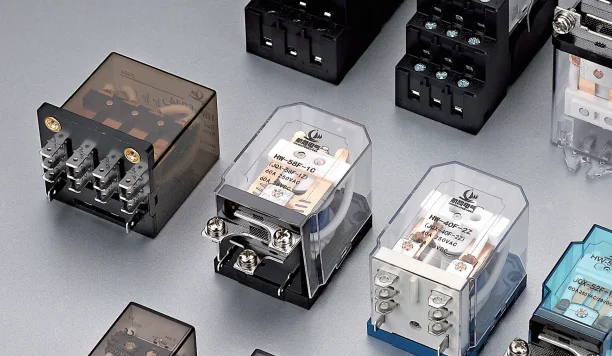
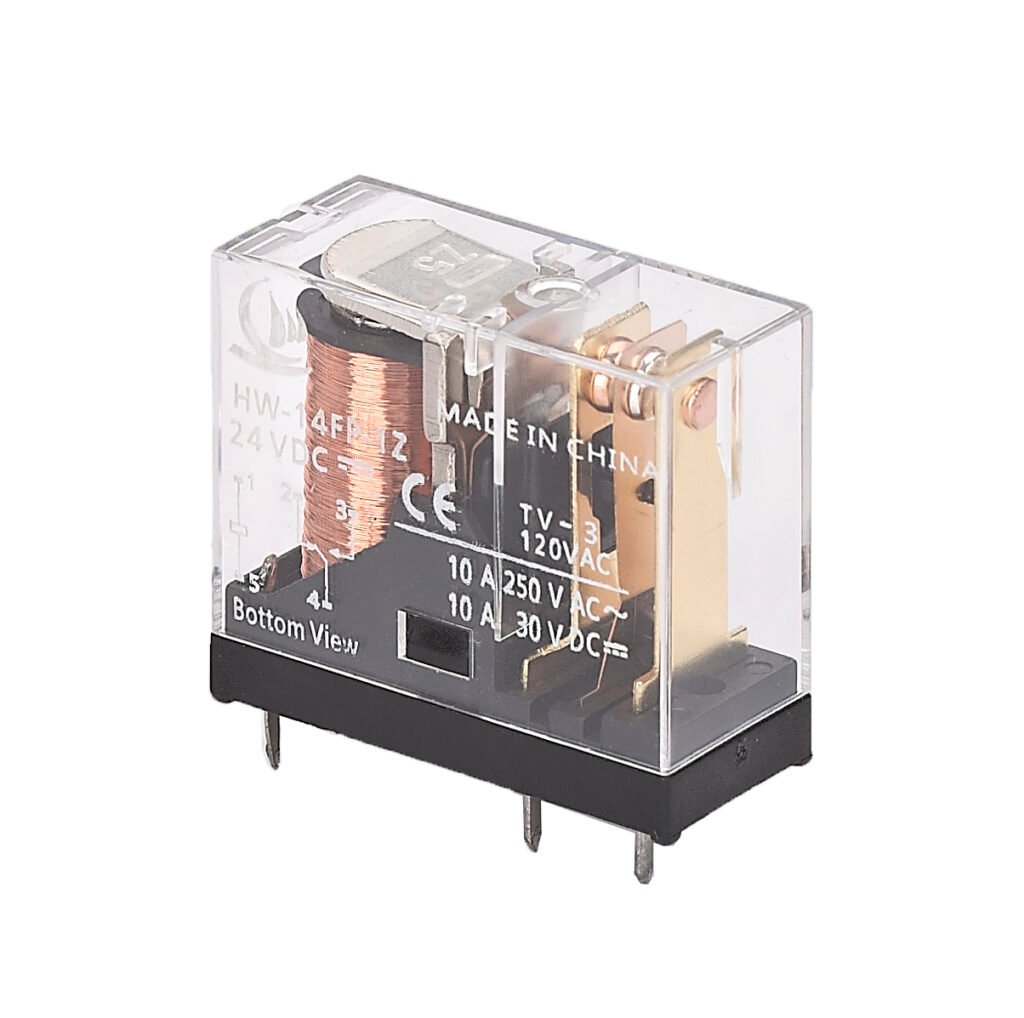
A power relay can be classified by mounting style, contact structure, current range, and load type. In practical sourcing, the most useful distinction is often between PCB power relays, general industrial power relays, high power relays, and high power DC relays, because each one fits a different integration path.
Relay type selection
Relay type
Typical use
Better choice when
Less suitable when
PCB power relay
Board-mounted control and switching
Space is limited and the relay is part of the control board design
Load current, wiring, or heat make board-level switching risky
Industrial power relay
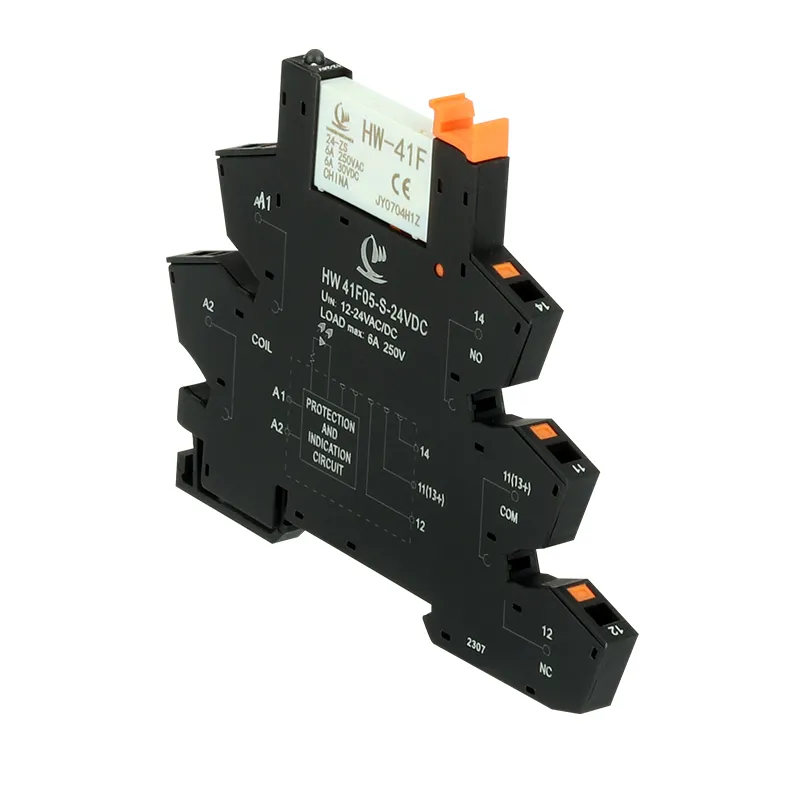
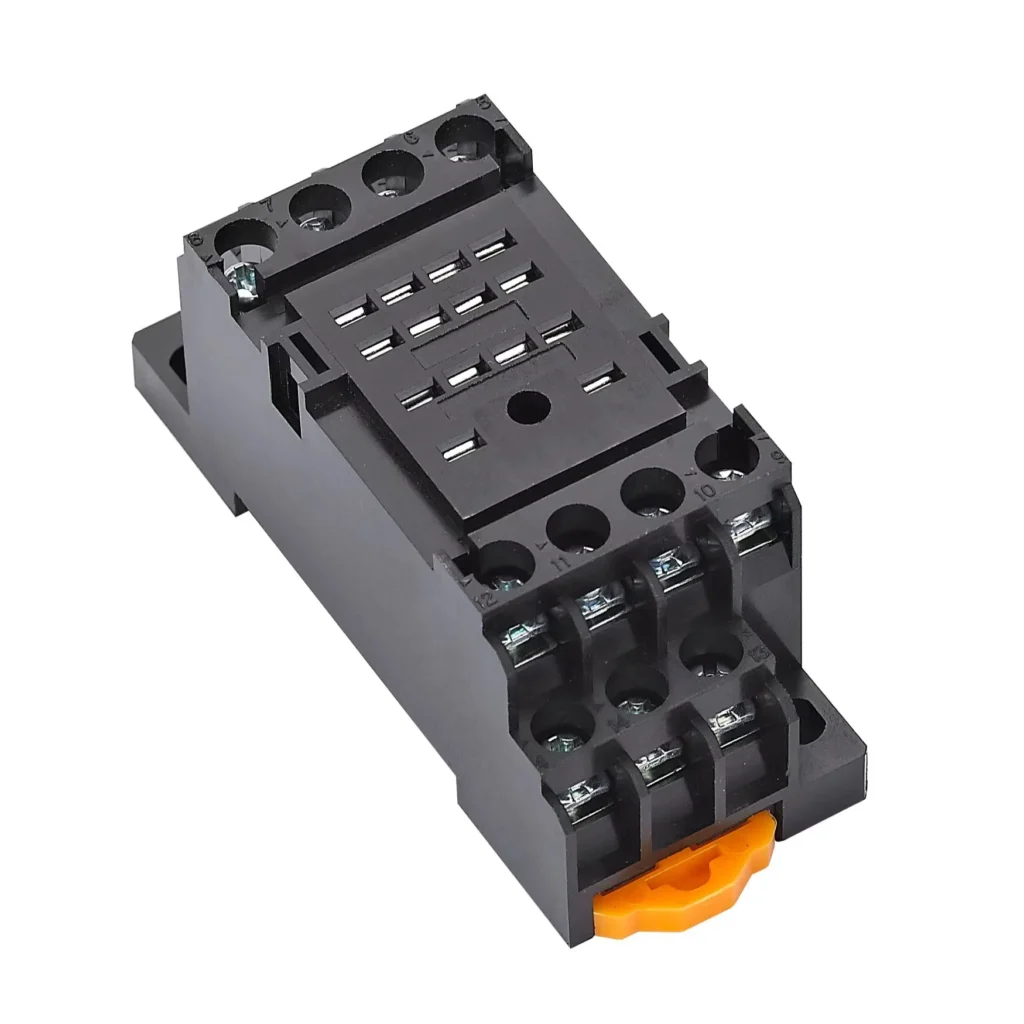
Equipment and panel-level switching
You need a balance between current capacity and integration flexibility
The application requires very high interrupt capability
High power relay
Heavier AC or mixed industrial loads
Load current and switching demand are above ordinary PCB relay limits
The main task is difficult DC breaking
High power DC relay
DC switching in energy and power circuits
The project involves battery, storage, DC source, or DC isolation tasks
The load is a simple low-demand AC control task
This classification matters because names alone can mislead buyers. A power relay pcb design may work well in a Small Relays, but the same approach may fail if the actual load has high inrush current, poor ventilation, or demanding field wiring conditions.
The same logic applies to high power relay versus high power dc relay. DC switching is not just “AC with a different voltage,” because arc interruption is usually more demanding in DC applications, so buyers should confirm whether the relay is truly intended for that duty instead of relying on appearance or nominal current alone.
When readers start narrowing options by mounting structure and load path, it becomes natural to review a broader power relay product category and compare whether the available models align with PCB integration, cabinet wiring, or higher-current switching requirements.
Where Power Relays Fit in Real Projects
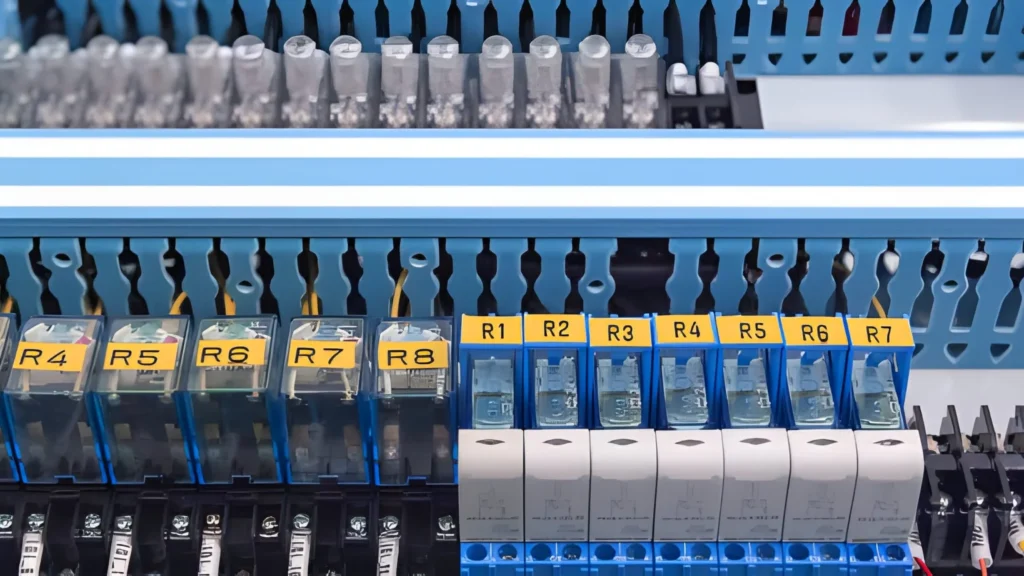
In industrial automation, power relays are commonly used to switch auxiliary loads, interface PLC outputs with field devices, and isolate control logic from the actual load circuit. In a machine tool or equipment cabinet, that may mean switching fans, pumps, heaters, valves, solenoids, or other controlled loads that exceed the direct output capability of the controller.
In power control and communication equipment, relays can also be used for source transfer, remote switching, redundancy logic, and controlled output management. These applications are less about the relay as an isolated component and more about whether its electrical life, coil behavior, and contact design match the operating pattern of the complete system.
For new energy and DC-related equipment, the application judgment becomes stricter. If the circuit involves battery systems, DC power routing, or high-current DC interruption, buyers should evaluate whether a dedicated DC relay path is needed instead of treating every high-current relay as interchangeable.
Explore our Selection Guide to find the right transformer solution for your specific voltage needs.
How to Choose the Right Power Relay
Most relay selection mistakes happen because buyers start with package size or nominal current, then only later discover issues with inrush current, coil mismatch, mounting limits, or contact life. A better approach is to begin with the load itself: what you are switching, how often it switches, whether it is AC or DC, and what happens at startup.
Selection checklist
What to check
Why it matters
Common mistake
Better question for the supplier
Load type
Resistive, inductive, motor, heater, and DC loads behave differently
Assuming one current rating covers every application
What rating applies to my actual load type?
Inrush current
Startup current can be far higher than running current
Choosing only by steady-state current
What is the relay’s margin for inrush conditions?
Coil voltage
The relay must match the control circuit
Matching contact rating but ignoring coil side
Is the coil available for my control voltage?
Mounting method
PCB and panel integration have different limits
Treating all relays as drop-in replacements
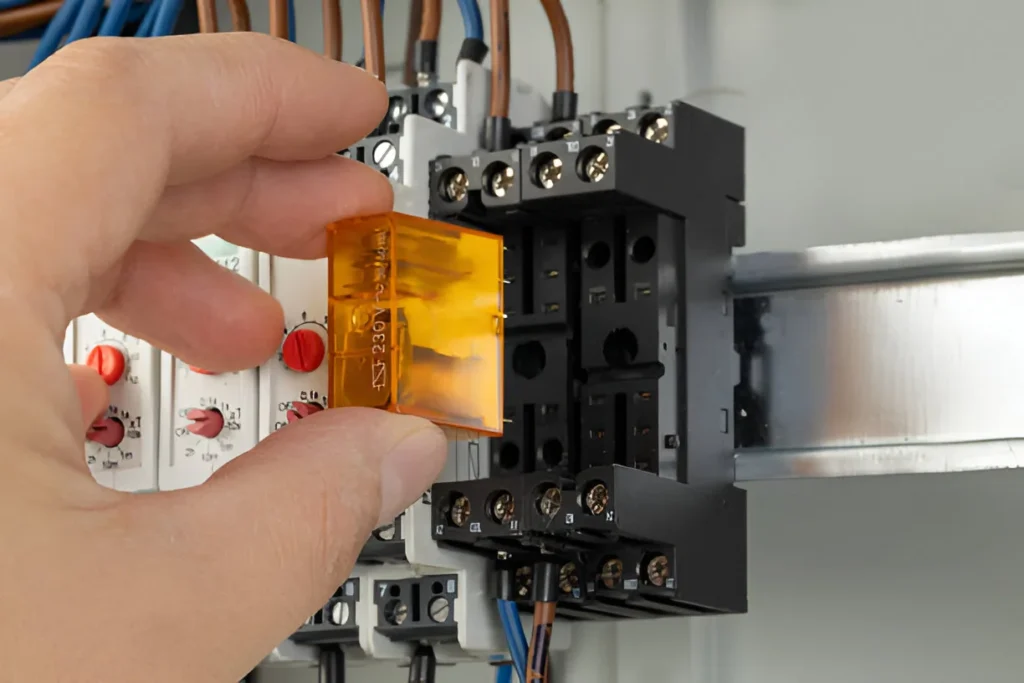
Is this model intended for PCB or system wiring?
Operating environment
Heat, vibration, dust, and duty cycle affect life
Ignoring cabinet temperature and switching frequency
What conditions reduce relay life in this model?
This is where terms like relay power supply, power relay pcb, and high power relay should be interpreted in context, not as isolated keywords. A relay that works well on a PCB in a Small Relays control board may not be the right option for a field-wired industrial load, while a larger relay may create unnecessary cost or space pressure if the duty is actually moderate.
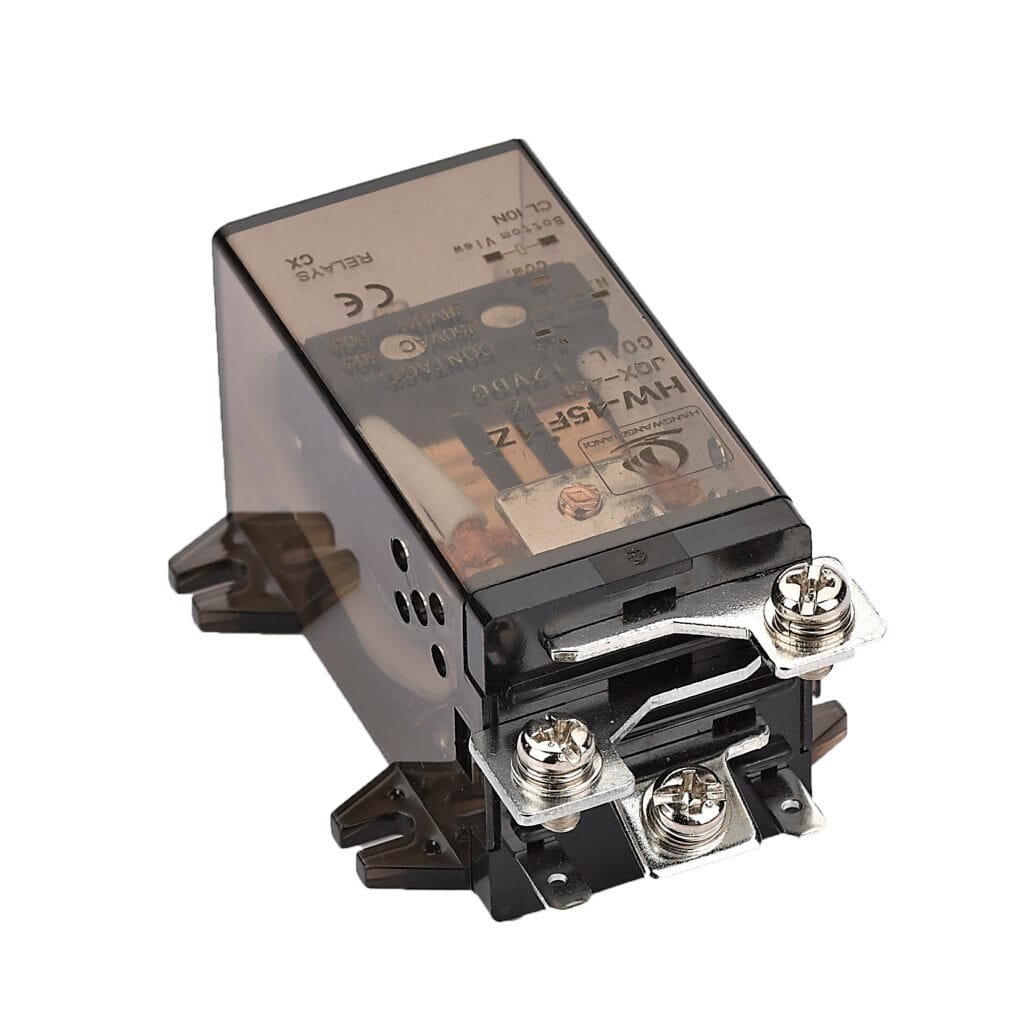
If your design needs a board-mounted switching option with a defined contact form, it can be useful to check a specific example such as the HW-40F-2Z power relay against your coil, footprint, and load assumptions before moving to sample or RFQ stage. That kind of review is more useful than choosing by appearance or relay family name alone.
How to Evaluate a Power Relay Manufacturer
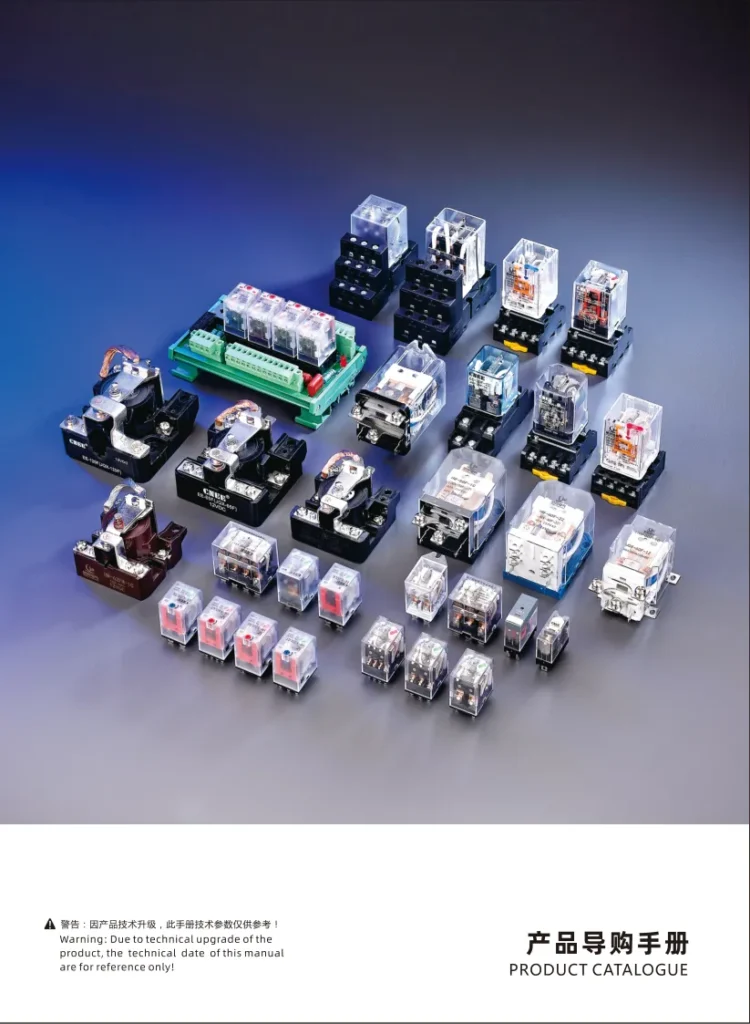
Once the relay type is roughly clear, the next step is not “who is cheapest” but “who is most likely to deliver the right model consistently.” A qualified power relay manufacturer should be able to show a relevant product range, explain application boundaries, support export-facing communication, and align with OEM or bulk procurement requirements.
For overseas buyers, manufacturer evaluation often includes more than product data. You may need to check whether the supplier can support customization, white label or private label requests, stable batch consistency, sample coordination, and communication that makes technical comparison easier across sourcing teams, engineers, and purchasing staff.
Supplier review points
Check item
Why buyers use it
What buyers often miss
Product range
Shows whether the supplier can support adjacent use cases
A narrow catalog may limit future redesign options
Engineering communication
Helps avoid wrong model selection
A fast quote is not the same as technical support
Export capability
Matters for overseas orders and documentation
Lead time and paperwork can affect total sourcing cost
OEM / ODM support
Important for branded or customized projects
Not every supplier handles private label smoothly
Batch consistency
Critical for repeat orders
Sample performance does not guarantee batch stability
For buyers comparing suppliers, manufacturers, wholesalers, distributors, or exporters in China, this section is often where the article naturally shifts from information gathering to commercial evaluation. If you are reviewing options for OEM, bulk sourcing, or export projects, it helps to confirm the load profile, coil requirement, mounting structure, and customization scope before requesting a final quotation.
What Affects power relay manufacturer Price
Searches for power relay price often assume pricing is mainly a factory markup issue, but the bigger drivers are usually technical and commercial variables. Contact rating, DC versus AC duty, material choices, certification requirements, order volume, customization, packaging, and export handling can all change the real sourcing cost.
A low quoted price may look attractive until you account for redesign risk, mismatch with the real load, shortened service life, or inconsistent batch performance. For B2B procurement, the better question is not “What is the lowest price?” but “What total cost and risk does this relay create in production and field use?”
That is especially true when comparing standard products with OEM or ODM requests. Once you add custom coil options, specific terminals, labeling, white label packaging, or project-based documentation, the best supplier is usually the one that keeps the sourcing process accurate and repeatable, not simply the one with the lowest initial number.
Common Buying Mistakes
One common mistake is treating all power relays as interchangeable if the size looks similar. In reality, similar-looking relays may differ in contact form, load suitability, PCB integration limits, and expected life under inductive or DC loads.
Another frequent issue is using a PCB relay for a duty that really belongs to a heavier system-level relay or contactor. This can happen when buyers focus on compact design first and only later discover that field wiring, heat, inrush, or switching frequency push the application beyond what the original relay structure handles well.
A third mistake is evaluating a supplier only by catalog coverage or price. For long-term sourcing, especially in export, wholesale, distributor, or OEM programs, the more useful test is whether the power relay manufacturer supplier can help reduce model mismatch, replacement risk, and communication delays across repeated orders.
Compare your load type, coil voltage, and mounting requirements with our power relay range before requesting a final quote.
FAQ
What does a power relay mean?
A power relay is generally a relay used to switch higher electrical loads than a signal relay in equipment, control, or power circuits. The exact load level depends on the relay design, contact structure, and whether the application is AC or DC.
How is a power relay different from a contactor?
A power relay is often more compact and easier to integrate into equipment or control assemblies, while a contactor is usually better suited to heavier switching duty and more demanding power applications. The right choice depends on actual load behavior, not just rated current on paper.
What affects power relay price the most?
Power Relay Manufacturer price is influenced by current rating, load type, DC switching requirements, materials, certification, order volume, and customization scope. In B2B sourcing, the total cost also includes consistency, documentation, and the risk of wrong selection.
Can a PCB power relay handle industrial loads?
Sometimes yes, but only if the real load, inrush, heat, and board layout are within the relay’s intended use. A PCB-mounted relay should not be chosen purely for compactness if the application behaves more like a field-wired industrial switching task.
When should I choose a high power DC relay?
You should consider a high power DC relay when the circuit involves DC source switching, battery systems, storage systems, or other applications where DC interruption is a core requirement. DC switching usually needs more careful evaluation than standard AC control loads.
What should buyers check before contacting a power relay manufacturer?
Start with load type, current profile, coil voltage, mounting method, switching frequency, and environmental conditions. Then compare whether the supplier’s product range, export support, and OEM or batch supply capability actually match your sourcing plan.
If you’re here, you probably already know that an intermediate relay 5A is one of the most common “workhorses” in control panels. But in the real world, B‑end buyers don’t just care about definitions—they want to know how to pick the right model, how to wire it properly, and where to use it without causing headaches down […]
In the vast world of industrial automation, Industrial Relay play an indispensable role in controlling electrical circuits and ensuring smooth operations. If you’re involved in manufacturing, maintenance, or system design, you might have wondered: what exactly distinguishes an industrial control relay from a standard industrial relay? These terms might seem interchangeable, but they embody important […]
Learn how to choose a power relay socket by relay compatibility, pin layout, mounting method, and maintenance needs for industrial control and B2B sourcing.
We use cookies to enhance your browsing experience, serve personalised ads or content, and analyse our traffic. By clicking "Accept All", you consent to our use of cookies.
Get a Free Quote
Your email information is completely secure and will not be disclosed to third parties for any reason.
Interested In Our Relay Products?
Get the latest product brochures and technical data.