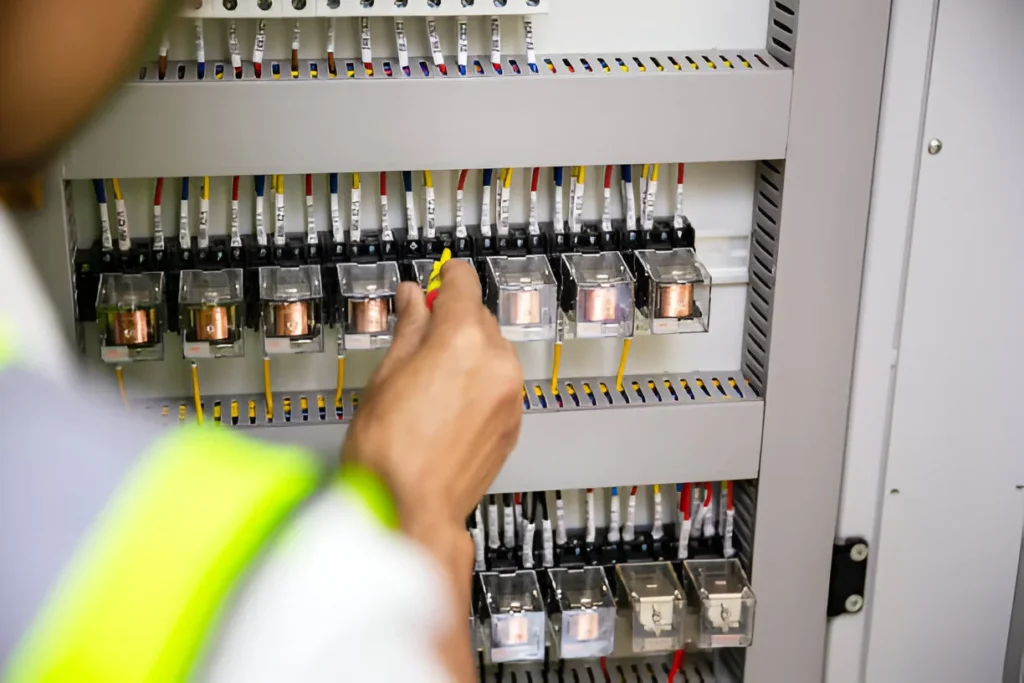
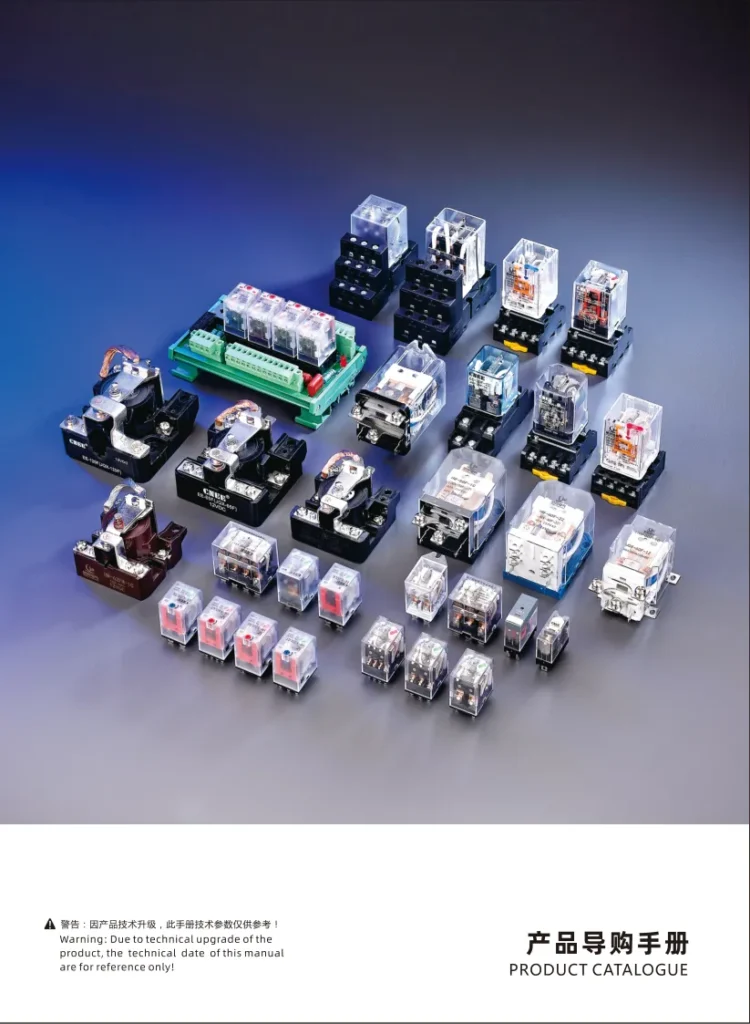
Power relay are essential components in industrial automation and electrical control systems. They enable efficient and reliable switching control in complex power applications, ensuring device safety and improved automation levels. Whether in factory production lines, rail transit, or large power distribution systems, power relays play a crucial role.
However, a single power relay cannot meet all control needs alone. Auxiliary components are key to enhancing relay functions and ensuring reliable operation. This article thoroughly reviews common auxiliary components of power relays—from auxiliary relays, relay sockets, auxiliary contacts, to protection diodes and interface modules—helping you understand the role and selection of these critical accessories.
Definition and Major Applications of Power Relay
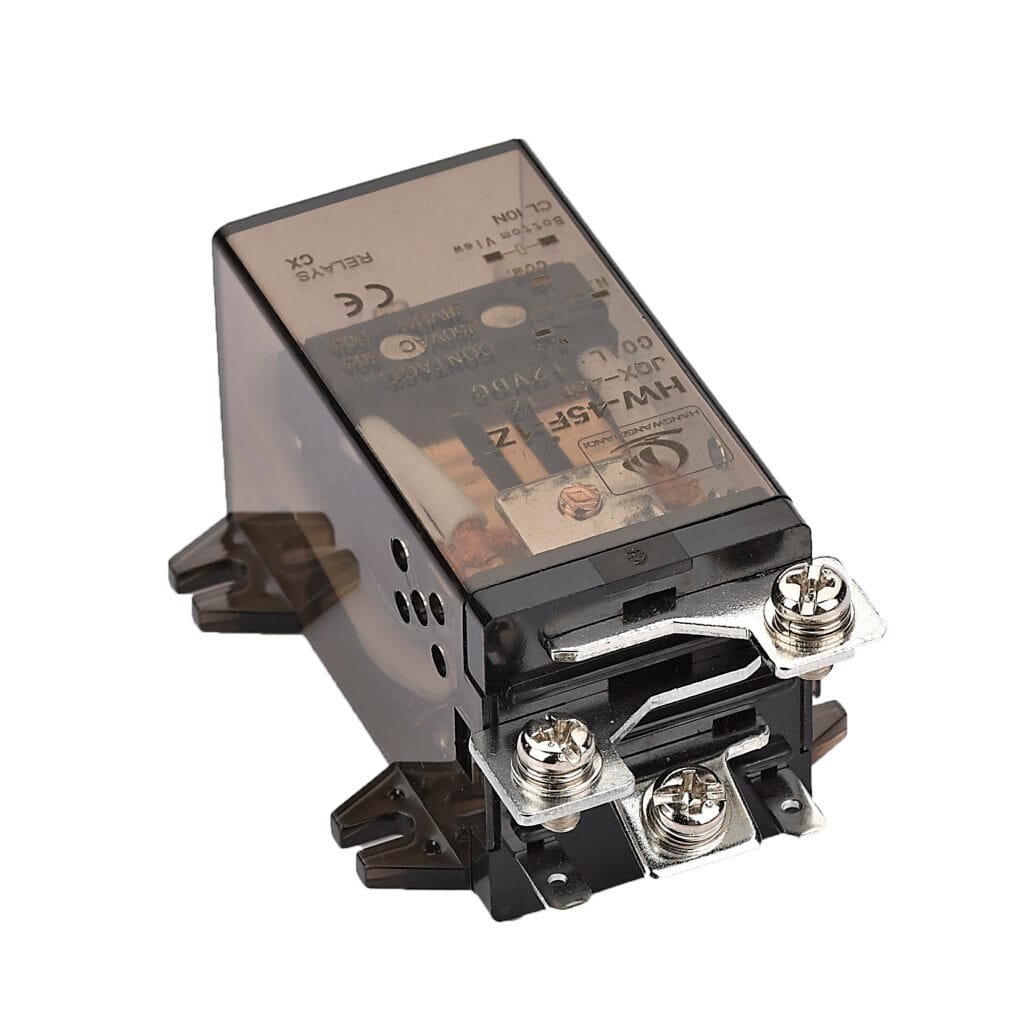
A HW-38F-3Z-P power relay is an electrical switch capable of handling high current loads, typically used to control high-power circuits. Its main function is to achieve remote control and automatic switching in electrical control systems to ensure safe and stable operation.
HW-38F-3Z-P Power Relay 40A, 3 Contacts, PCB Mountable
Application Area
Typical Equipment/System
Function Description
Industrial Automation
Production line controllers, robots
Controls production process for safety and efficiency
Power Distribution
Substations, distribution cabinets
Circuit protection and automatic switching
Rail Transit
Train control systems
Provides safe and reliable electrical switching
HVAC Systems
Air conditioning, ventilation
Automates temperature control for energy savings
Medical Equipment
Critical motors and pumps
Ensures stable operation of medical devices
Common Auxiliary Components of Power Relays
Auxiliary components are essential to maximize the function of power relays. They extend control signals, protect electrical circuits, and facilitate easier installation.
1️⃣Auxiliary Relay
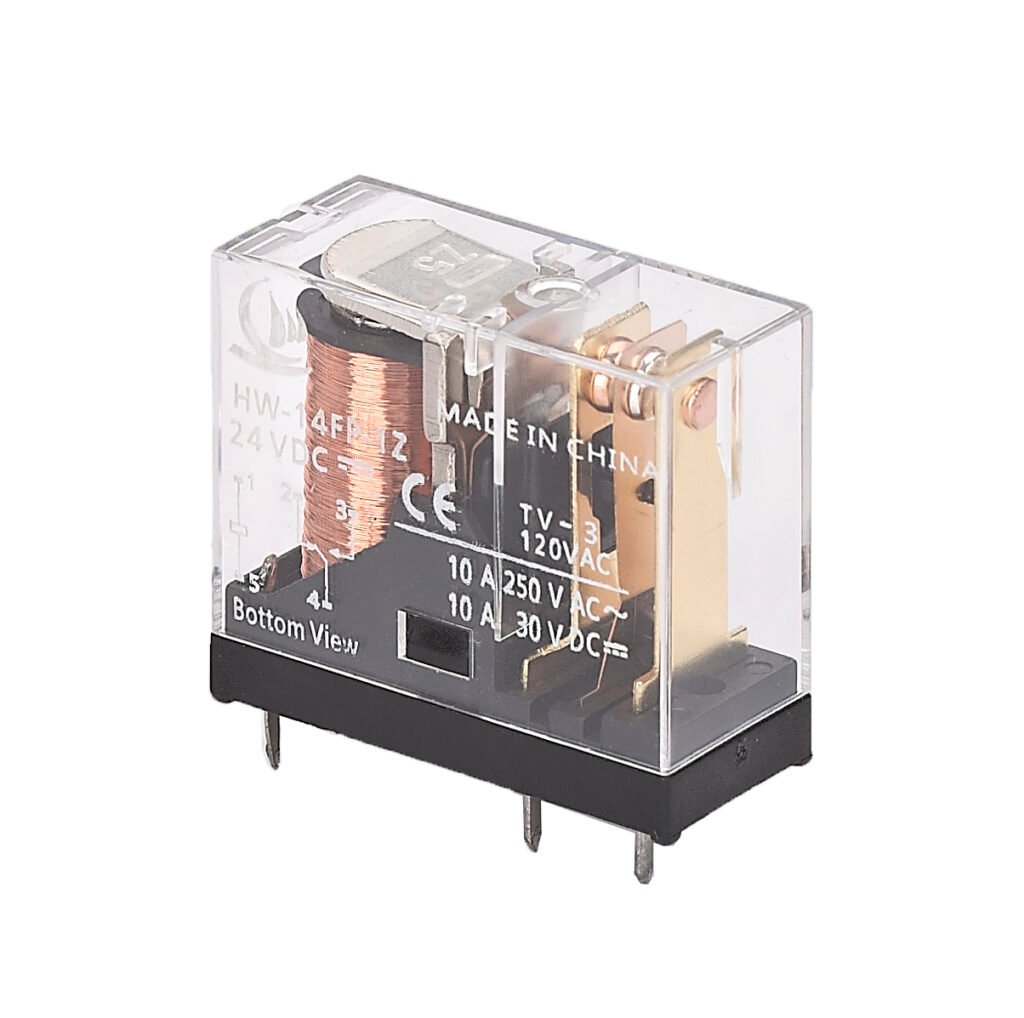
Auxiliary relay act as “helpers” in power relay systems, mainly used for signal amplification and control circuit transmission. They amplify or convert signals from the main relay, making complex control tasks simpler and more reliable.
Feature
Function
Typical Application
Compact and lightweight
Signal isolation and prevents excessive current on main relay
Industrial automation, mechatronics
High-speed response
Improves system control response time
Production line synchronization, emergency stop signaling
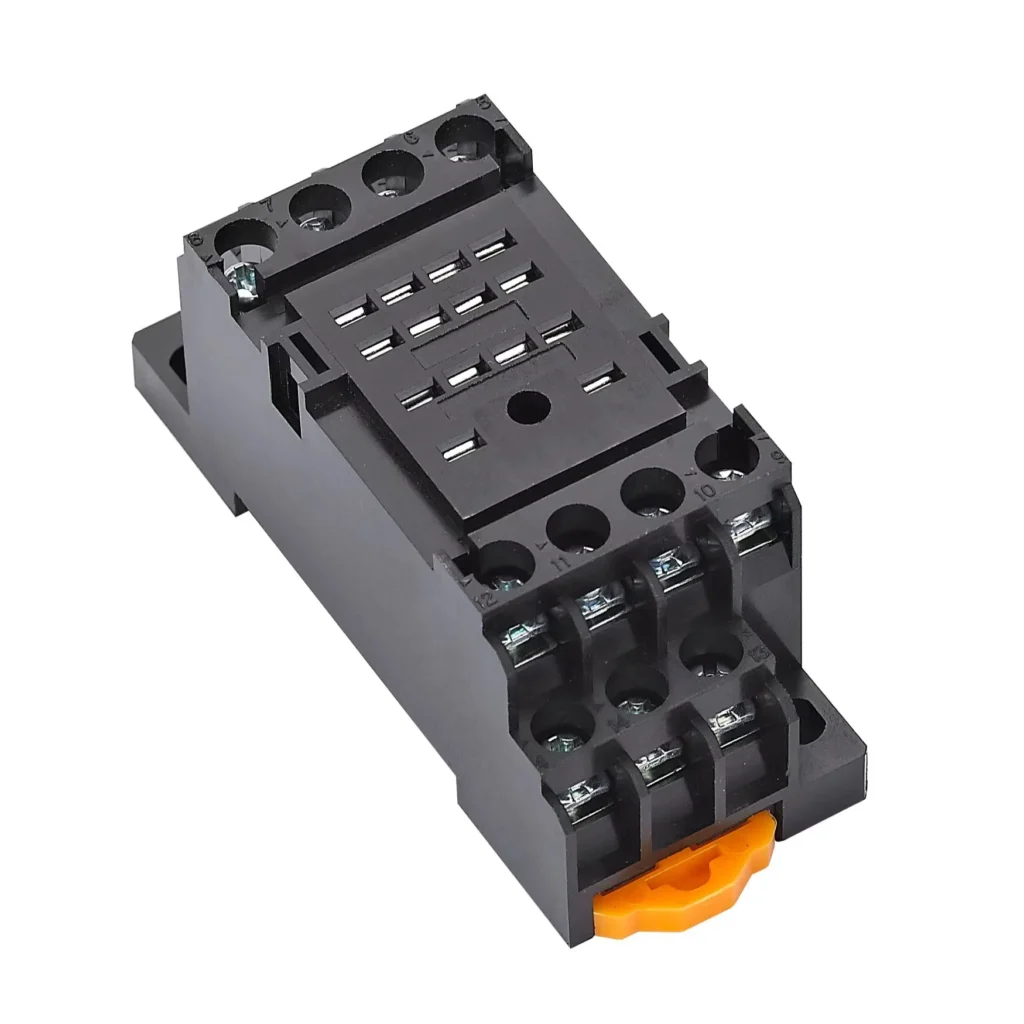
2️⃣Relay Socket & Base
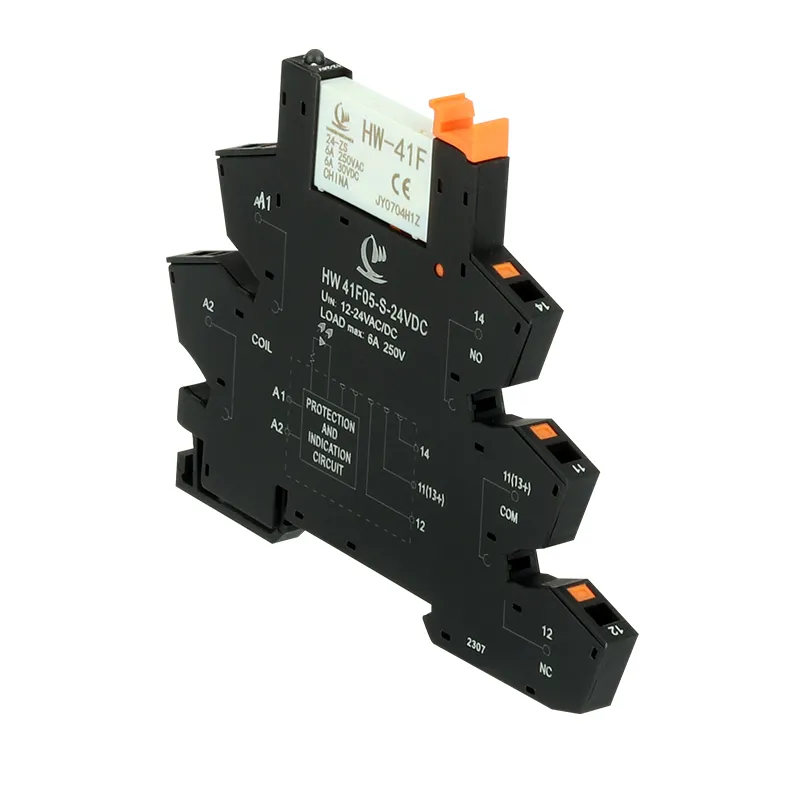
Relay sockets and bases connect relays to external circuits. Plug-in designs simplify installation and maintenance while reducing wiring errors that cause faults.
Type
Features
Suitable Application
Universal socket
Compatible with various relay models
Factory automation equipment, distribution boxes
Dustproof and waterproof base
Improves environmental adaptability and safety
Outdoor and harsh environments
3️⃣Auxiliary Contact
Auxiliary contacts provide additional control signal outputs. Compared to main contacts, they assist with control and status feedback and are common in control circuits and indicator systems.
Comparison
Main Contact
Auxiliary Contact
Primary Use
Directly switch high-current loads
Pass control signals or status feedback
Current Rating
High
Low
Location
Main part of relay
Auxiliary part
Contact us for tailored solutions and technical support.
Our power relay focus on every detail – to enhance the reliability and safety of your projects!
Relays are often paired with DIN rail-mounted modules for signal conversion, isolation, and protection, making systems flexible and safer.
Module Type
Function
Application Scenario
DIN rail modules
Easy installation, unified control interface
Distribution boxes, control cabinets
Isolation interface modules
Electrical signal isolation to ensure system safety
Automation systems with high signal integrity requirements
5️⃣Diode & Snubber Module
These protect relay coils from voltage spikes, preventing damage to relays and associated circuits. They ensure smooth coil turn-off and reduce electrical interference.
Protective Component
Function
Typical Setup
Diode
Prevent coil reverse voltage damage
Diode connected parallel to relay coil
Snubber Module
Suppress current spikes and electromagnetic interference
Provide safe and reliable electrical connections between relays, power sources, and loads, improving installation efficiency and safety.
Component
Function
Suitable Environment
Terminal block
Reliable electrical connection points
Internal wiring of control cabinets
Busbar
High current distribution and centralized connections
High current power distribution scenarios
7️⃣Relay Cover & Label
Covers protect relays from dust and mechanical damage, ensuring safe operation. Labels clearly display relay models and wiring info for easy onsite maintenance.
Auxiliary Component Selection and Installation Tips
Selecting the right auxiliary components ensures long-term stable operation of power relay systems. The table below summarizes key selection factors:
Selection Criteria
Description
Recommendation
Voltage Rating
Match component voltage with main circuit
Strictly according to actual circuit requirements
Contact Configuration
Choose normally open, normally closed, or changeover contacts based on control needs
Configure per control logic
Load Capacity
Prevent damage due to overload
Choose specs 20%-30% above actual load
Electrical Compatibility
Avoid faults caused by parameter mismatches
Prefer same-brand or standardized series
Reliability and Lifespan
High-quality components ensure durable operation
Select certified high-quality brands
During installation, ensure wiring firm to avoid looseness; arrange auxiliary parts logically for easy future maintenance. Proper selection and installation not only improve system stability but also reduce maintenance costs.
Power relay roles go far beyond simple switching. Their auxiliary components greatly enrich and guarantee the entire system’s safety, convenience, and efficiency. Whether you face complex industrial automation or large-scale power distribution, proper selection and application of auxiliary components are key to achieving excellent performance. As a professional relay manufacturer, we offer a wide range of high-quality power relays and auxiliary components to meet diverse customer and application needs.
FAQ
When should auxiliary relays be used?
When main relay signals are insufficient or complex control signals are required.
How many types of relay sockets are there and how to choose?
Common types include plug-in and fixed; choice depends on environment and maintenance needs.
Can auxiliary contacts replace main contacts?
No, they differ in electrical parameters and function; not interchangeable.
How to install diode protection on a relay?
Connect diode parallel to relay coil with correct polarity.
If you’re here, you probably already know that an intermediate relay 5A is one of the most common “workhorses” in control panels. But in the real world, B‑end buyers don’t just care about definitions—they want to know how to pick the right model, how to wire it properly, and where to use it without causing headaches down […]
When someone types “Power Relay 40A, Dual Contacts, Rail Mount”, they not trying to write a PhD thesis. They want a relay that can survive real‑world loads, fit in a crowded control cabinet, and be easy enough for the wiring team not to swear at it. HW‑40F‑2Z sits exactly in that spot: a 40A power […]
In modern industrial automation systems, industrial relay contact serve as essential bridges for electrical control. At the heart of every relay are its contacts-the components responsible for making or breaking the circuit. The performance and reliability of these contacts directly impact the stability and safety of the entire system. Many relay failures can be traced […]
We use cookies to enhance your browsing experience, serve personalised ads or content, and analyse our traffic. By clicking "Accept All", you consent to our use of cookies.
Get a Free Quote
Your email information is completely secure and will not be disclosed to third parties for any reason.
Interested In Our Relay Products?
Get the latest product brochures and technical data.