In today’s world of industrial automation and control systems, power relay play an irreplaceable role. In particular, the power relay is responsible for switching high current and high voltage circuits, ensuring the safe startup, operation, and protection of equipment.
For manufacturers and B2B customers, choosing the right core components and auxiliary parts of a power relay directly affects the device’s performance and lifespan while impacting overall system stability and safety.
With so many types of power relays on the market, how can you make the right choice? This article dives into practical selection strategies for power relay core components and auxiliary parts, helping you make wise purchasing decisions.
Power Relay Basics
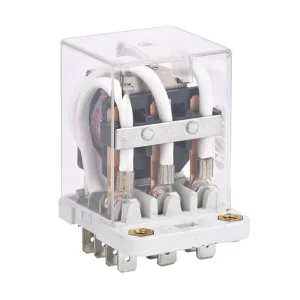
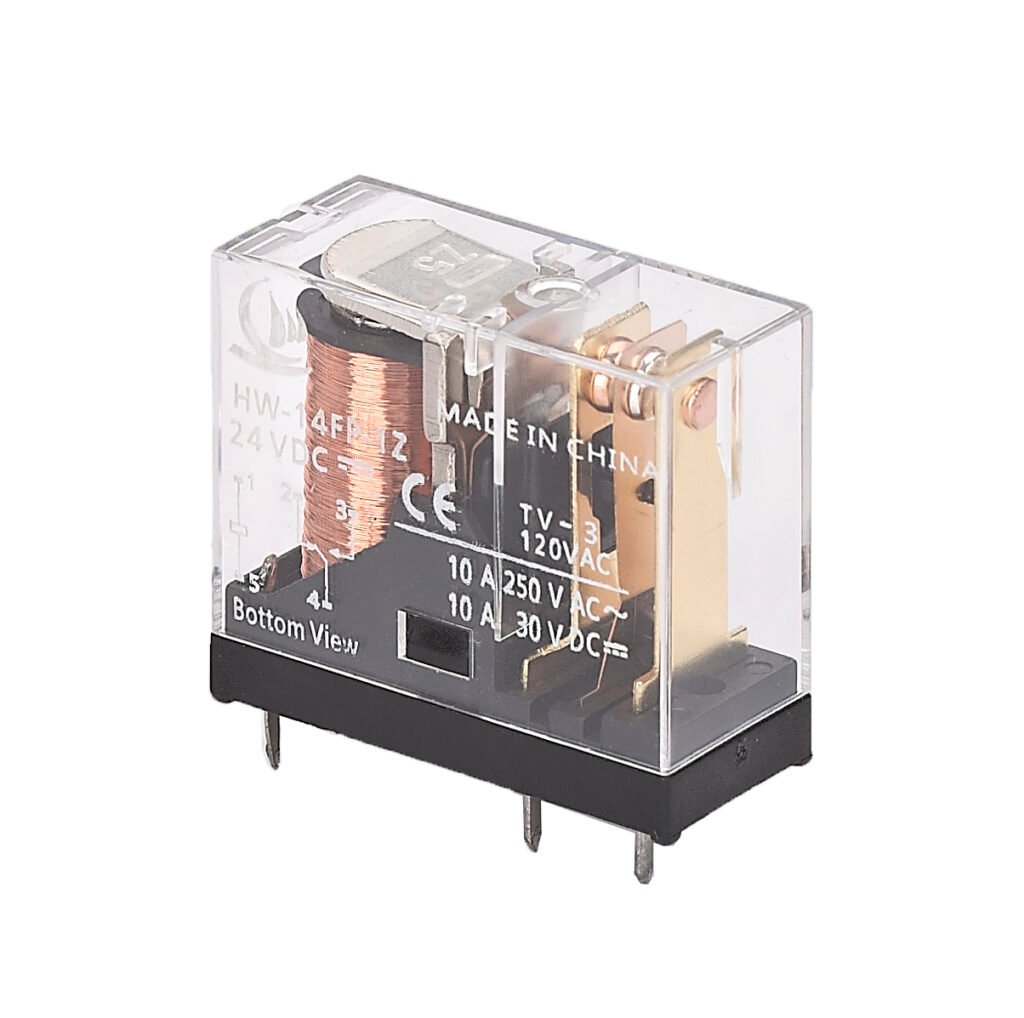
A power relay is an electrical switch that uses a low-power signal to control a high-power circuit. Its main principle is using an electromagnetic coil to generate a magnetic field, thereby attracting or releasing the armature and opening or closing contacts to connect or disconnect large currents.
Main Feature
Description
Control Function
Uses a low-voltage signal to control high-voltage, high-current circuits
Typical Uses
Industrial motor control, HVAC, automation devices, high-power appliances
Key Advantages
Electrical isolation, high load capacity, fast response
Power relays are widely used in industrial automation. For example, they are found in motor control circuits for starting, stopping, and reversing motors, as well as in relay protection, sequence control, and safety interlocks.
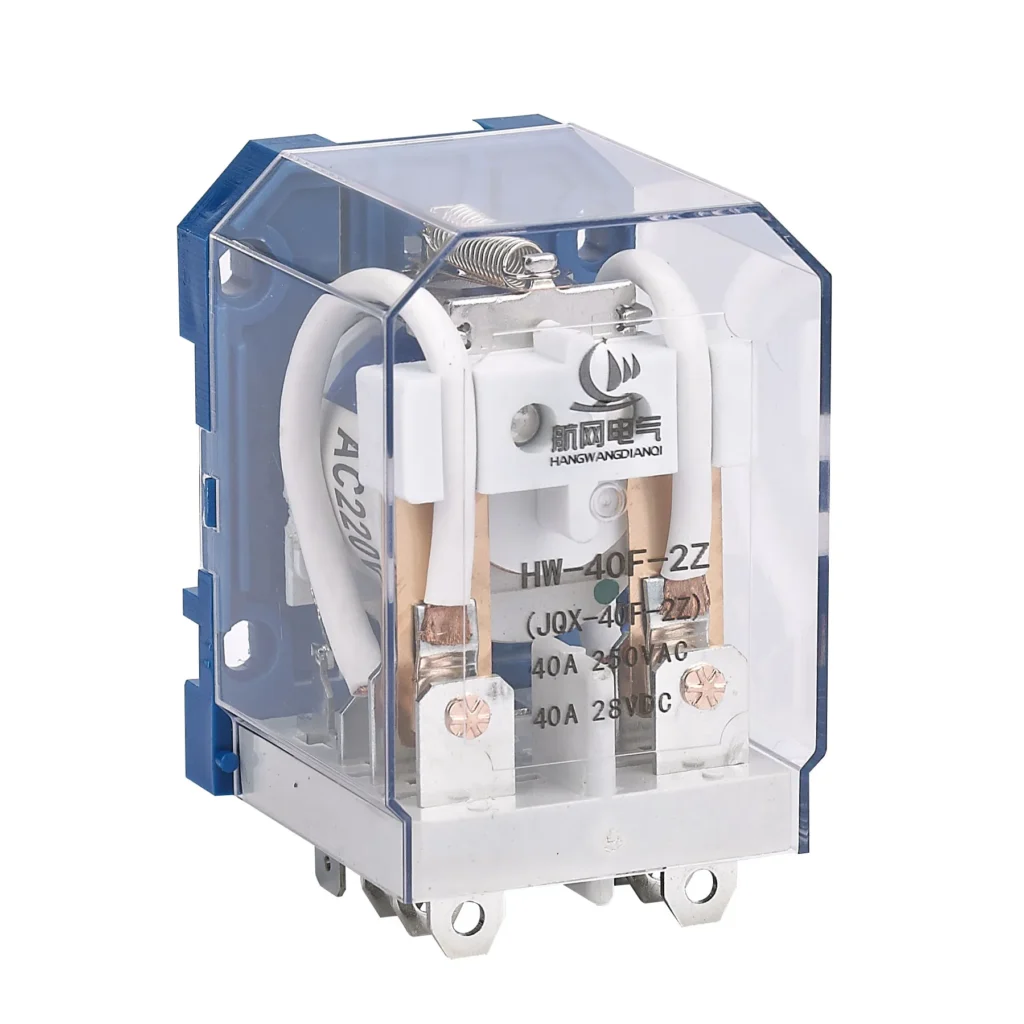
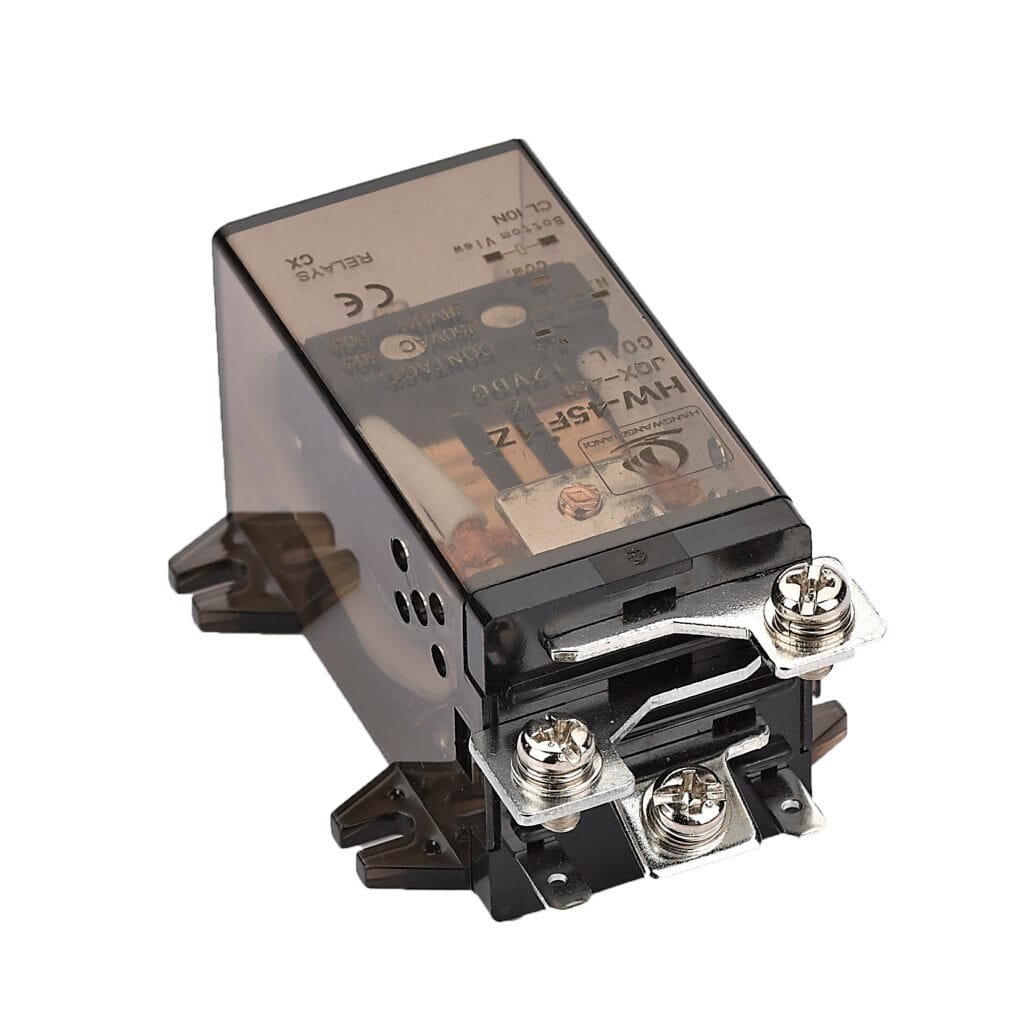
HW-40F-2Z Power Relay 40A, Dual Contacts, Rail Mount
Key Points for Selecting Core Components
When choosing the core components of a power relay, pay attention to these key parameters:
1️⃣Coil
The rated voltage and current of the coil directly determine control circuit design. Select a coil voltage that matches your control system and factor in energy consumption and heat generation. Coils made with heat-resistant and voltage-tolerant materials boost reliability.
Parameter
Description
Selection Advice
Rated Voltage
Operating voltage of the coil
Match with control system voltage
Power Consumption
Actual current drawn
Prefer models with low power draw
Temperature Range
Coil’s heat resistance
Choose models for high-temp areas
2️⃣Contact Material
Contacts bear the relay’s load current—the material affects lifespan and contact resistance. Silver alloys, copper, and tungsten are common. Silver alloys have great conductivity and wear resistance, perfect for frequent switching. Copper is good for general use, while tungsten works well in high-temp or high-voltage environments.
Type
Characteristics
Ideal for
Silver Alloy
Excellent conductivity, durable
High-frequency switching, high current
Copper
Low cost, good conductivity
Medium or low load applications
Tungsten
Stable at high temp/voltage
Heavy-duty or high-temperature use
3️⃣Contact Structure
Standard types include SPST, SPDT, and more. NO (normally open), NC (normally closed), and changeover contacts dictate your circuit options. Choose the right structure for the system’s switching needs.
4️⃣Switching Capacity
The contacts must withstand the maximum load current and voltage. Select a relay with a rated switching capacity greater than your actual application for safety margin.
Key Points for Selecting Auxiliary Parts
Auxiliary parts are essential for boosting relay performance, increasing lifespan, and improving safety.
1️⃣Arc Suppression
When switching high currents, contacts can arc and burn. Arc suppression methods extend relay life and improve safety.
Arc Suppression
Key Feature
Application Advice
Magnetic Blowout
Uses magnetic field to stretch arc
Good for high DC current
RC Snubber Circuit
Reduces voltage spikes
Used for typical AC loads
Alloy Arc Chutes
Mechanically isolate arc
Frequent switching environments
2️⃣Isolation System
Maintains electrical separation between control and load circuits. This ensures operator safety and system reliability.
3️⃣Mounting Accessories
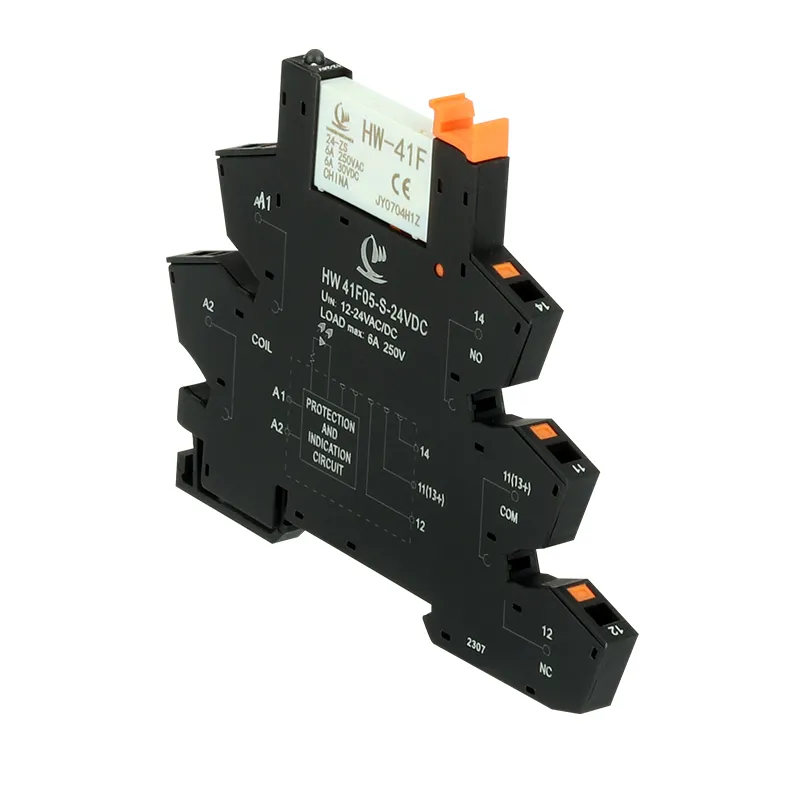
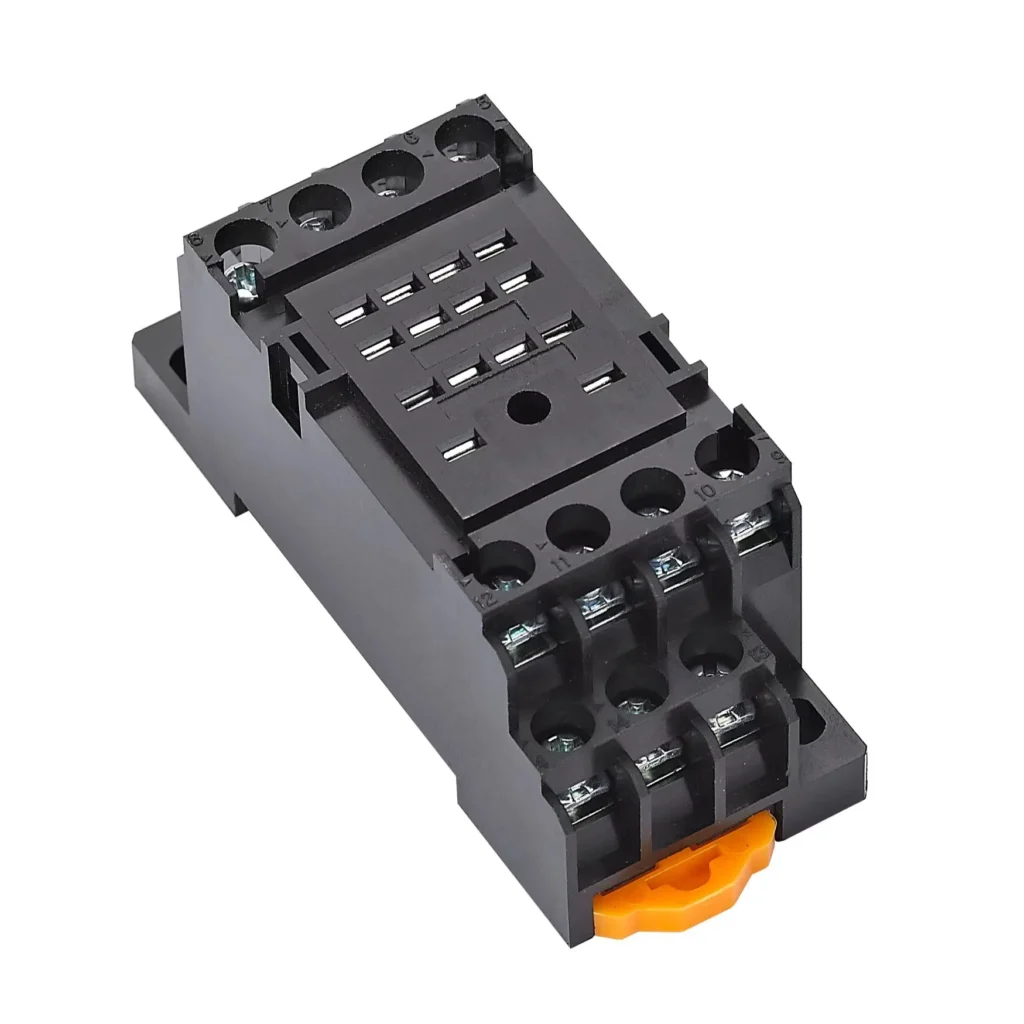
Choose the right mounting type for your use—DIN rail, PCB plug-in, or socket base—for fast maintenance and replacement.
4️⃣Indicator & Test Button
Integrated indicators or test buttons make checking the relay’s status easier, improving maintenance efficiency.
Choose the right power relay components for reliable, long-lasting performance. Contact us today for tailored solutions!
Thanks to their high load capacity, power relays are widely used in many sectors. Here are common applications and selection tips:
Industry
Application Example
Selection Focus
Industrial Automation
Motor control, sequence switching
High switching capacity, heat resistance
HVAC
Air conditioning, water heaters
Interference resistance
Inverters
Photovoltaic/UPS systems
Frequent switching, energy saving
EV Charging
Electric vehicle chargers
PCB mounting, high current rating
For example, in EV charging stations, PCB-mounted power relays with magnetic arc suppression are often chosen to manage frequent high-current switching.
Common Selection Mistakes and Points of Attention
Selecting the wrong relay can result in poor performance or even safety hazards. Common mistakes include:
1. Ignoring environmental suitability, causing premature failure in hot, humid, or dusty places. Always select relays with a suitable IP rating and temperature range.
2. Choosing only by nominal current, without considering inrush current or load characteristics, can cause overload.
3. Underestimating lifespan and maintenance cycles, which may lead to frequent faults.
4. Neglecting relay testing and certification standards (UL, CE, RoHS, etc.), risking quality and compliance.
Conclusion & Procurement Advice
To select the best power relay core components and auxiliary parts, focus on:
👉Understand your load and choose a relay with the right switching capacity.
👉Match coil voltage with your control circuit.
👉Select the ideal contact material and structure for your environment.
👉Add effective arc suppression to extend life.
👉Prefer certified products with reliable after-sales support.
Make smart choices, and your systems will run more smoothly, with less downtime and lower maintenance costs. Need help figuring out the best power relay for your application? Contact us, and we’ll deliver a tailor-made solution!
FAQ
Q1: What is the difference between a power relay and a signal relay?
A power relay is designed to switch high current and high voltage loads, while a signal relay is made for small signals like sensors or communication devices.
Q2: How do I choose the right contact material?
If your application requires frequent switching and carries large currents, pick a silver alloy. Copper is fine for lower loads, and tungsten is best under harsh conditions.
Q3: Can I use a power relay without arc suppression?
Technically yes, but it will drastically reduce the relay’s lifespan and may cause safety risks. Arc suppression is highly recommended, especially for high-current loads.
Q4: Why do I need a relay with certifications like UL or CE?
Certifications guarantee that the relay meets international safety, quality, and environmental standards, helping you comply with regulations and reassure your customers.
Q5: What if my working environment is hot or dusty?
Select a relay with a higher IP rating and heat resistance. Always match the relay’s specs to your real environmental conditions.
Q6: How can I simplify maintenance?
Choose relays with built-in indicators and test buttons, and select mounting accessories like plug-in bases or DIN rails for easy replacement.
Miniature Relay are essential components in industrial automation. With their compact size, stable performance, and flexible installation, miniature relay are the preferred choice for modern automation system design. But with so many relay options on the market, how can you select the best one for your needs? In this article, we’ll guide you through the […]
In the vast world of industrial automation, Industrial Relay play an indispensable role in controlling electrical circuits and ensuring smooth operations. If you’re involved in manufacturing, maintenance, or system design, you might have wondered: what exactly distinguishes an industrial control relay from a standard industrial relay? These terms might seem interchangeable, but they embody important […]
Choosing the right coil voltage for a power relay switch can feel tricky, especially when you are designing industrial control panels, OEM equipment, or automation systems for demanding B2B projects. You not only need the relay to pull in reliably, you also have to think about supply tolerance, safety, heat, and long‑term reliability. This guide […]
We use cookies to enhance your browsing experience, serve personalised ads or content, and analyse our traffic. By clicking "Accept All", you consent to our use of cookies.
Get a Free Quote
Your email information is completely secure and will not be disclosed to third parties for any reason.
Interested In Our Relay Products?
Get the latest product brochures and technical data.