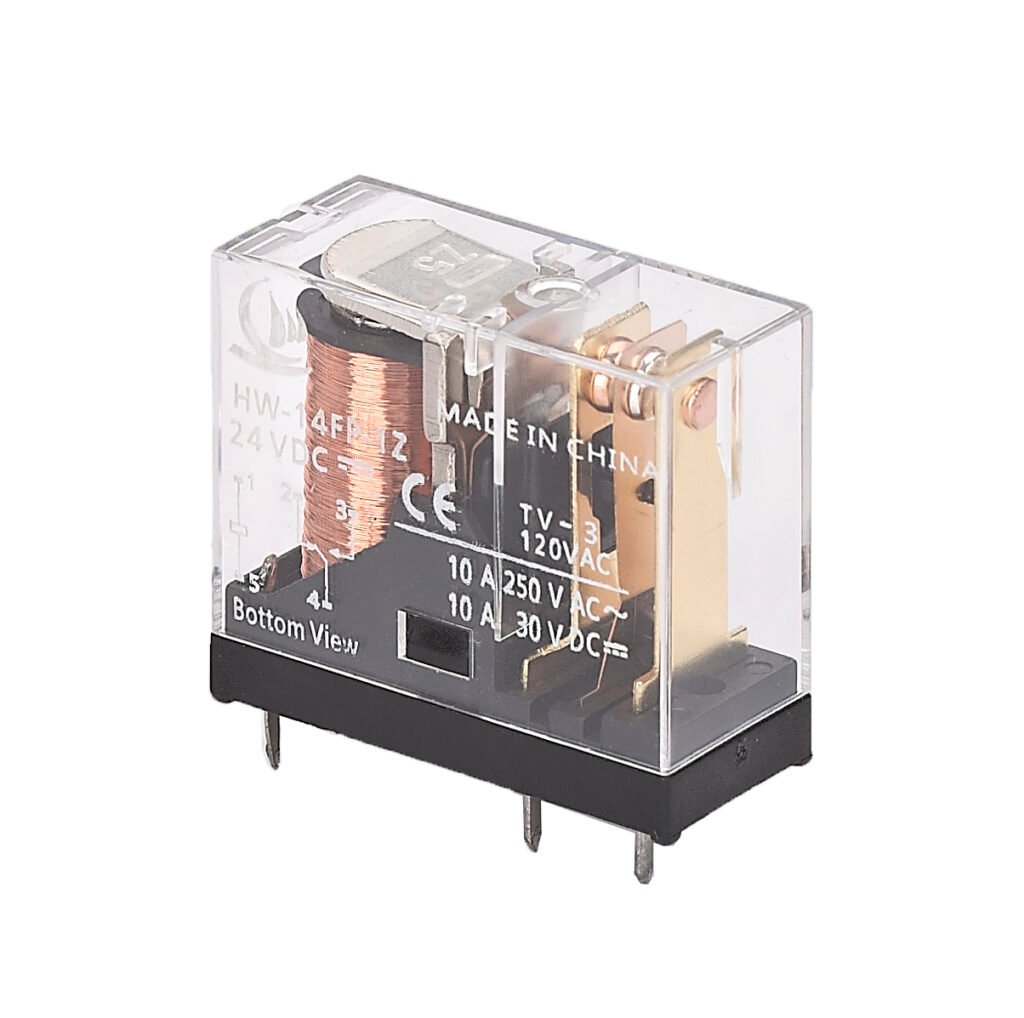
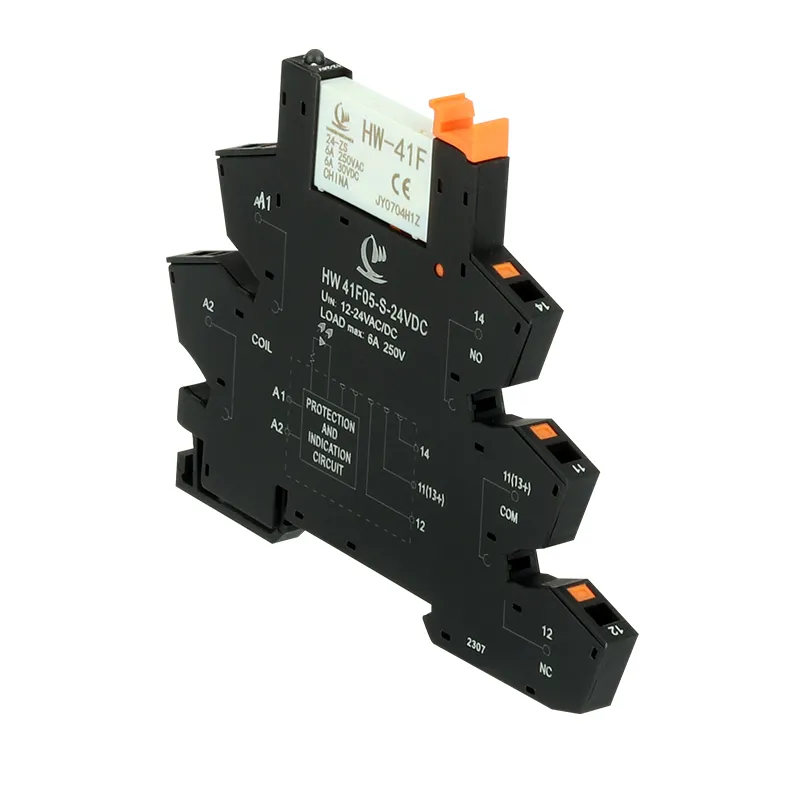
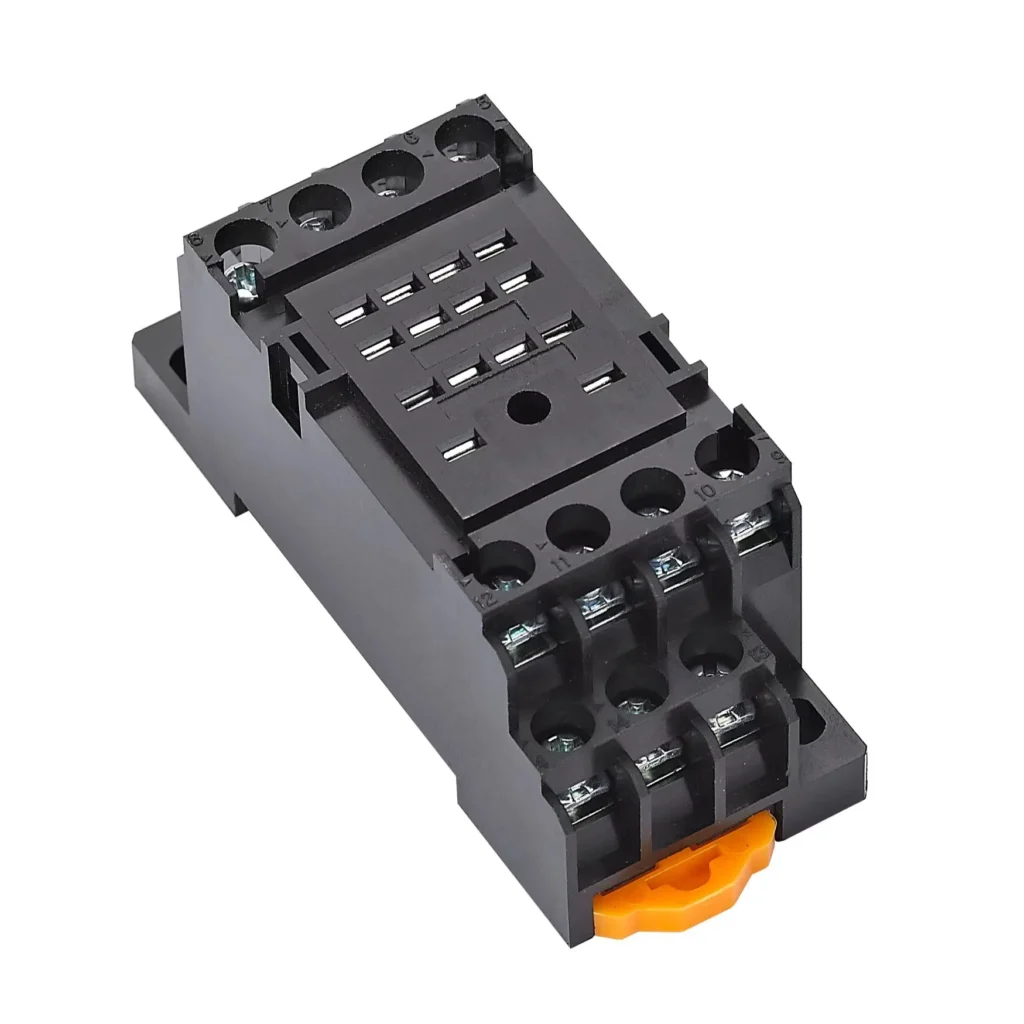
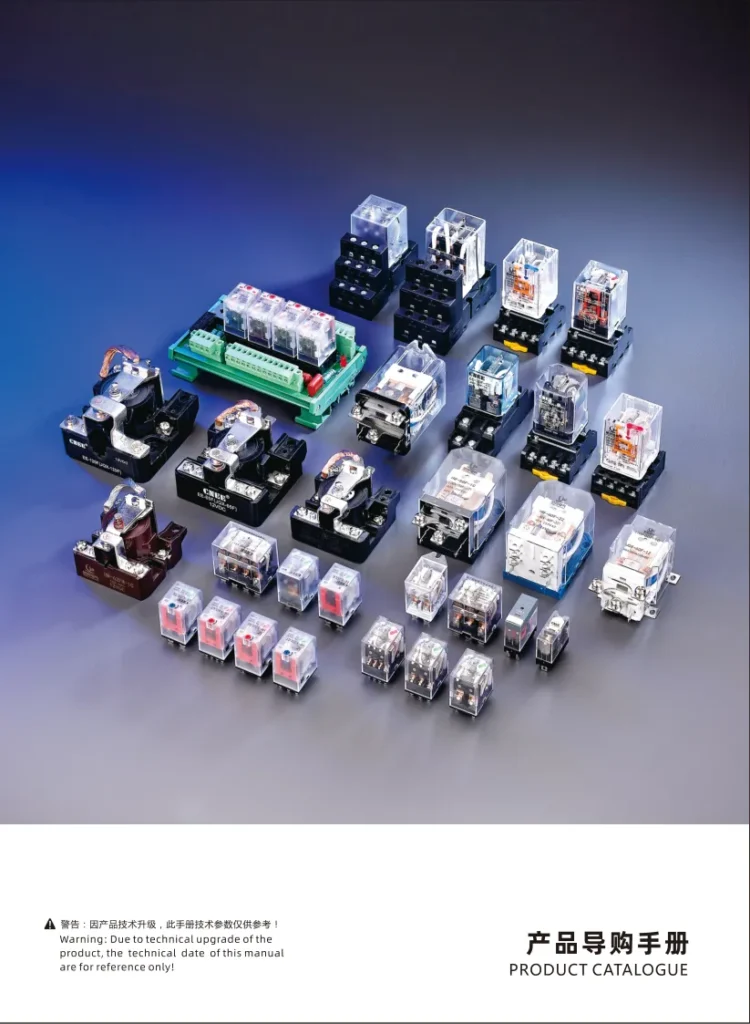
A power relay socket matters because the wrong base can create wiring errors, poor contact matching, difficult maintenance, or avoidable replacement problems even when the relay itself is correct. For industrial buyers, panel builders, and OEM sourcing teams, the real task is not just finding a socket that looks similar, but confirming whether the relay, socket, mounting method, and load scenario actually match.
If you are comparing relay accessories for industrial control, this article will help you judge what a power relay socket is, how it differs from a timer relay base, when a socket-based setup makes sense, and what to confirm before RFQ. That matters in export, wholesale, OEM, and bulk procurement projects because a mismatch in pin layout, mounting style, or service method can delay assembly and increase replacement risk later.
What Is a Power Relay Socket?
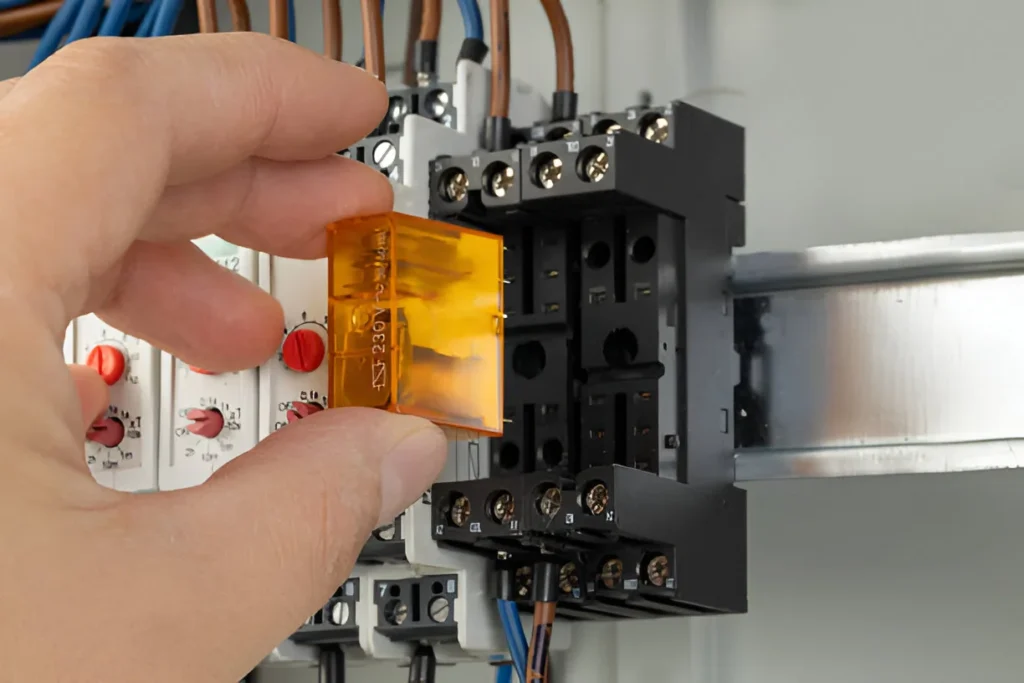
A power relay socket is the base or holder that allows a compatible relay to be installed, connected, replaced, and serviced more easily in a control system. It is not just a mounting accessory, because the socket also affects wiring layout, maintenance speed, replacement accuracy, and whether the relay can be used safely in the intended panel or machine.
In real purchasing language, buyers often mix up relay, socket, base, holder, and relay with socket. That creates confusion during sourcing, especially when the request includes terms like “power socket relay,” “relay for power sockets,” or “8 pin power timer relay socket base holder,” even though those terms may refer to different product structures or applications.
Whether it is truly compatible with the relay model, not just similar in shape.
Relay with socket
A relay sold together with a matching base
Whether the bundled pair fits your wiring and maintenance plan.
Timer relay socket
A socket intended for a timer relay structure
Do not assume it can replace a power relay socket with the same pin count.
How Power Relay Sockets Are Classified
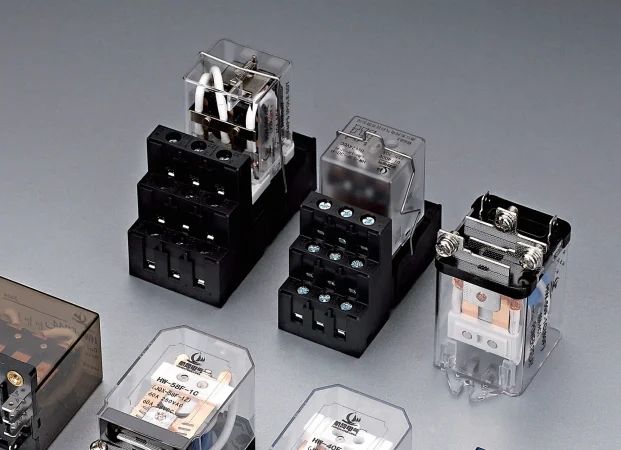
Power relay sockets are usually classified by pin configuration, terminal structure, mounting method, and the relay family they are designed to match. For selection work, these factors matter more than generic product names because they affect installation time, wiring access, replacement convenience, and long-term serviceability.
For example, a socket may look acceptable at first glance because the pin count seems right, but that does not guarantee the internal pin mapping or body fit is correct. In industrial control panels, machine tools, and system cabinets, the wrong socket can lead to misalignment, unstable assembly, or unnecessary rewiring during maintenance.
Classification factor
What it affects
Why it matters in B2B selection
Pin configuration
Physical and electrical fit
Similar pin counts do not always mean true compatibility.
Terminal style
How the wiring is connected
It changes assembly speed and field service convenience.
Mounting type
Panel layout and installation method
DIN rail and panel mounting create different space and service demands.
Relay family match
Whether the socket fits the relay structure
A generic request may not be enough for OEM or export orders.
Insulation and material
Environmental suitability
Heat, spacing, and durability affect industrial use and replacement intervals.
Pin Configuration and Contact Layout
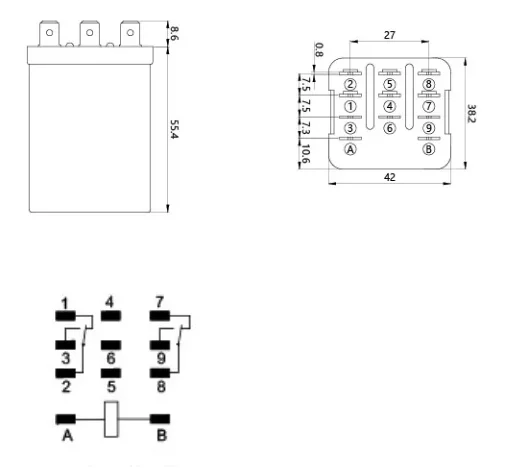
Pin count is only the starting point. A buyer who searches for an 8 pin base holder still needs to confirm the actual contact arrangement, coil position, mechanical keying, and whether the relay family uses the same base logic.
This is one of the biggest sourcing mistakes in the relay accessory market. A supplier, manufacturer, or distributor may receive a basic “8 pin socket” inquiry, but without model confirmation, the delivered base may not match the intended relay or application.
Mounting and Wiring Style
Mounting style influences more than installation preference. It also affects how quickly technicians can wire the panel, how easily a relay can be replaced in service, and whether the assembly remains manageable in a dense cabinet layout.
For OEM equipment, panel builders, and factory-based batch production, consistent mounting and terminal access can reduce assembly variation across projects. That is why procurement teams should evaluate the socket as part of the full control solution, not as a low-value accessory chosen only by price.
When a Socket-Based Relay Setup Makes Sense
A relay plus socket arrangement usually makes more sense when the relay may need to be replaced during maintenance, when assembly consistency matters, or when the wiring must remain organized in control cabinets and machine panels. This is common in industrial automation, mechatronics equipment, machine tools, communication control units, and electrical system cabinets, which aligns with the industrial application background you provided for Hangwang Electrical.
Socket-based installation can also help distributors, wholesalers, and maintenance teams manage replacement parts more efficiently. Instead of rewiring the full circuit each time a relay is replaced, technicians can often remove and reinstall the relay more quickly, which is valuable when downtime matters.
Better assembly consistency and easier parts planning.
Spare parts and after-sales support
Yes in many cases
Faster replacement and easier stock matching.
Very tight fixed layouts
Not always
Socket height or footprint may create space limits.
Harsh vibration or highly fixed designs
Needs evaluation
Direct wiring may sometimes be more suitable.
Industrial Control Panels and Automation Cabinets
In industrial automation projects, the main value of a socket is usually serviceability rather than convenience alone. If the relay sits inside a cabinet with multiple control loops, a replaceable base can simplify troubleshooting and reduce wiring disruption during service.
OEM Equipment and Replacement Parts Planning
For OEM buyers, socket-based relay installation can support more standardized assembly and clearer replacement planning across product batches. That is useful for manufacturers, exporters, and private label projects that need repeatable builds and easier after-sales support.
When Direct Wiring May Be Better
A socket is not automatically the better choice. If the design is extremely space-limited, highly vibration-sensitive, or built around a fixed wiring architecture, direct mounting or another relay structure may be more practical.
How to Check Relay and Socket Compatibility
Compatibility is the core decision point. A power relay socket must match the relay electrically, mechanically, and functionally, otherwise the assembly may still fail even if the relay can physically plug in.
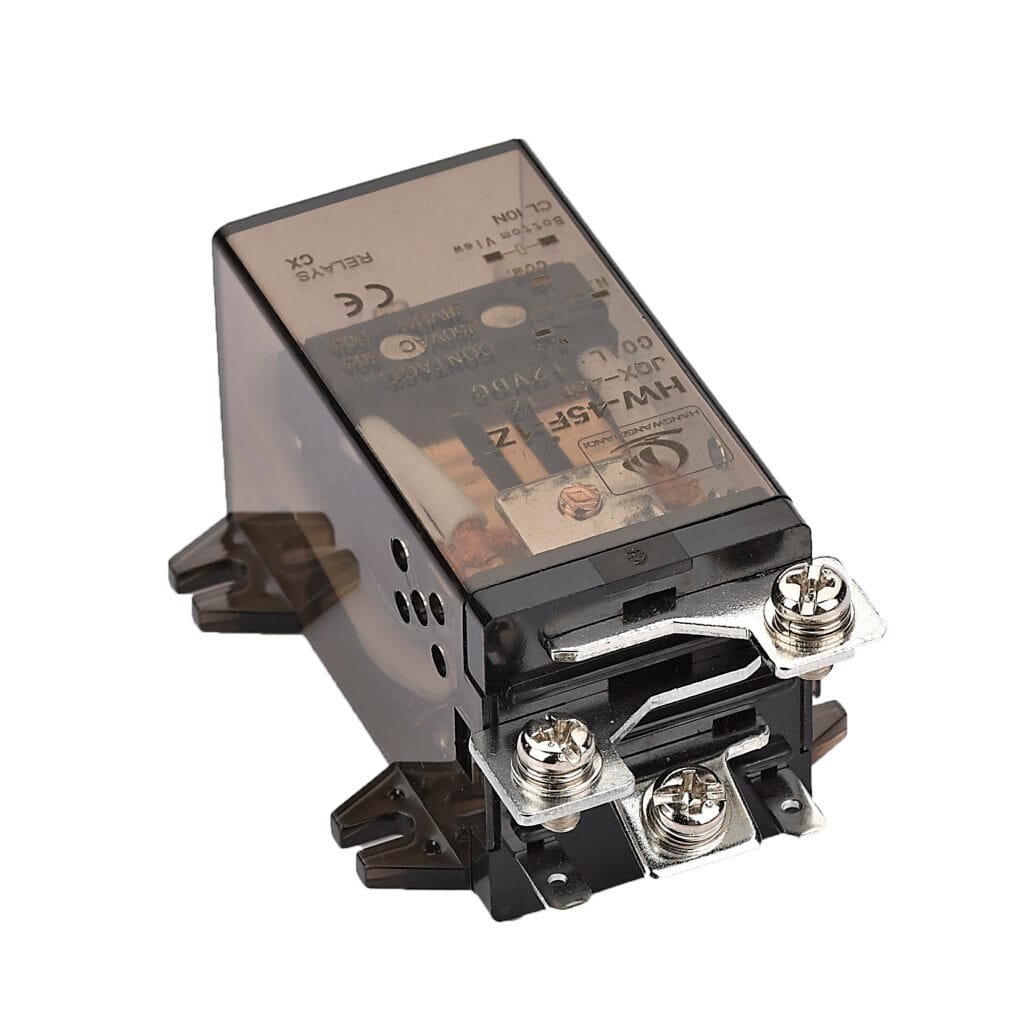
For example, third-party reference pages for the JQX-38F-3Z relay family describe it as an 11-pin quick-connect power relay with 3PDT contact form, up to 40A contact rating at 28VDC/250VAC, and multiple coil voltage options, which shows why socket matching must go beyond a simple visual check. A buyer evaluating a product such as the HW-38F-3Z should therefore confirm whether the intended socket is designed for the same relay structure, termination style, and service conditions before treating it as a valid pair.
Check item
Why it matters
Risk if ignored
Pin mapping
Confirms functional compatibility
Wrong switching logic or failed installation.
Contact arrangement
Ensures the relay works as intended
Control circuit mismatch.
Coil and relay type
Prevents wrong pairing assumptions
Incorrect model selection and RFQ confusion.
Load level
Checks whether the assembly fits the application
Overstress, short life, or unsafe use.
Mounting space
Confirms actual installability
Cabinet interference or rework.
Terminal access
Affects wiring and service
Slow assembly and maintenance errors.
Electrical Matching
Electrical matching includes more than the relay’s rated current. Buyers should also review the contact form, coil version, switching duty, and whether the control architecture matches the socket and relay combination being quoted.
If the project involves a higher-load industrial relay structure, the socket question should be handled together with relay selection. In that stage, it is natural to review the supplier’s power relay category and then narrow down a specific structure such as the HW-38F-3Z power relay as a reference point for matching, rather than treating the socket as an isolated spare part.
Mechanical Matching
Mechanical matching covers body size, pin alignment, locking fit, and installation footprint. A socket that is “close enough” in shape can still create problems if technicians cannot seat the relay properly or if the final assembly interferes with nearby wiring or panel space.
This is especially important for panel builders, machine manufacturers, and control system integrators ordering from a China-based relay supplier or factory for batch projects. In those cases, one small mismatch can repeat across the full production lot.
Service and Maintenance Considerations
Serviceability is often the reason buyers want a socket in the first place. If the maintenance team expects periodic relay replacement, field inspection, or quick fault isolation, the socket should be selected with the replacement process in mind, not only initial installation.
For distributors and wholesalers, this also affects how replacement parts are stocked and explained to end customers. A relay and socket pairing that is easy to identify and replace can reduce support friction after export delivery.
Send your inquiry today to confirm the right power relay socket for your relay structure, mounting method, and industrial application.
Common Buying Mistakes With Power Relay Sockets
One common mistake is assuming that all sockets with the same pin count are interchangeable. Another is choosing by price first and compatibility second, which is risky in industrial control and OEM supply because installation errors can cost more than the accessory itself.
A third mistake is mixing timer relay sockets with power relay sockets without confirming the real relay structure. This often happens when buyers use broad search terms or when distributors try to simplify stock categories too early in the sourcing process.
Mistake
Likely consequence
Better approach
Checking pin count only
False compatibility
Confirm model family, mapping, and mounting details.
Buying the lowest-price base
Rework or short service life
Evaluate fit, application, and maintenance value first.
Mixing timer and power relay sockets
Wrong part selection
Match by actual relay type, not search term similarity.
Ignoring cabinet space
Installation problems
Review footprint and service clearance in advance.
Forgetting OEM/export details
Quote mismatch
Confirm marking, packaging, quantity, and private label needs.
What B2B Buyers Should Confirm Before RFQ
Before sending an RFQ, buyers should prepare more than a keyword. At minimum, the Power Relay supplier should know the relay model or equivalent structure, socket type required, quantity, mounting preference, application environment, and whether the order is for replacement, OEM production, wholesale distribution, or export supply.
This matters because B2B sourcing is not only technical. It also includes project quantity, lead time, labeling, white label or private label requests, carton standards, and whether the order needs OEM or ODM support from the manufacturer or exporter.
Explore our buying guide to find the right transformer solution for your specific voltage needs.
RFQ item
Why it should be confirmed
Relay model or series
Prevents generic and inaccurate socket quotations.
Socket type needed
Clarifies whether you want a base only or a relay with socket set.
Mounting and wiring style
Helps the supplier recommend the right structure.
Application environment
Affects fit, layout, and service expectations.
Quantity and procurement mode
Important for wholesale, distributor, or batch procurement planning.
OEM/ODM or private label need
Changes packaging, labeling, and quotation details.
Export requirements
Helps align packing and delivery expectations.
For a manufacturer, distributor, or procurement company comparing suppliers in China, a better RFQ usually produces a better quote. Before Request a quote, it helps to confirm the relay model, socket type, pin layout, mounting method, quantity, and application environment so the matching result is accurate from the start.
A good buying decision starts with the relay, not the socket alone. If your project involves industrial control, OEM production, wholesale supply, or export procurement, the safest approach is to confirm the relay structure first, then match the socket by actual compatibility, maintenance needs, and installation method.
FAQ
Are all power relay sockets universal?
No. Sockets with similar pin counts can still differ in pin mapping, relay family compatibility, body fit, and mounting structure, so universal replacement should never be assumed.
What is the difference between a power relay socket and a timer relay socket?
A power relay socket is matched to a power relay structure and application, while a timer relay socket is designed around timer relay formats and control functions. Even if the search terms overlap, the two are not automatically interchangeable.
How do I choose a power relay socket for an industrial control panel?
Start with the relay model, then confirm pin layout, terminal structure, mounting method, cabinet space, and maintenance needs. Choosing by appearance or pin count alone is usually not enough for panel work.
Is it better to buy a relay with socket or separately?
That depends on the project. Buying them together can simplify matching and batch procurement, while buying separately may offer more flexibility for maintenance stock or multi-model sourcing.
What should I confirm before sending an RFQ for relay sockets?
You should confirm the relay series, socket type, quantity, mounting style, application environment, and whether the project involves OEM, ODM, export packing, or private label requirements. This gives the supplier enough information to recommend a more accurate match.
Can an 8 pin relay socket base holder be used for any 8 pin relay?
Not necessarily. The pin count may match, but the relay’s contact layout, coil position, body structure, and intended application may still differ, so the final compatibility must be checked by model or structure.
Choosing the right coil voltage for a power relay switch can feel tricky, especially when you are designing industrial control panels, OEM equipment, or automation systems for demanding B2B projects. You not only need the relay to pull in reliably, you also have to think about supply tolerance, safety, heat, and long‑term reliability. This guide […]
When buyers search for a high current relay, they usually do not want a lecture on electromagnetism. They want three things: what it can switch, how it should be connected, and which version belongs in a real panel instead of a nice-looking catalog page. I agree. A relay that survives the datasheet but dies in the […]
Have you ever felt confused by Industrial Relay contact symbols when designing industrial automation systems? Or hesitated during selection, unsure which contact type best fits your project? Don’t worry—this article will take you on a deep dive into Industrial Relay Contact types, symbols, and their specific roles and advantages in industrial applications. By mastering these essentials, you’ll […]
We use cookies to enhance your browsing experience, serve personalised ads or content, and analyse our traffic. By clicking "Accept All", you consent to our use of cookies.
Get a Free Quote
Your email information is completely secure and will not be disclosed to third parties for any reason.
Interested In Our Relay Products?
Get the latest product brochures and technical data.