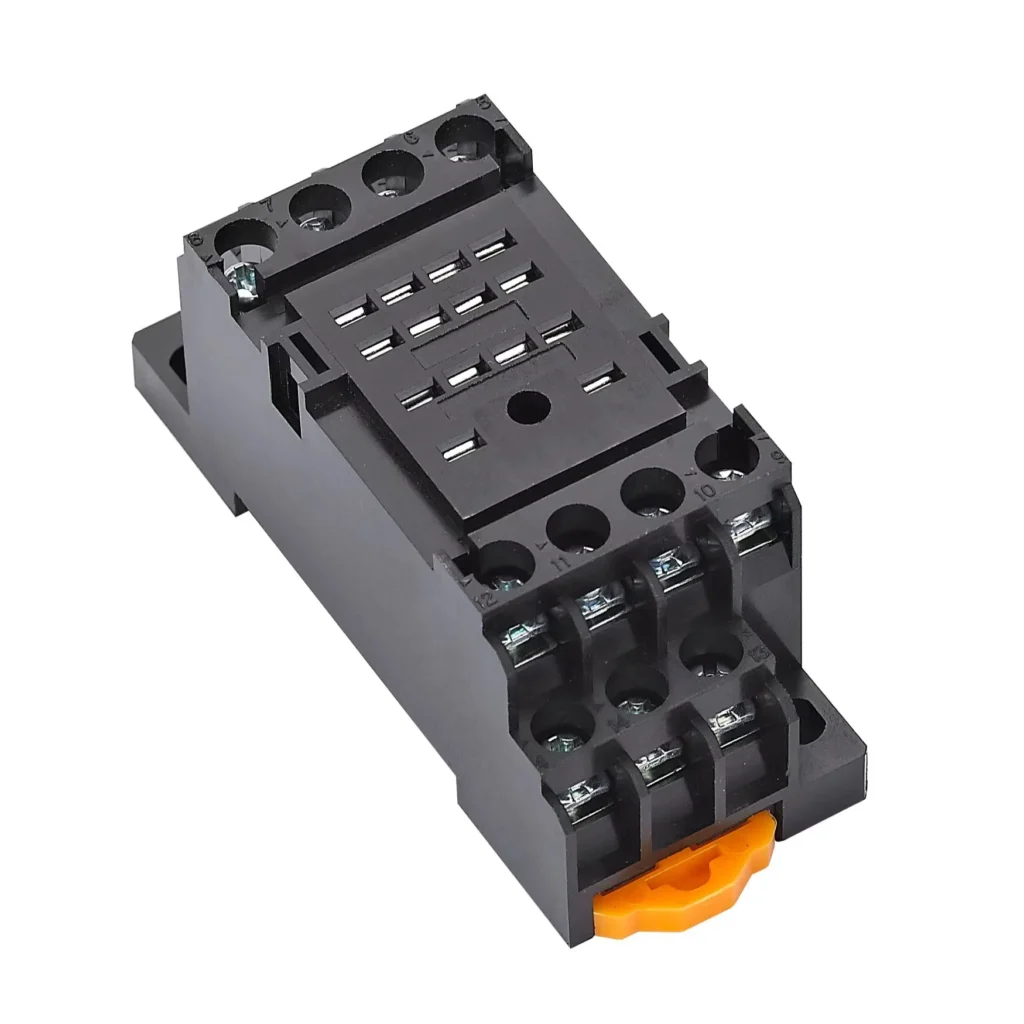
Relay Blog
HW Relay Symbol Basic Knowledge Required For Electrical
Relay symbols are the cornerstone of electrical engineering, the universal language for designing, troubleshooting, and maintaining electrical systems.
Read More
Choosing a 12V relay power supply supplier for an OEM project is not just about finding a low quote. A relay that looks acceptable on paper can still create redesign work, inconsistent batch quality, overload failures, or export delivery problems if the supplier does not match your technical and purchasing needs.
This article helps you judge whether a supplier is suitable for OEM work, what technical checks matter before RFQ, and how to compare relay manufacturers, factories, exporters, and distributors without reducing the decision to price alone.
In OEM projects, the relay is a small component, but the sourcing decision affects panel layout, control logic, load switching reliability, service life, and after-sales risk. That is why experienced buyers usually evaluate both the relay specification and the supplier’s manufacturing fit before moving to bulk procurement.
A weak supplier choice often leads to four problems: the sample works but the production batch changes; the nominal current rating looks fine but the actual load profile is wrong; lead times become unstable during export orders; or technical questions are answered too late to support design decisions.
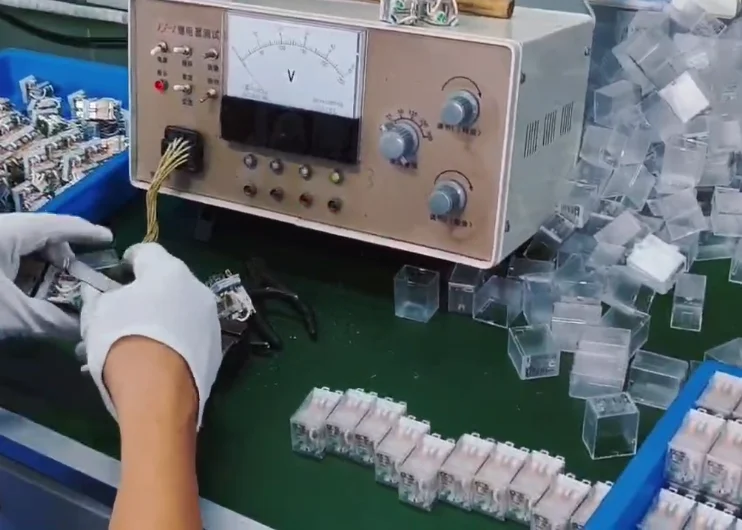
When buyers search for a 12V relay power supply supplier, they are usually looking for more than a single part number. In B2B terms, they may be comparing a manufacturer, factory, exporter, wholesaler, distributor, or OEM/ODM supplier that can support sampling, bulk purchase, customization, white label, private label, and overseas delivery.
In practice, the supplier may offer several relay families under the same category, including dc power relay products, general purpose power relay options, industrial power relays, power latching relay designs, and higher-current versions for heavier loads. This matters because OEM selection is rarely based on voltage alone; it depends on switching duty, contact form, installation method, and the actual behavior of the load.
Relay types and typical OEM fit
| Relay type | Typical OEM use | What buyers should watch |
|---|---|---|
| General purpose power relay | Standard control cabinets, machine control, auxiliary switching | Do not assume it fits higher inrush or harsher environments |
| Industrial power relays | Automation systems, control panels, higher-duty switching | Check environmental limits, mounting style, and duty cycle |
| Power latching relay | Systems that need low coil power consumption or state retention logic | Confirm control logic complexity and reset behavior |
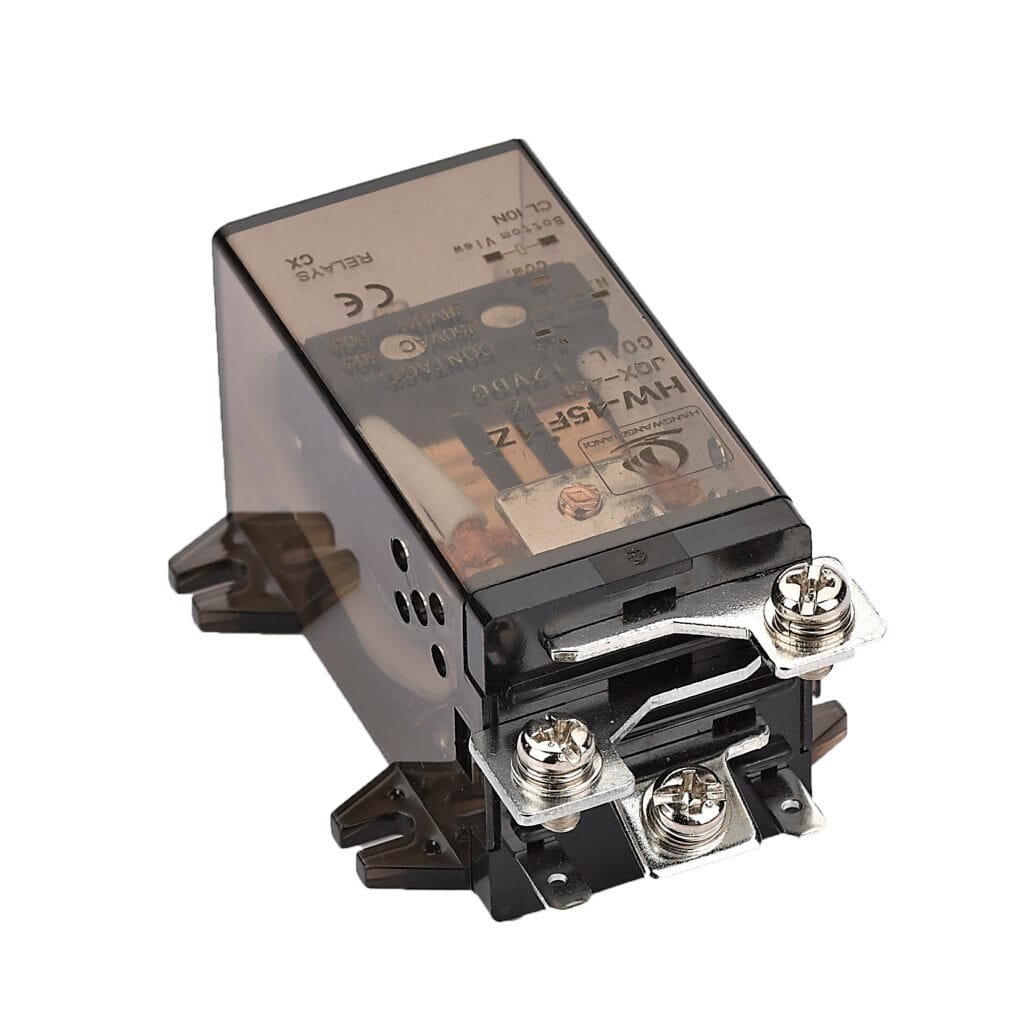
| High-current 12V dc relay | Continuous-duty or heavier dc load applications | Rated current alone is not enough; verify inrush and real load type |
Before you compare prices, first confirm whether the relay fits the application electrically and mechanically. Buyers who skip this step often end up comparing quotes for parts that are not truly interchangeable.
A common mistake is to treat “12v 30a power relay” as a complete decision. In reality, 30A may be sufficient for some resistive loads, but it may be inadequate or misleading if the application has motor starting current, repetitive switching stress, or long continuous duty requirements.
The same logic applies to terms like “100 amp continuous duty 12v dc power relay.” A high current number does not automatically mean the part is correct for your project unless the supplier can confirm duty cycle, thermal limits, load type, and installation conditions.
A standard non-latching relay is usually easier to integrate when the control logic is simple and maintenance teams expect conventional on/off behavior. A power latching relay makes more sense when you want to reduce coil power consumption or maintain state with a different control strategy.
The right choice depends on system design, not trend language. If your panel design values simpler replacement and familiar wiring, non-latching may be the safer OEM option; if energy use and retained state matter more, latching designs deserve review.

Once the relay looks technically suitable, the next question is whether the supplier can actually support OEM execution. This is where the difference between a trading seller and an OEM-capable manufacturer becomes important.
A factory or manufacturer suitable for B2B export projects should be able to discuss samples, batch consistency, customization, labeling, packaging, documentation, and delivery expectations in a practical way. That is especially important for China sourcing, where many suppliers can quote quickly, but not all can support steady OEM or ODM cooperation.
Supplier evaluation points
If your project involves custom branding, white label, private label, or distributor expansion, ask those questions early. A supplier that is strong in standard wholesale may still be a poor fit for OEM branding or ODM coordination.
This is the point where supplier selection becomes practical. Instead of asking which relay is “best,” ask which relay design fits the application, load behavior, and project delivery model.
For control panels and industrial automation equipment, buyers often start with general purpose power relay or industrial power relays, then narrow down by contact arrangement, mounting style, and switching duty. For higher-current dc loads or longer duty cycles, the shortlist usually shifts toward heavier-duty designs that are validated for that operating condition rather than standard control relays.
Application matching guide
| Application | What usually matters most | Relay direction to review |
|---|---|---|
| PLC-linked control panel | Contact form, panel wiring, switching frequency | General purpose or industrial power relay |
| Machine tool or automation cabinet | Repetitive switching, environmental stability, maintainability | Industrial power relays with suitable mounting and duty profile |
| Higher-current dc switching | Current rating, inrush, thermal behavior, continuous duty | High-current 12V dc relay solution |
| Low-power retention logic | Coil consumption and state-control strategy | Power latching relay |
At this stage, it is natural to review a dedicated power relay category or a representative model such as HW-38F-3Z-P to verify contact form, installation fit, and load alignment before requesting a formal quote.
Many sourcing problems start with a correct keyword and a wrong decision method. Buyers may search for “power relay 12v” or “12v relay power supply,” but still choose the wrong part because they compare labels instead of operating conditions.
Mistakes to avoid
Another mistake is trying to mix completely different search intents into one buying decision. A retail repair query such as a power window relay kit or a vehicle relay location search is not the same as selecting an industrial or OEM relay supplier for export procurement.
A better buying path is simple. First, define the coil voltage, contact form, real load type, current profile, mounting method, application environment, and target order volume.
Second, compare two or three suppliers on technical fit, OEM communication quality, export support, and batch consistency before you compare final price. Third, validate a sample in the actual use condition, then move to bulk procurement or ODM discussion only after the application match is clear.
If you are narrowing down options now, prepare your key relay parameters first, then review the relevant product range and ask the supplier to confirm model fit, sample availability, and batch-order conditions before requesting a final quotation.
A suitable 12v relay power supply supplier is not simply the company with the cheapest offer. For OEM projects, the better choice is the one that matches your load, control logic, customization needs, export process, and batch consistency requirements with fewer technical and purchasing risks.
When the project is still in evaluation, use price as the final filter, not the first one. That approach gives engineers, purchasers, distributors, and OEM decision-makers a clearer path from search to a workable supplier shortlist.
Looking for a reliable power relay supplier? HW RELAY provides high-quality relay products, technical specifications, and OEM/ODM solutions for overseas markets. Contact us for bulk pricing.
Start with the application, not the catalog. Confirm coil voltage, contact form, real load type, switching current, duty cycle, mounting method, and environment before you compare suppliers.
Sometimes yes, but not always. A 30A label may be acceptable for a resistive load, while inductive loads, motor starting current, or continuous duty conditions may require a different relay design.
Choose a latching design when coil power consumption or retained state is important to the system logic. Use a standard relay when simpler control behavior and easier maintenance matter more.
A supplier may resell or distribute products, while a manufacturer or factory is more likely to support OEM coordination, customization, private label, and deeper technical matching. The difference matters most in bulk purchase and export projects.
Do not compare unit price alone. Compare price only after you confirm the same load conditions, duty cycle, contact form, mounting style, and batch support level across suppliers.
Yes, but you should verify that capability instead of assuming it. Ask directly about customization scope, branding support, sample workflow, MOQ, export packaging, and batch delivery coordination.

Relay symbols are the cornerstone of electrical engineering, the universal language for designing, troubleshooting, and maintaining electrical systems.
Read More
Have you ever wondered what kind of “switch” behind large and complex industrial equipment makes motors start smoothly and machines stop safely? The answer is the power relay. Although power relays seem inconspicuous, they play a critical role in ensuring industrial automation systems run smoothly and efficiently. In this article, we will take you deep […]
Read More
Understanding Relay Modules Relay modules are compact circuit boards housing one or more relays, typically rectangular in shape. These modules come in various configurations, accommodating 2, 4, 8, or even up to 16 relays. Beyond the relay units, these modules incorporate additional components such as indicator LEDs, protection diodes, transistors, and resistors. At the heart […]
Read More