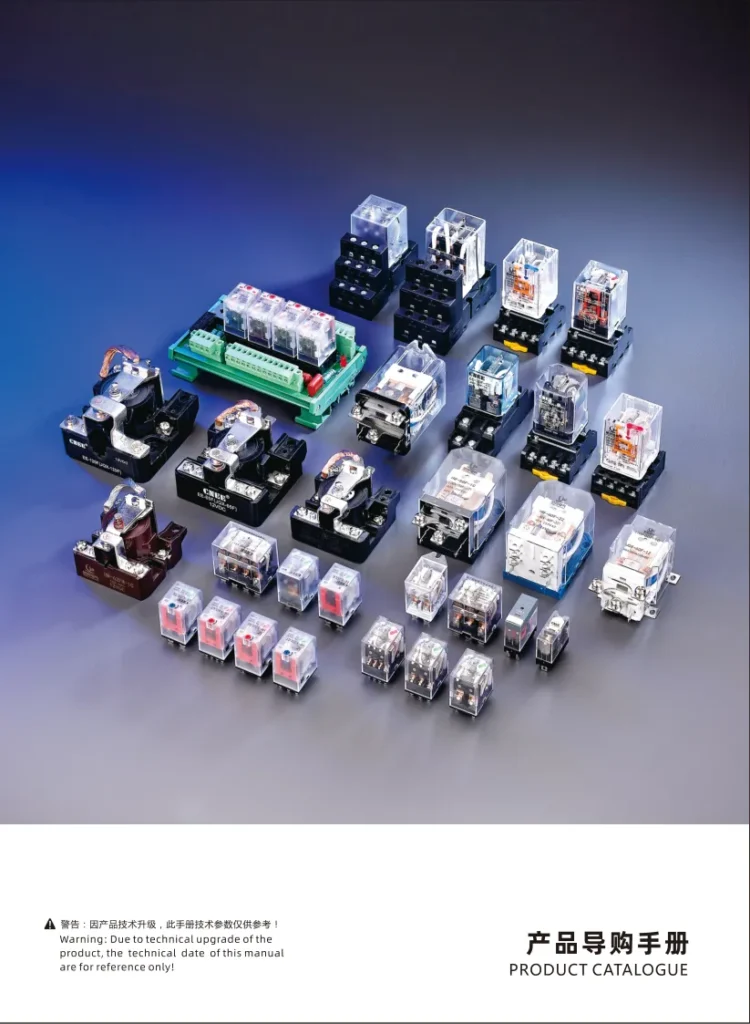
When a PCM power relay fails, your engine “brain” either loses power completely or stays powered when it should be off. In both cases, vehicles become unreliable, diagnostics get messy, and procurement teams face urgent replacement needs from trusted suppliers and manufacturers. Understanding exactly what happens in an open vs. closed failure helps engineers, buyers, and wholesalers choose the right PCM power relay, design safer systems, and manage costs more confidently.
Understanding PCM Power Relay
A PCM power relay (often called ECM/PCM power relay or powertrain control module relay) is an electromechanical switch that provides battery or ignition power to the engine control module (ECM/PCM) and related loads such as fuel pump, injectors, or ignition coil drivers. When the ignition is switched on, the relay coil is energized, closing the contacts and feeding power to the PCM so it can manage fuel, timing, emissions, and diagnostics.
In modern vehicles, many core functions—starting, idling stability, drive‑by‑wire throttle, OBD fault logging—rely on a clean, stable supply path through the PCM power relay. Because of this, HW-38F-3Z relay performance is critical not just for drivers, but for OEM engineering teams, tier‑1 suppliers, and aftermarket wholesalers who must guarantee reliability over long service life.
Key Aspect
Description
Relevance for B2B Buyers
Electrical role
Switches battery/ignition power to ECM/PCM and related loads
Direct impact on engine start, drivability, and diagnostics
Typical rating
12 V coil, 20–40 A contact rating (automotive power relay class)
Must match vehicle bus voltage and load current margin
Mounting style
PCB, plug‑in, or harness connector housing
Affects compatibility, assembly, and replacement logistics
Critical applications
Engine management, emissions, safety functions
Influences quality level and validation requirements
Common naming variants
PCM relay, ECM relay, ECM/PCM power relay
Important for cataloging, cross‑reference, and RFQ documents
An “open” failure means the relay contacts do not close when commanded, so power never reaches the PCM or connected circuits. This can be caused by burnt contacts, broken internal springs, worn mechanical parts, coil open‑circuit, or cracked solder joints on PCB‑style relays.
When a PCM power relay fails open, the most typical symptom is a no‑start condition, often without fuel pump priming or injector pulse. The PCM either stays completely offline or resets intermittently, which can also generate hard starting, unexpected stalling, and fault codes such as P0685 (ECM/PCM power relay control circuit open) or similar power‑supply DTCs.
For engineers and manufacturers, this kind of failure is especially critical in safety‑relevant platforms because it can lead to sudden engine shutdown if the relay opens while driving. For fleets and industrial users, vehicles with an open PCM power relay often require tow‑in, increasing downtime and total cost of ownership. If your customers complain that “the car cranks but won’t start and there is no check‑engine light,” an open PCM relay should be high on the diagnostic checklist.
Open Failure Effect
Impact on Vehicle/System
Business Impact for B2B Stakeholders
No power to PCM
Engine won’t start; no fuel or ignition control
Warranty claims, urgent replacement orders
Intermittent contact
Random stalling, misfires, unstable idle
Increased diagnostic time, need for higher‑quality relays
Related DTCs (e.g. P0685)
Power supply fault codes stored or pending
Drives demand for OE‑grade or upgraded replacements
No MIL / dead OBD link
Scan tools cannot communicate with PCM in severe open failures
More complex troubleshooting for workshops and service centers
If your organization needs stable supply of PCM power relays to reduce this failure mode, sending a focused RFQ to specialized PCM power relay suppliers can secure more robust designs and better contact materials for harsh environments.
Failure Mode 2: PCM Power Relay Fails Closed
A “closed” failure means the relay contacts stay welded or stuck in the ON position, even when the ignition is turned off or the control coil is de‑energized. This typically comes from contact welding due to overcurrent, voltage spikes, or using a relay under‑rated for the load and switching frequency.
In a closed failure, the PCM and associated loads may remain powered continuously, causing parasitic battery drain and potential overheating of components designed for duty‑cycle operation only. Over time, this can flatten the battery overnight, force frequent jump‑starts, and cause intermittent electrical issues when the system never truly resets.
From a design and procurement viewpoint, a stuck‑closed PCM relay is often a sign that the original relay specification (contact rating, inrush handling, arc suppression) was too optimistic for the real‑world current profile. For large buyers and wholesalers, this creates an opportunity to specify upgraded PCM power relays with higher current ratings, improved contact alloys, or built‑in surge protection in the next sourcing round.
Closed Failure Effect
Impact on Vehicle/System
Why It Matters to Buyers
PCM stays powered with ignition off
Battery drains, repeated no‑start after parking
Drives demand for higher‑spec and OE‑quality relays
Components run outside intended duty cycle
Possible overheating or premature ECU and pump wear
Impacts warranty, fleet uptime, and lifecycle cost
Increases service time and need for reliable replacement parts
Indicates contact welding / overcurrent
Signals mismatch between relay specs and application
Guides engineers to redesign specs and request customization
If customers report frequent dead batteries without visible loads on and the PCM remains live, testing for a welded PCM power relay is a quick way to confirm this failure mode and justify stocking higher‑quality replacements from reputable manufacturers.
Contact us for custom high-performancepower relays solutions tailored to your needs.
How Relay Failure Affects Diagnostics and ECU Safety
Both open and closed PCM HW-38F-3Z Power Relays failures complicate diagnostics because they disturb the PCM’s expected power‑up and power‑down sequence. In an open state, scan tools may not connect to the PCM at all, while in a stuck‑closed state the PCM may log strange intermittent faults due to incomplete resets or brown‑outs.
These power irregularities can stress sensitive components on the ECU board, especially voltage regulators, EEPROM, and communication drivers, which are designed for defined power‑up ramps and controlled shutdowns. For OEM and tier‑1 manufacturers, this translates into stricter requirements on relay coil control strategy, suppression components (diodes, resistors), and harness design to ensure long‑term ECU safety.
For workshops and fleet engineers, understanding relay behavior allows fast isolation of faults: a simple check of voltage at PCM power pins versus ignition status often tells whether the PCM power relay is behaving correctly or not. For procurement and wholesalers, this also justifies stocking diagnostic‑friendly relays with consistent coil resistance and clearly marked terminals for easier field replacement.
Aspect
Relevance to PCM Power Relay Failures
Implications for B2B Customers
Power‑up sequence
Determines how safely ECU initializes sensors and drivers
Drives relay spec for turn‑on delay, bounce, and stability
Power‑down behavior
Affects data logging, memory integrity, and shutdown timing
Impacts system reliability in commercial fleets
Diagnostic access
Stable power needed for scan tool communication and reflashing
Affects workshop efficiency and warranty service throughput
ECU lifetime
Repeated abnormal power events shorten component life
Encourages long‑term sourcing contracts for higher‑grade relays
If your engineering team is revising an engine management platform, building PCM power relay testing into end‑of‑line and incoming quality control processes is a low‑cost way to protect ECUs and reduce downstream claims. Feel free to send your spec sheet or drawings if you would like a customized PCM power relay recommendation for your exact current and duty‑cycle profile.
Design, Specification, and Customization Considerations
From a B2B perspective, a PCM power relay is not just a commodity—it is a strategic component that can reduce open/closed failure cases if correctly specified from the start. Engineers should consider not only steady‑state current, but also inrush peaks from fuel pumps and inductive loads, ambient temperature cycles, vibration levels, and required lifecycle (number of operations).
Some manufacturers and dedicated PCM power relay factories provide customization services, including coil voltage options (12 V, 24 V), different pinouts, reinforced contact materials, sealed housings, and brand‑specific footprint compatibility for direct drop‑in replacement. With customization, you can design in adequate margins so that even under worst‑case loads, relay contacts do not weld, and coil voltage tolerances prevent nuisance opens during low‑voltage cranking.
For suppliers and wholesalers, offering multiple current and temperature classes (for example, standard vs. heavy‑duty PCM power relays) allows you to serve both price‑sensitive aftermarket customers and OEM programs requiring advanced validation. If your company needs this kind of differentiation, you can easily request sample lots for testing and then place bulk orders once your in‑house validation confirms performance.
Specification Item
Typical Options / Notes
Benefit in Preventing Fail‑Open/Fail‑Closed
Coil voltage & resistance
12 V automotive, optional 24 V commercial; tuned for cranking dips
Reduces unintended drop‑out and open failures
Contact rating (A)
20–40 A at 12 V DC; higher for heavy‑duty loads
Prevents contact welding and stuck‑closed failures
Contact material
AgSnO2, AgNi, or specialized alloys
Improves arc resistance and extends mechanical life
Housing type
Sealed or open, PCB or plug‑in
Protects from dust, moisture, and vibration‑induced faults
Custom footprint
OEM‑specific pin layout, locking tabs
Enables easy retrofit without redesigning the harness
Ensures long‑term reliability in harsh environments
If you are preparing a new sourcing project, sharing your target current, switching frequency, ambient temperature, and expected lifetime with potential PCM power relay manufacturers is the quickest way to receive accurate quotations and technical proposals. You are welcome to send your RFQ details to get a tailored quote structure, sample schedule, and price ladder.
Buying PCM Power Relays: Suppliers, Wholesalers, Prices
For procurement managers and purchasing engineers, the main questions are usually: where to buy, how to compare, and how to control prices without sacrificing reliability. PCM power relays are available from automotive parts retailers, online industrial distributors, dedicated relay manufacturers, and OEM‑focused relay factories offering direct customization and branding.
Retail and aftermarket channels are suitable for low‑volume and emergency replacements but often lack the pricing structure and technical documentation needed for large‑scale B2B projects. In contrast, working directly with specialized PCM power relay suppliers, wholesalers, and manufacturers enables better unit cost at volume, stable lead times, and value‑added services such as PPAP documentation, custom labeling, or packaging suitable for assembly lines.
Price levels vary with contact rating, housing type, seal class, and qualification level (generic vs. automotive‑grade), so it is common for purchasing teams to maintain at least two qualified sources for each PCM relay footprint. If your organization is planning a platform refresh or cost‑down program, now is a good time to benchmark relay prices across multiple vendors and secure long‑term agreements.
Channel Type
Use Case
Advantages for B2B
Automotive retailers
Service and repair, emergency replacement
Fast availability, familiar brands
Online distributors
Small to mid‑volume, engineering validation samples
Wide selection, easy comparison of specs
Dedicated manufacturers
OEM projects, high‑volume, custom PCM power relays
Best control over customization, pricing, and lifecycle
Wholesalers/importers
Regional distribution, fleet and workshop supply
Volume discounts, logistics optimization
If you have a current model or part number you want to cross‑reference, feel free to send it; you can then obtain a quote for equivalent or upgraded PCM HW-38F-3Z Power Relays suitable for your market and target prices.
FAQ
What is a PCM power relay in a car?
A PCM power relay is a power switch that supplies battery or ignition power to the engine’s control computer (PCM/ECM) and some key loads such as fuel pump or ignition system. When the ignition is on, the relay closes, powering the PCM so it can manage fuel, timing, and emissions.
What happens if the PCM power relay fails open?
If it fails open, the PCM does not receive power, which usually causes a no‑start situation, stalling, or missing communication with diagnostic tools, often with power‑supply related DTCs like P0685.
What happens if the PCM power relay fails closed?
If it fails closed, the PCM may stay powered even when the ignition is off, leading to battery drain, unnecessary ECU stress, and intermittent electrical issues due to lack of proper shutdown.
How can engineers diagnose a bad PCM power relay?
Technicians often check for relay coil activation, measure voltage at PCM power pins, inspect for battery drain with ignition off, and read relevant DTCs to confirm whether the relay is stuck open or closed.
Where can B2B buyers purchase PCM power relays?
Buyers can source PCM power relays from automotive parts retailers, industrial distributors, and specialized relay manufacturers, suppliers, and wholesalers that offer volume pricing and customization options for OEM and aftermarket programs.
In the fast-moving world of industrial automation, reverse power relay are small but crucial components that safeguard generators and parallel power systems. If you’re an engineer, electrical system designer, or purchasing manager, understanding how this device works—and how to select the right one—can help you prevent expensive downtime, hazardous faults, and unnecessary wear on your equipment. Let’s explore what makes […]
In the world of electrical systems, relays play a crucial role in managing the flow of electricity and ensuring the smooth operation of circuits. Among these, PCM power relays are gaining significant attention, especially for their reliability and versatility in various industrial applications. This article aims to provide a detailed overview of PCM power relays, […]
Choosing the right coil voltage for a power relay switch can feel tricky, especially when you are designing industrial control panels, OEM equipment, or automation systems for demanding B2B projects. You not only need the relay to pull in reliably, you also have to think about supply tolerance, safety, heat, and long‑term reliability. This guide […]
We use cookies to enhance your browsing experience, serve personalised ads or content, and analyse our traffic. By clicking "Accept All", you consent to our use of cookies.
Get a Free Quote
Your email information is completely secure and will not be disclosed to third parties for any reason.
Interested In Our Relay Products?
Get the latest product brochures and technical data.