In modern industrial automation systems, industrial relay contact serve as essential bridges for electrical control. At the heart of every relay are its contacts-the components responsible for making or breaking the circuit. The performance and reliability of these contacts directly impact the stability and safety of the entire system. Many relay failures can be traced back to contact issues such as sticking, arcing, or poor conductivity.
Therefore, understanding the structure, material selection, lifespan factors, and optimization methods for HW-L2CLGT Industrial relay contact is vital for buyers, engineers, and maintenance personnel. This article provides a comprehensive overview of industrial relay contacts, helping you select the right product and improve your equipment’s overall reliability.
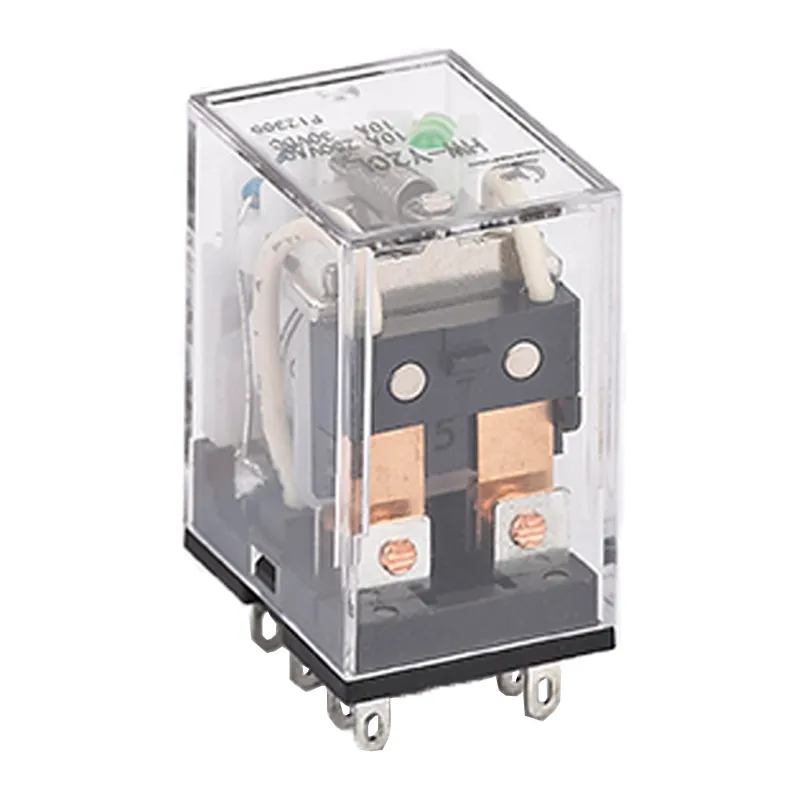
HW-L2CLGT Relay with LED Indicator
Basic Structure and Types of Industrial Relay Contact
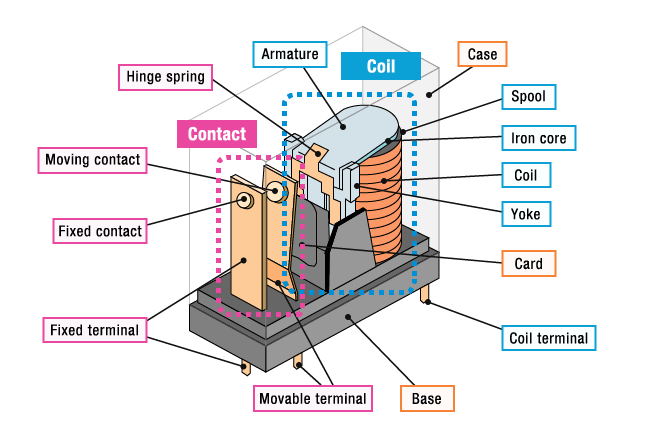
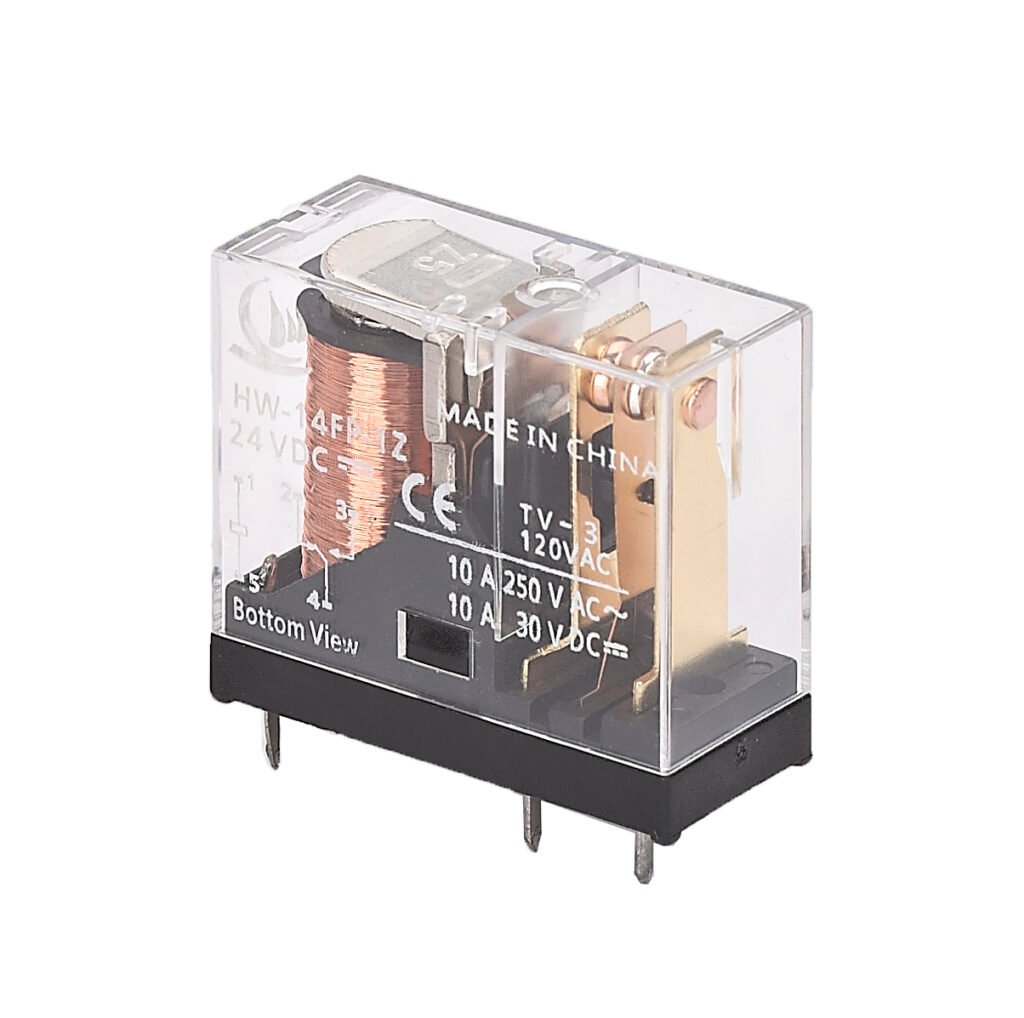
Basic Structure: Relay contacts consist of moving and stationary elements that open or close circuits through mechanical action.
Types:
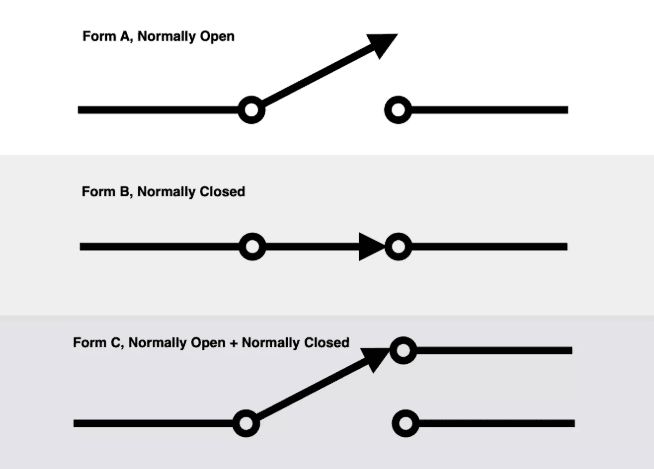
Normally Open (NO): Open when de-energized, closed when energized; commonly used for power control.
Normally Closed (NC): Closed when de-energized, open when energized; often used in safety circuits.
Changeover (CO): Switches between NO and NC; suitable for multi-way control.
Symbols: Illustrate common schematic symbols for each contact type.
Comprehensive Comparison of Contact Materials and Performance
The material of Industrial relay contact is crucial for their durability, conductivity, and resistance to wear, welding, or corrosion. Here is a comparison table of common relay contact materials, their characteristics, suitable applications, and drawbacks:
Material
Description
Best For
Drawbacks
Silver Nickel (AgNi)
Silver alloyed with ~10% nickel; good conductivity and durability
General-purpose, resistive loads
Oxidizes at high temperatures
Silver Cadmium Oxide (AgCdO)
Excellent anti-welding, handles high inrush currents
Inductive loads, motors
Phased out due to cadmium toxicity
Silver Tin Oxide (AgSnO₂)
High resistance to welding and arcing, long life
High inrush, capacitive/inductive loads
Can wear faster under DC loads
Hard Silver (Ag)
Silver mixed with copper/nickel for hardness
General-purpose relays
Oxidizes at high temperatures
Silver Tin Indium Oxide (AgSnOinO)
Improved version of AgSnO₂, even better for inrush currents
Power circuits with large surges
Less common, more expensive
Tungsten (W)
Extremely hard, excellent arc resistance, high melting point
High-power, high-voltage applications
Expensive, lower conductivity
Gold Plating (10μm Au)
Thin gold layer, excellent for low-power, corrosion resistance
Low-power, signal circuits
Wears off after ~1 million cycles
Gold Flash (3μm Au)
Very thin gold layer for storage protection
Low-power, seldom-used relays
Less durable, wears off easily
Palladium (Pd)
Does not oxidize, very low electrical noise
Low current, signal switching
Limited to ~5A, lower conductivity
Selection Tips:
For high power applications, use Silver Nickel, Silver Cadmium Oxide, or Tungsten for better resistance to welding and burnout.
For inductive or motor loads, Silver Cadmium Oxide and Silver Tin Oxide offer the best performance.
For low power or signal switching, choose Gold-plated or Palladium contacts for reliable, corrosion-resistant connections.
Consider RoHS and environmental regulations, as some materials (like AgCdO) are being phased out in favor of safer alternatives.
Request samples and experience our reliable relay contact solutions.Get your free quote now for high-quality industrial relay contacts.
Electrical Factors: Current and voltage levels, type of load (resistive, inductive, capacitive) directly influence contact wear and arcing.
Mechanical Factors: Frequency of operation, spring pressure, and contact gap affect reliability.
Environmental Factors: Temperature, humidity, dust, and corrosive gases can accelerate oxidation and wear.
Arcing and Sparking: Contact opening/closing can generate arcs, leading to erosion and material transfer.
Common Contact Failures and Prevention
Sticking/Welding: Caused by high current or arcing, making contacts fuse together.
Erosion: Repeated arcing forms pits and black oxides on contact surfaces.
Increased Contact Resistance: Due to contamination or oxidation, raising circuit losses.
Preventive Measures:
Select appropriate contact material (e.g., AgSnO₂ for anti-sticking).
Add RC snubber circuits to suppress arcing.
Regular maintenance and cleaning of contact surfaces.
Contact Protection Technologies and Life Extension Methods
RC Snubber Circuits: Parallel resistor-capacitor networks absorb voltage spikes from inductive loads, reducing arcing.
Arc Suppression Devices: Magnetic blowouts or air gaps extend contact life.
Optimized Design: Proper spring force and contact gap reduce mechanical wear.
Selection Advice: Match contact material and type to load characteristics and application environment.
Application Case Studies
Lighting Control: High current, frequent switching; requires wear-resistant contacts.
Motor Control: Inductive loads generate high inrush and back EMF; needs anti-welding materials and protection circuits.
Automation Equipment: Low current, high frequency; needs low-resistance, wear-resistant contacts.
Industrial relay contact, though small, are critical to the reliability and lifespan of industrial control systems. By carefully selecting contact materials, designing appropriate protection circuits, and performing regular maintenance, you can significantly extend relay life and reduce downtime due to contact failures.
For different application scenarios, consider load type, current, voltage, and environmental conditions to choose the most suitable industrial control relay contact type and material. Combining practical experience with the right technical knowledge will help your business achieve higher efficiency and lower maintenance costs. We hope this guide assists you in making informed decisions for relay contact selection and application.
FAQ
What is an industrial relay contact?
Industrial relay contacts are conductive elements inside a relay that open or close the load circuit to control power flow. They are designed to handle electrical load switching efficiently.
What are the common types of relay contacts?
The main types include Normally Open (NO), Normally Closed (NC), Single Pole Double Throw (SPDT), and Double Pole Double Throw (DPDT) contacts, each serving different circuit control roles.
How to select relay contacts for industrial use?
Selection depends on load type, current rating, voltage, switching frequency, and the environment. Proper contact material and configuration ensure long-lasting and reliable operation.
What is contact fusing and how to prevent it?
Contact fusing occurs when excessive current melts the contact surface, causing it to stick. Choosing relays with appropriate ratings and using protective circuits prevents this.
Why are multiple contacts in a relay important?
Multiple contacts allow simultaneous control of several circuits or enable complex switching sequences, improving efficiency in industrial automation.
Understanding Relay Modules Relay modules are compact circuit boards housing one or more relays, typically rectangular in shape. These modules come in various configurations, accommodating 2, 4, 8, or even up to 16 relays. Beyond the relay units, these modules incorporate additional components such as indicator LEDs, protection diodes, transistors, and resistors. At the heart […]
Power relay switch is the “muscle” of an electrical control system, turning heavy loads on and off safely while your PLC, controller, or IoT module only handles tiny signals. For B2B buyers in industrial automation, HVAC, new energy, telecom, or power distribution, understanding how a power relay switch works, what components matter, and how it […]
A Power Relay is a critical electrical device that acts as a switch, allowing a low-power circuit to control a high-power circuit safely and efficiently. Think of it as a middleman that controls heavy machinery or electrical loads without needing you to manually flip a switch every time. Power relays are extensively used in industrial […]
We use cookies to enhance your browsing experience, serve personalised ads or content, and analyse our traffic. By clicking "Accept All", you consent to our use of cookies.
Get a Free Quote
Your email information is completely secure and will not be disclosed to third parties for any reason.
Interested In Our Relay Products?
Get the latest product brochures and technical data.