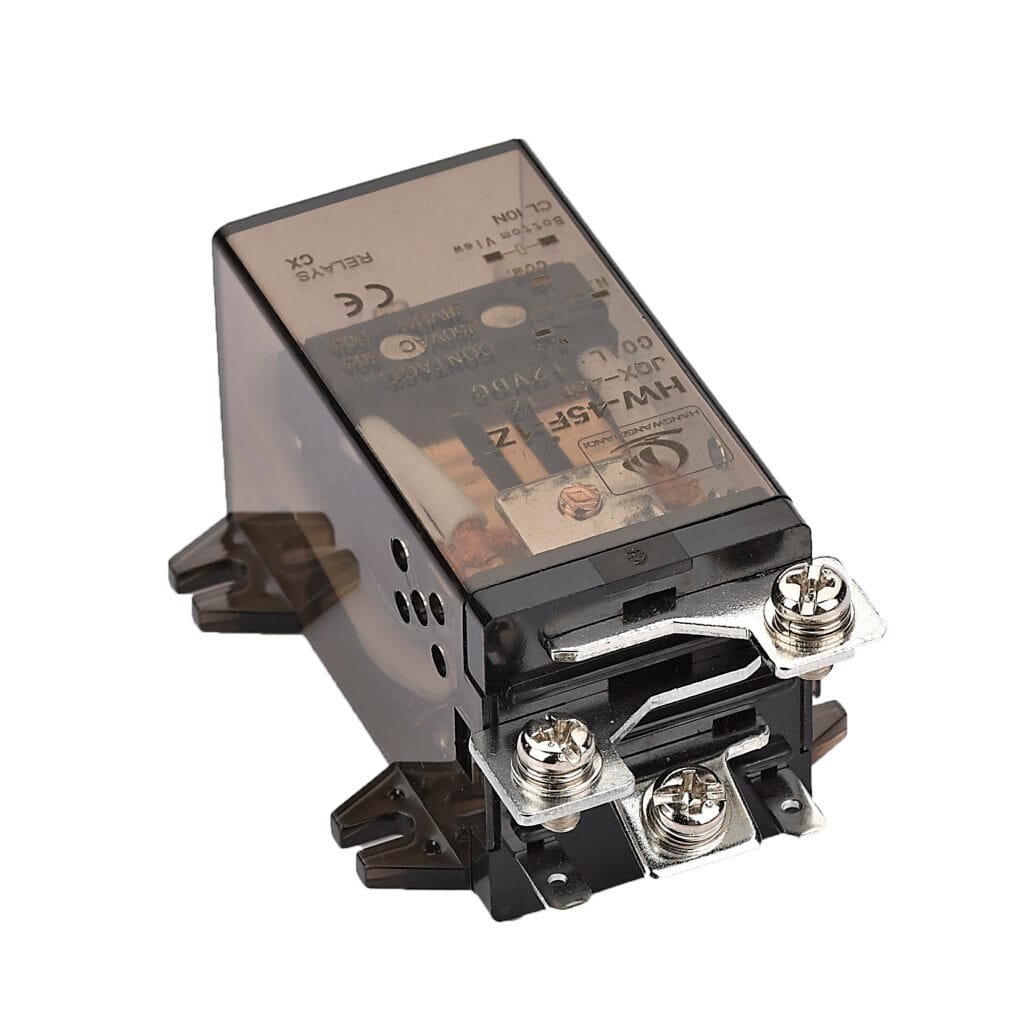
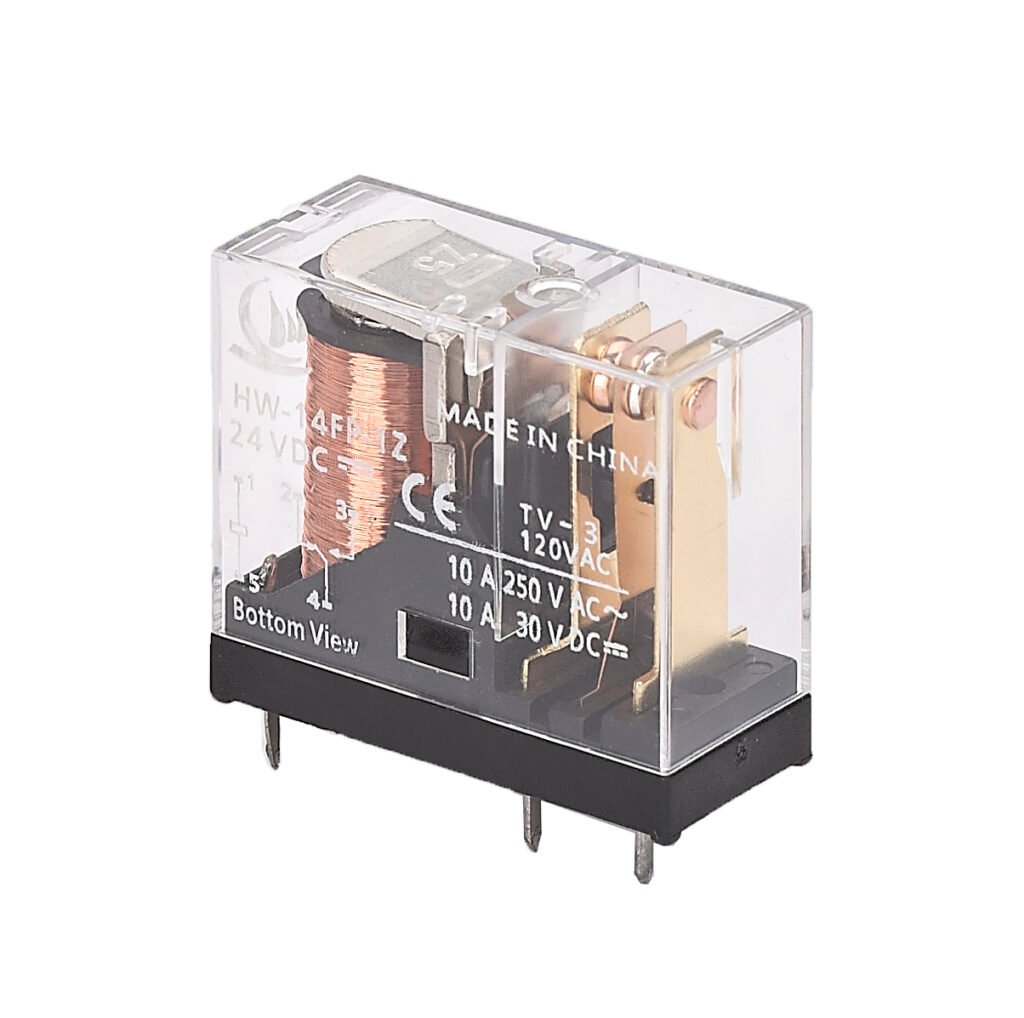
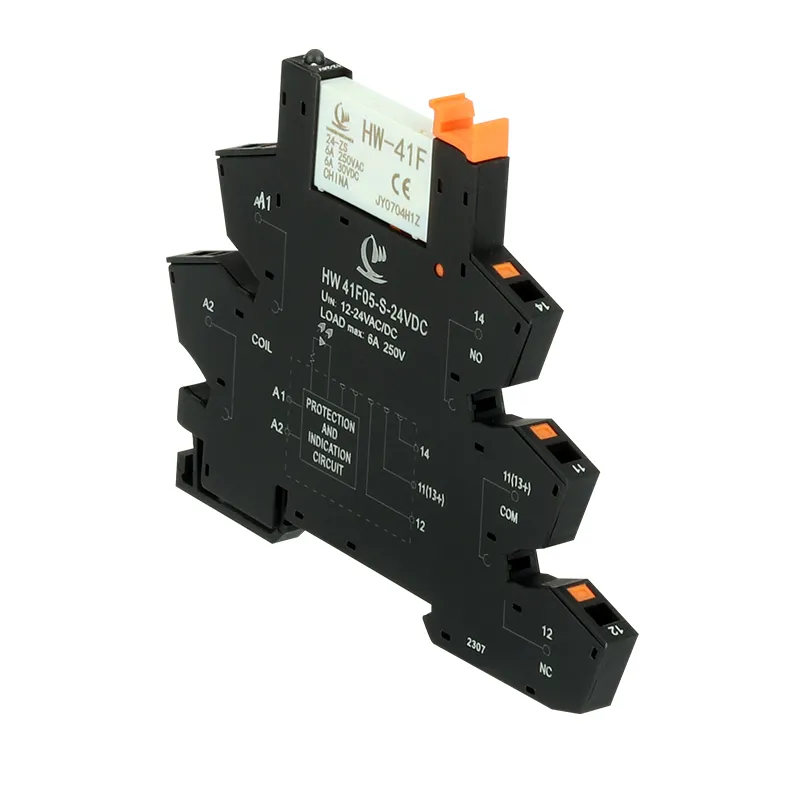
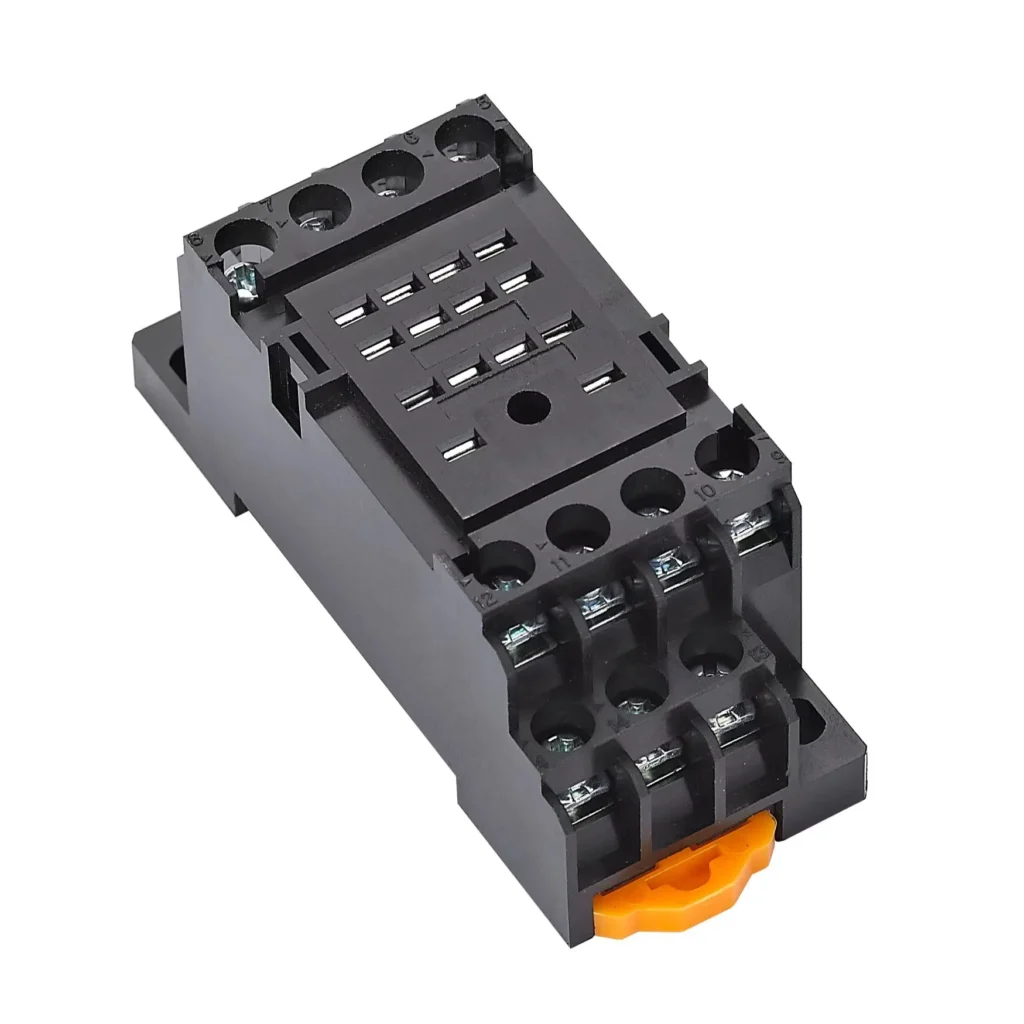
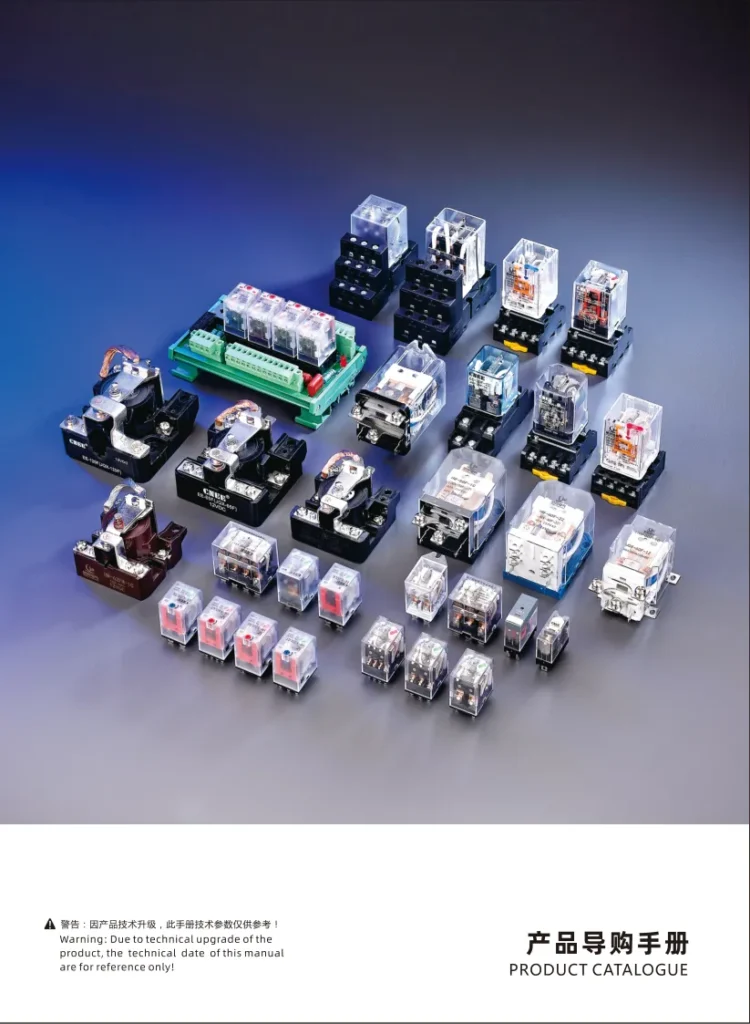
Relays utilize different types of Relay Contacts to control circuits based on specific conditions. The main contact types include Conversion Type, Normally-ON Type, and Normally-OFF Type. Here’s a detailed explanation of each:
Description of contact forms:
Type
Default State
Energized State
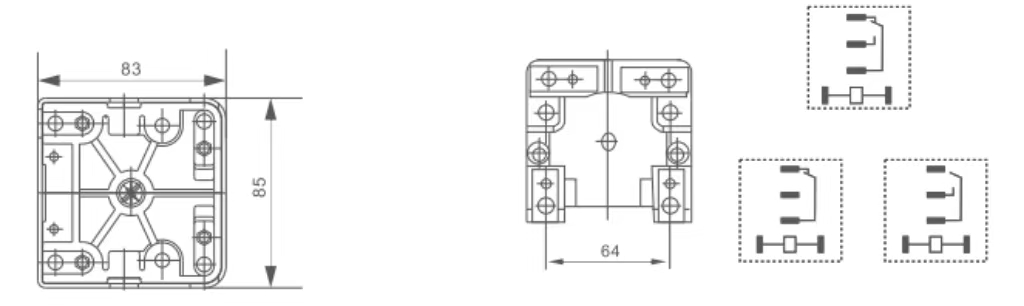
Relay contact structure
Conversion Type
C to NC connected
C switches to NO
Normally-ON Type
Open (disconnected)
Closed (connected)
Normally-OFF Type
Closed (connected)
Open (disconnected)
Relay Contacts Conversion Type (Changeover Contact, SPDT)
Relay Contacts Conversion Type, also known as a changeover contact or Single Pole Double Throw (SPDT) contact, can function as either a Normally-ON or Normally-OFF contact, depending on the wiring.
Structure:
Composed of three terminals: Common (C), Normally Closed (NC), and Normally Open (NO).
In the default state (relay coil unpowered), the contact connects C to NC.
When the relay coil is powered, the contact switches to connect C to NO.
Working Principle:
Default (unpowered): The contact bridges C and NC.
Powered: The contact switches to bridge C and NO.
Applications:
Useful for selecting between two circuits or toggling between two conditions.
Common in circuit switching, signal routing, and power management applications.
Normally-ON Type (NO Contact)
The Normally-ON Type contact, also called Normally Open (NO), is open in its default state and closes only when the relay coil is energized.
Structure:
Comprises two terminals that remain disconnected in the unpowered state.
Working Principle:
Default (unpowered): The contact remains open; the circuit is incomplete.
Powered: The relay coil creates a magnetic field that closes the contact, completing the circuit.
Applications:
Used in systems where the circuit should only be powered under specific conditions.
Common in motor starters, lighting control, and load activation when a triggering condition is met.
Normally-OFF Type (NC Contact)
The Normally-OFF Type contact, also called Normally Closed (NC), is closed in its default state and opens when the relay coil is energized.
Structure:
Comprises two terminals that remain connected in the unpowered state.
Working Principle:
Default (unpowered): The contact remains closed; the circuit is complete.
Powered: The relay coil energizes, opening the contact and breaking the circuit.
Applications:
Ideal for systems where continuity is required under normal conditions and should only break under specific conditions.
Frequently used in safety circuits, alarms, and fault detection systems.
Materials Used in Relay Contacts
Relay contacts are critical components, and their material significantly impacts performance, durability, and suitability for specific applications. Below are the commonly used materials and their characteristics:
Material
Properties
Limitations
Applications
Silver (Ag)
Excellent electrical conductivity Low contact resistance Good thermal conductivity
Oxidizes in humid/sulfur environments Oxide remains conductive
Low-voltage, high-current applications (e.g., power relays)
Electrical Current: Higher currents often require silver or silver alloys.
Voltage: High-voltage relays benefit from materials with strong arc resistance (e.g., tungsten or silver alloys).
Environment: Corrosive or humid environments may require gold or gold-plated contacts.
Switching Frequency: Frequent switching demands materials with good wear resistance, such as silver tin oxide.
Relay Contacts are vital components across industries due to their compact size, efficiency, and versatility. As technology advances, these devices are expected to become even smaller while offering enhanced performance and functionality. They will play an increasingly significant role in intelligent systems while supporting sustainability goals in electronic design.Looking ahead, their role will expand further as industries embrace sustainability goals by designing energy-efficient systems that rely on reliable components like miniature relays.
Have you ever wondered what kind of “switch” behind large and complex industrial equipment makes motors start smoothly and machines stop safely? The answer is the power relay. Although power relays seem inconspicuous, they play a critical role in ensuring industrial automation systems run smoothly and efficiently. In this article, we will take you deep […]
Welcome to HW Relay knowledge hub! If you’re in the market for reliable control solutions or simply want to keep your procurement team savvy, understanding the ins and outs of both PCM Power Relays and main relays can give you a real edge. It’s a question that keeps popping up in engineer forums and RFP discussions: What exactly […]
If you’re here, you probably already know that an intermediate relay 5A is one of the most common “workhorses” in control panels. But in the real world, B‑end buyers don’t just care about definitions—they want to know how to pick the right model, how to wire it properly, and where to use it without causing headaches down […]
We use cookies to enhance your browsing experience, serve personalised ads or content, and analyse our traffic. By clicking "Accept All", you consent to our use of cookies.
Get a Free Quote
Your email information is completely secure and will not be disclosed to third parties for any reason.
Interested In Our Relay Products?
Get the latest product brochures and technical data.