Electromagnetic relay is a commonly used control element, which plays the role of automatic switch in the circuit. Its main functions are: isolating the control circuit and the controlled circuit, controlling the large current with a small current, playing the role of amplification; realizing remote control and expanding the control range; realizing multi-way switch control through contact combination; converting Direct current (DC) circuit into AC circuit, or converting Alternating current (AC) circuit into DC circuit.
Internal structure of electromagnetic relay
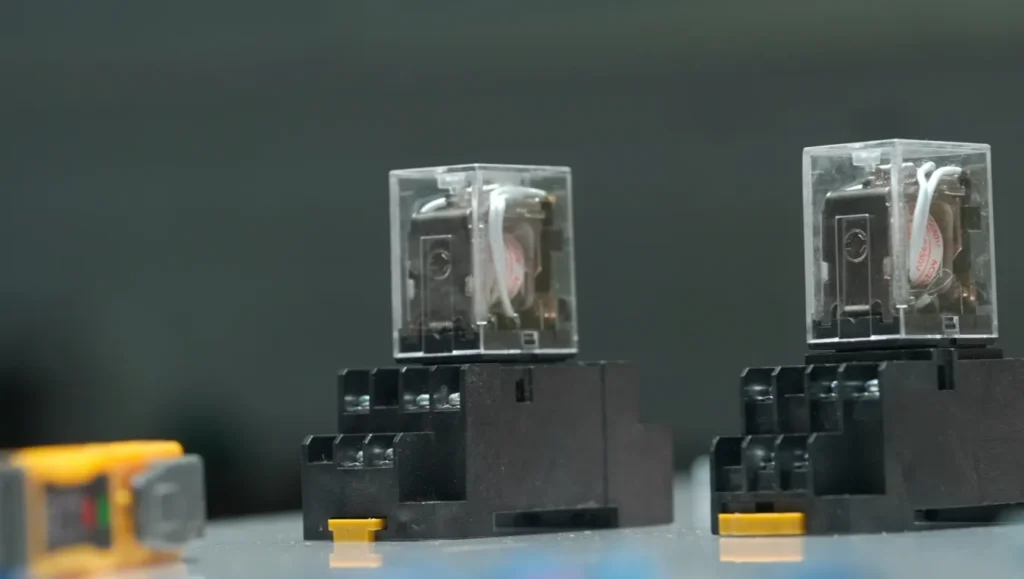
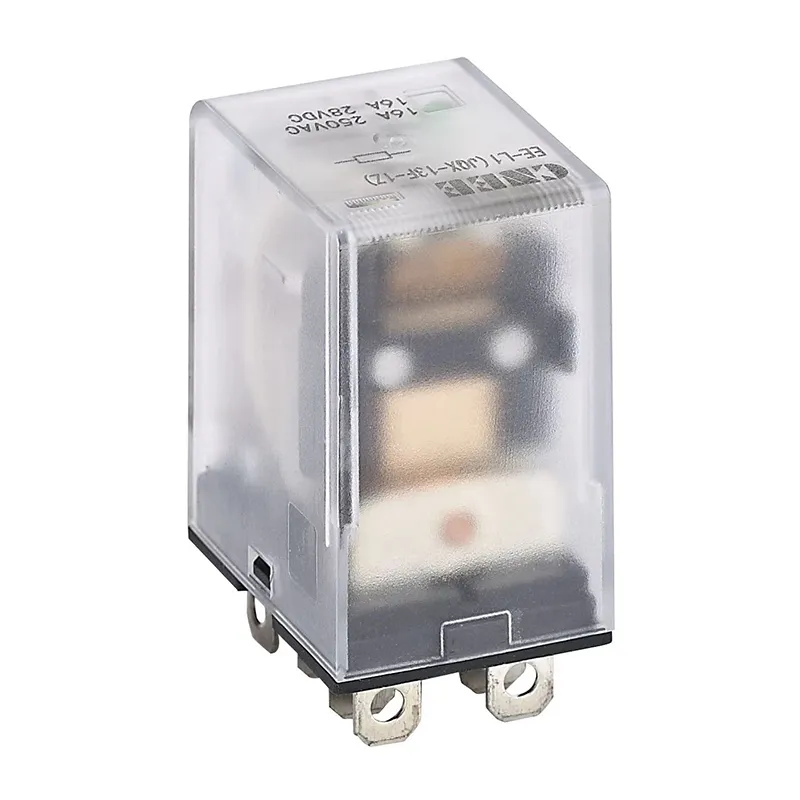
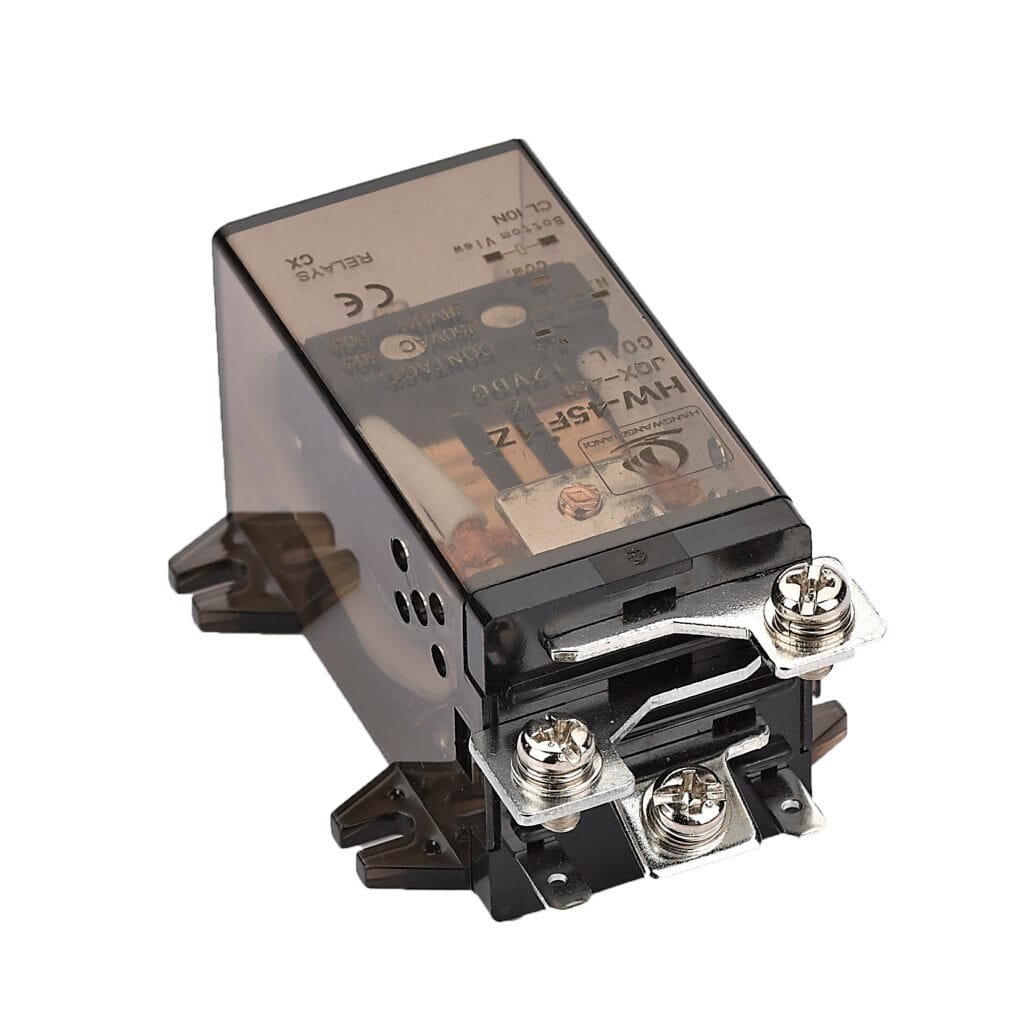
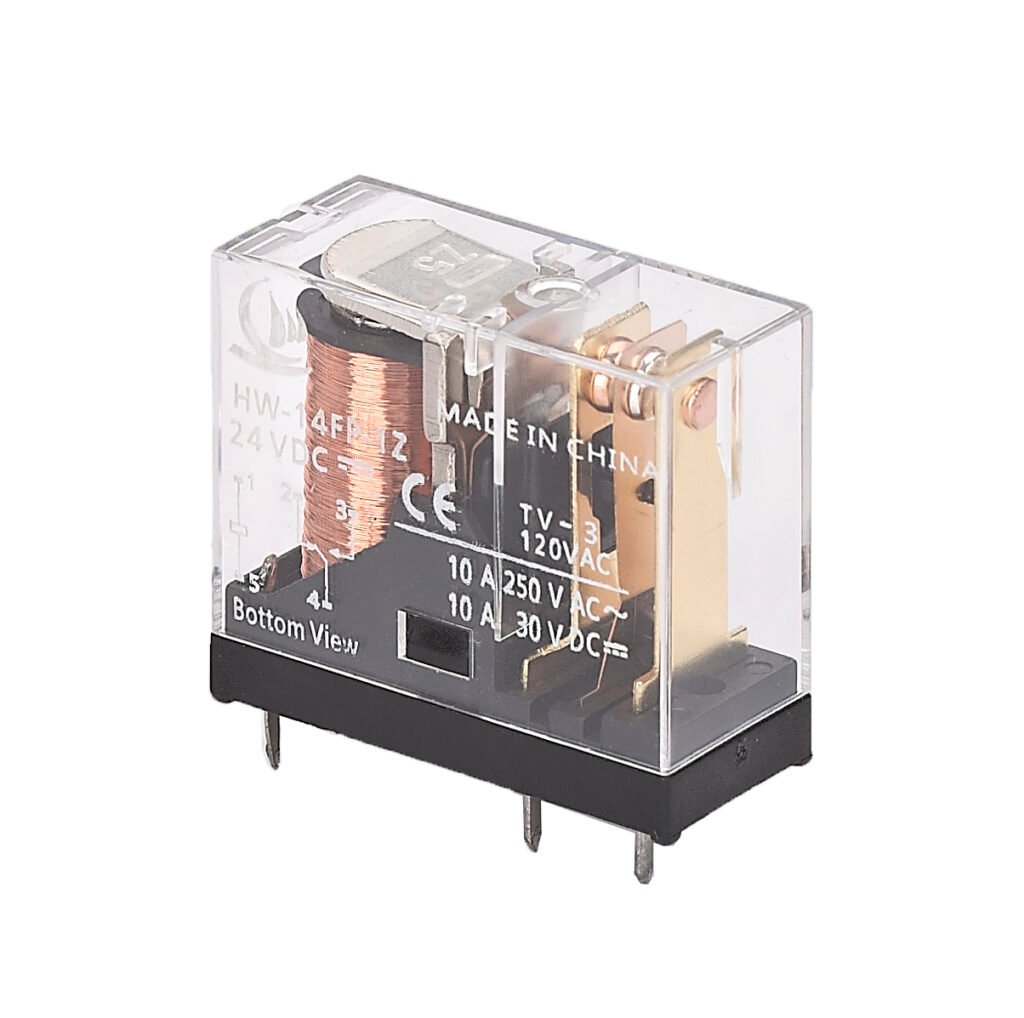
Electromagnetic relays are mainly composed of coils, iron cores, armatures, contacts and other parts:
Coil: Made of insulated wires, it generates an electromagnetic field when powered on.
Iron core: Made of laminated silicon steel sheets, it can enhance the magnetic field generated by the coil.
Armature: It can be attracted or released under the action of electromagnetic force, thereby driving the contact to move.
Contacts: divided into moving contacts and static contacts, which turn on or off the controlled circuit.
Spring: Makes the armature and contacts return to their initial position quickly after losing the electromagnetic force.
Casing: Made of insulating material, it has insulation and protection functions.
Advantages and disadvantages
Advantages
High voltage and high current circuits can be controlled with low voltage and weak current. This is because the control circuit and the controlled circuit of the relay are isolated, and a small current can be used to control a large current.
Remote control and automatic control can be achieved. The relay can transmit the control signal over a long distance to expand the control range.
Multi-way switch control can be achieved through contact combination. The contacts of the relay can form a variety of switch combinations to achieve complex control logic.
Can convert DC circuits into AC circuits, or convert AC circuits into DC circuits.
Relay contacts have large capacity, high reliability, low price, and are widely used.
Disadvantages
The mechanical structure of the relay makes its action and release time longer, generally 10-100ms, and the response speed is slow.
The contacts are prone to sparks, causing contact erosion and limited life. The mechanical life is generally 10^7 times.
Large volume, high power consumption, high heat generation, not conducive to miniaturization design.
Sensitive to vibration and impact, prone to malfunction.
Contact contact resistance is unstable, which can easily cause poor contact.
Working principle in automatic control circuit
Electromagnetic relays rely on the electromagnetic force generated by the coil to achieve contact control. Its working process is as follows:
In the initial state of the relay, the coil is not energized, and the armature and the moving contact are separated from the static contact under the action of the spring.
When the coil is energized, the electromagnetic force overcomes the spring force and attracts the armature to move toward the core.
The armature drives the moving contact to contact the static contact, closing the normally open contact and disconnecting the normally closed contact.
After the coil current is cut off, the electromagnetic force disappears, the armature is released under the action of the spring, and the contact returns to the initial state.
By controlling the on and off of the coil, the on and off control of the controlled circuit can be achieved.
Application scenarios of electromagnetic relay in automatic control circuit
Electromagnetic relays are widely used in industrial automation control systems. Typical application scenarios include:
Motor forward and reverse control circuit, which realizes the forward, reverse, stop and other control of the motor through the cooperation of multiple relays.
AC electrical appliance start-up and speed control circuit, such as air conditioners, fans and other household appliances.
PLC input and output control circuit, used to expand the number of switch input and output points of PLC.
Automotive electrical control circuit, such as high beam, wiper, horn and other control.
Building intelligent control, such as lighting, access control, security and other control circuits.
Sequential control and safety protection circuits of various machine tools, robots and other equipment.
Working principle of small relay A small relay is an electrical switch that operates using the principle of electromagnetic induction to control the on and off states of a circuit. It typically consists of four main components: a coil, an iron core, an armature, and contacts. When the coil is energized, current flows through it, generating a magnetic field. […]
Relay symbols are the cornerstone of electrical engineering, the universal language for designing, troubleshooting, and maintaining electrical systems.
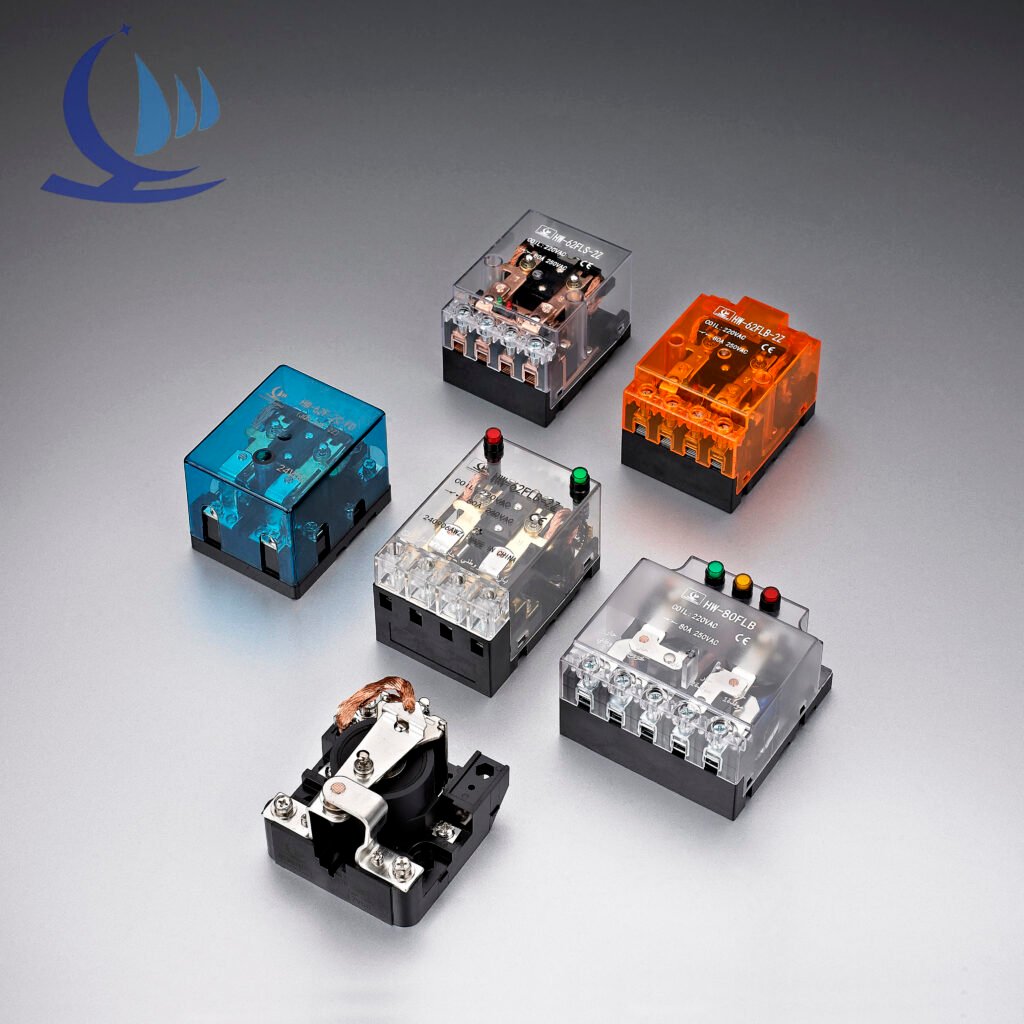
Power relays are the workhorses that sit between your low‑voltage control logic and your high‑power loads, making sure motors, heaters, power supplies, and industrial machines switch safely and reliably on command. For B2B buyers, choosing the right power relay is not just a technical decision; it directly impacts safety approvals, maintenance cost, energy efficiency, and […]
We use cookies to enhance your browsing experience, serve personalised ads or content, and analyse our traffic. By clicking "Accept All", you consent to our use of cookies.
Get a Free Quote
Your email information is completely secure and will not be disclosed to third parties for any reason.
Interested In Our Relay Products?
Get the latest product brochures and technical data.