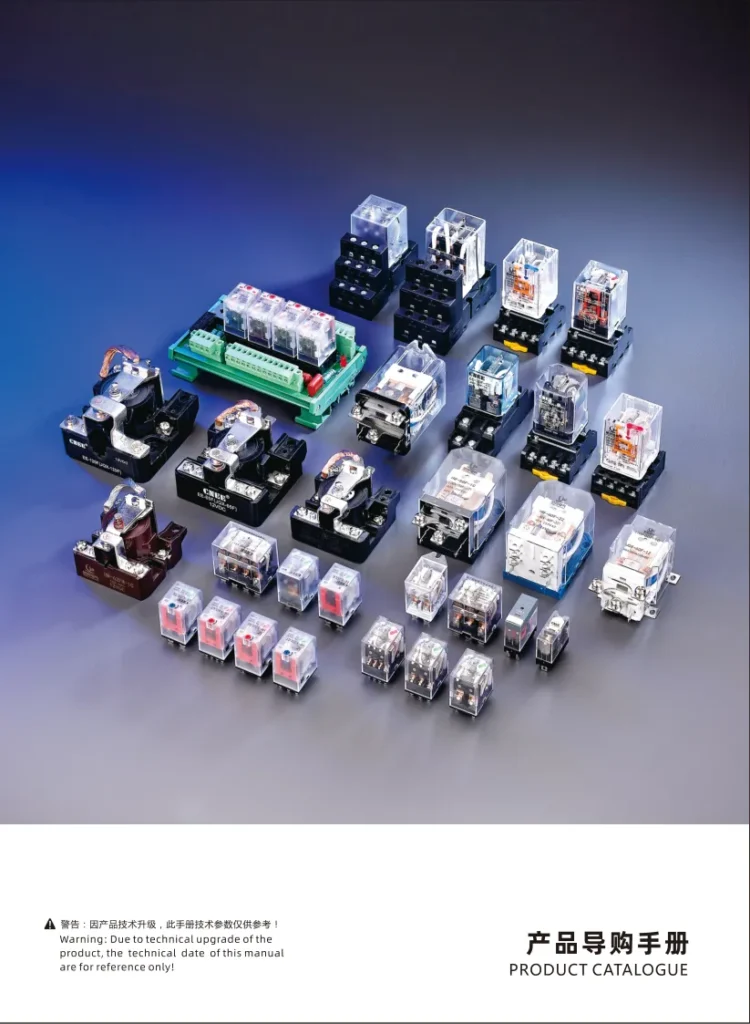
A relay base is an essential component in the installation and operation of electrical relays. It serves as the mounting platform or socket where a relay is securely placed and connected to the control circuit.
The relay base provides mechanical support and reliable electrical connections, facilitating easy installation, maintenance, and replacement of relays without disrupting the entire circuit.
Relay bases come in various types to accommodate different relay designs and applications:
Industrial Relay Base Socket: Designed for rugged industrial environments, these relay bases support high durability and secure connections.
Universal Relay Base Socket: Compatible with multiple relay models, offering flexibility in relay selection and replacement.
Waterproof Relay Base: Designed for outdoor or harsh environments where moisture resistance is critical.
Relay Base with Screw Terminals: Allows for easy wiring and secure electrical contacts through screw connections.
DIN Rail Mounted Relay Bases: Common in automation panels, enabling efficient and standardized mounting.
Secure and stable mounting to prevent relay dislodgement in industrial and mechanical environments.
Electrical isolation between the control circuit and the relay contacts to protect sensitive control components.
Simplified wiring and maintenance, reducing downtime during relay replacement or troubleshooting.
Compatibility with a wide range of relay types, including general-purpose, automotive, and industrial relays.
Durability to withstand electrical, mechanical, and environmental stresses.
Relay bases find extensive use across various industries and applications, including:
Industrial Automation and Control Systems: Relay bases are crucial in mounting relays that control motors, pumps, solenoids, and other machinery in automated manufacturing lines.
Building Automation: Used in lighting, air conditioning, and HVAC control systems to support relay operations.
Power Distribution Systems: Relay bases help mount protective relays that safeguard electrical circuits and equipment.
Automotive and Transportation: Facilitate control of electrical systems such as lighting and starter motors.
Outdoor and Harsh Environments: Waterproof relay bases ensure reliable relay operation under exposure to moisture and dust.
Properly matched to the relay type and specifications.
Installed in accessible locations for easy relay replacement.
Periodically inspected for corrosion, wiring integrity, and secure attachment.
Cleaned and maintained according to the environmental conditions to extend relay and base lifespan.