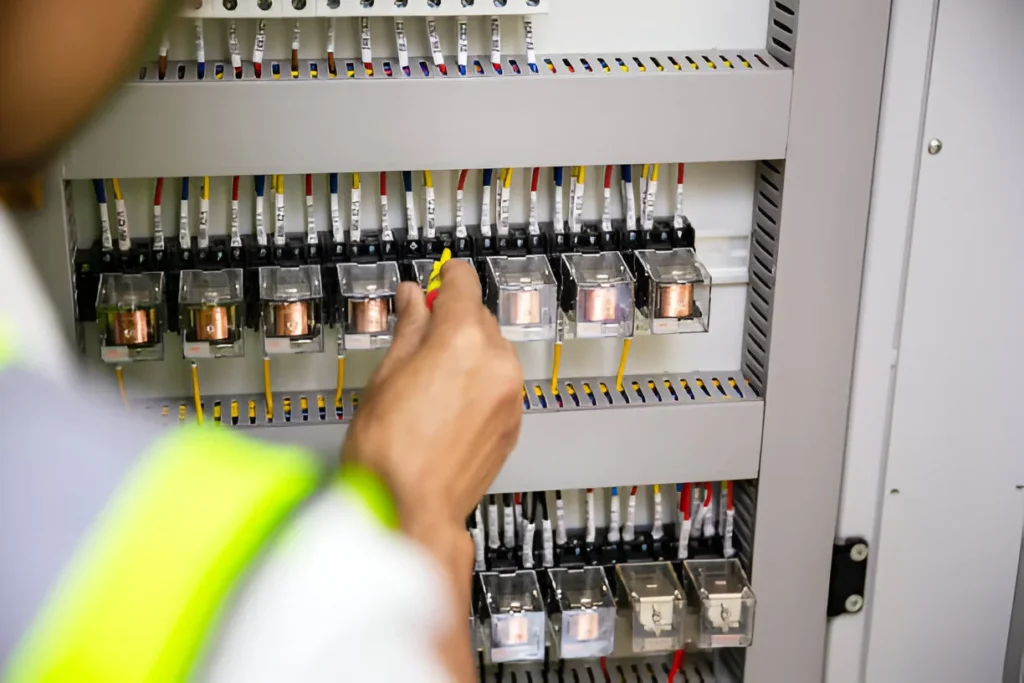
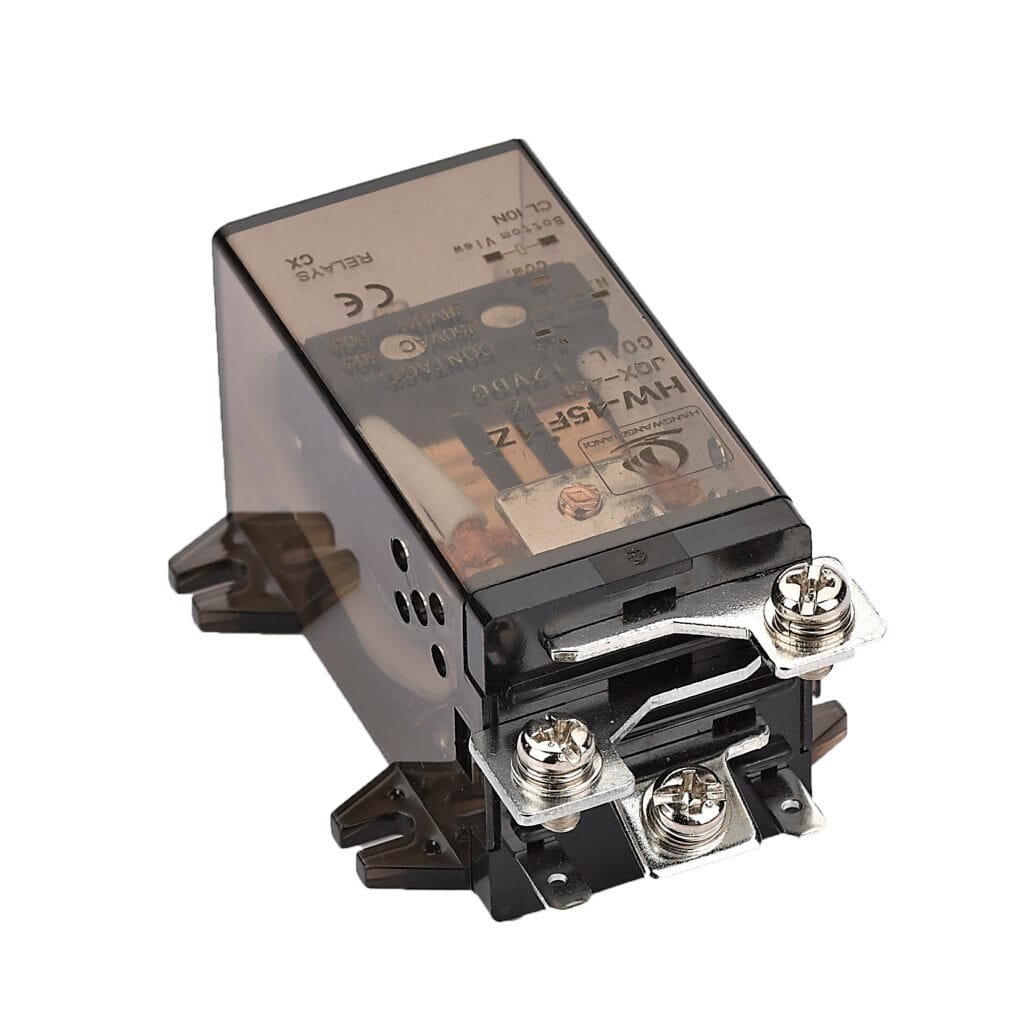
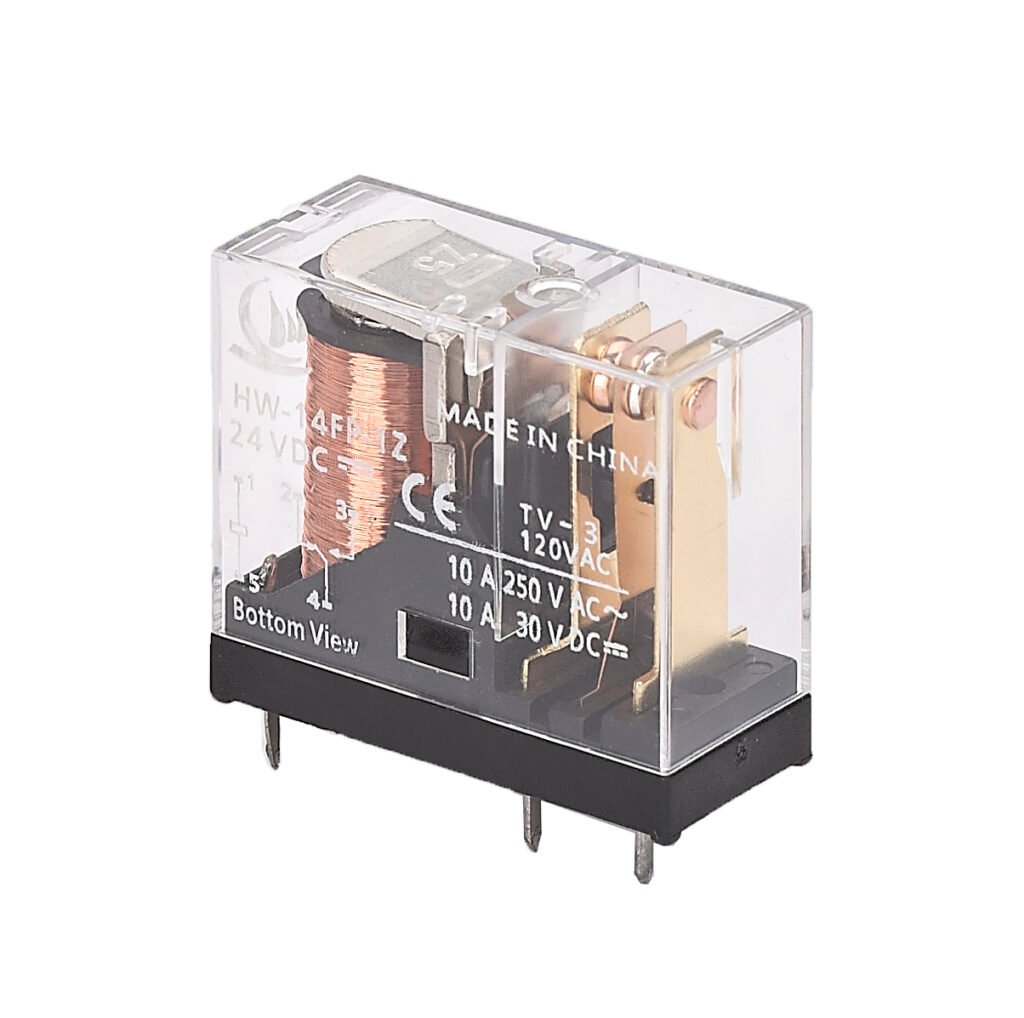
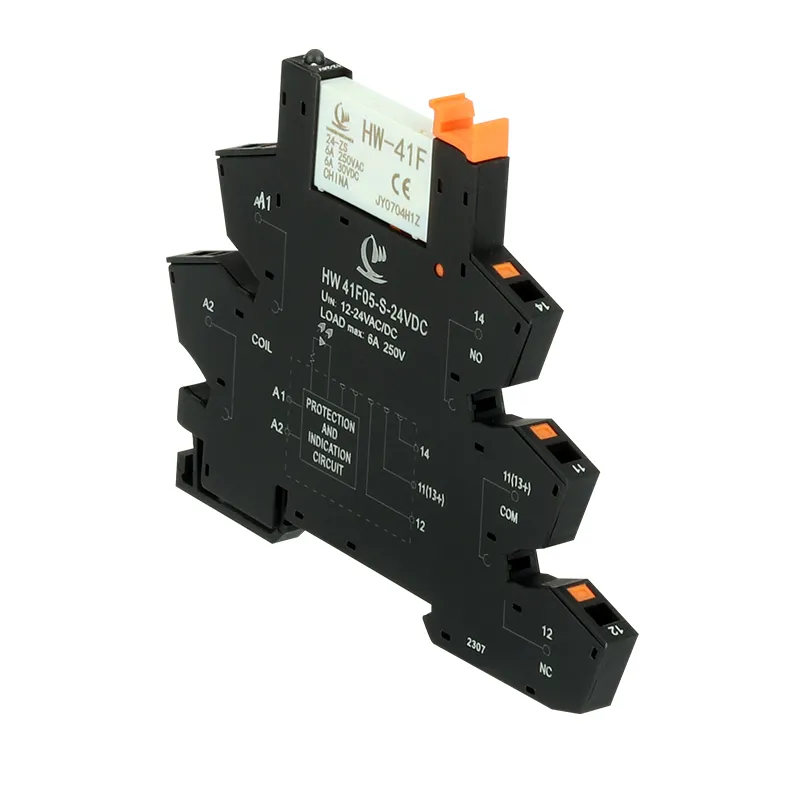
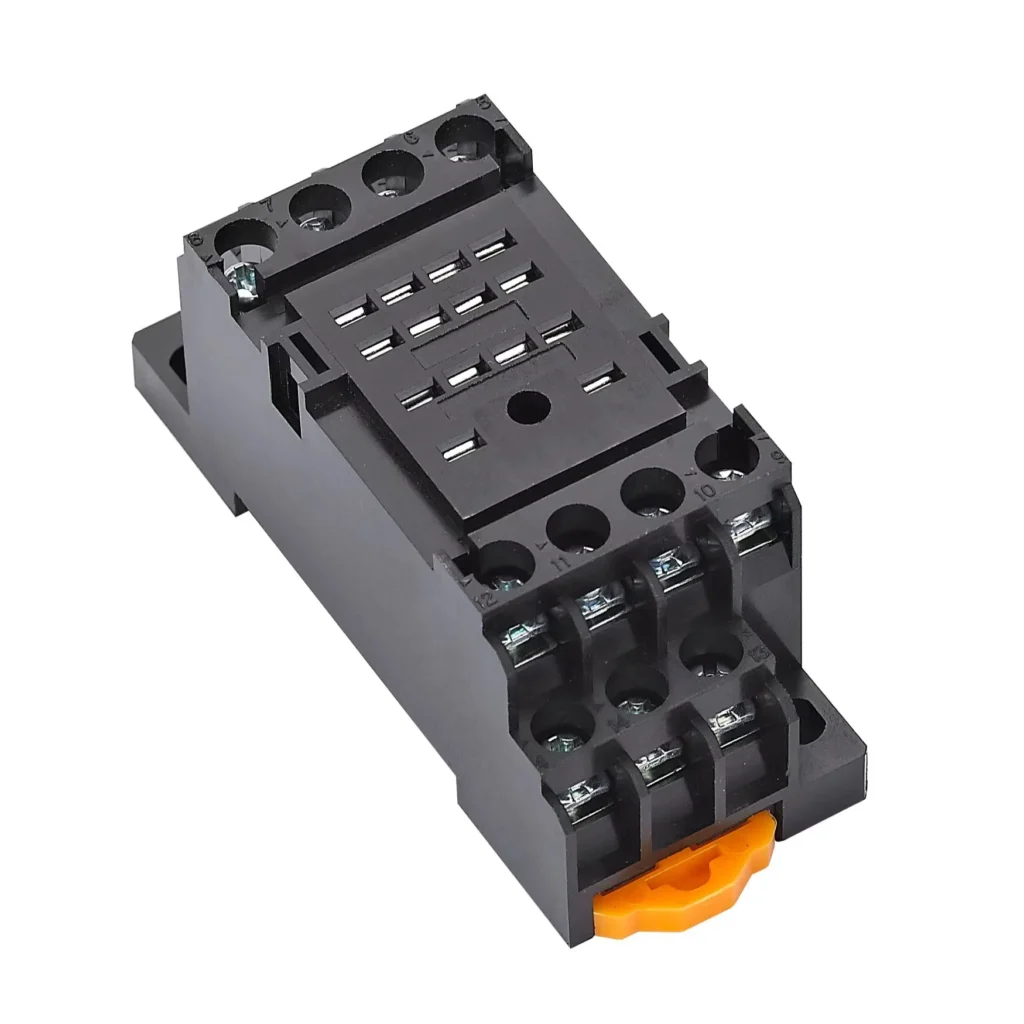
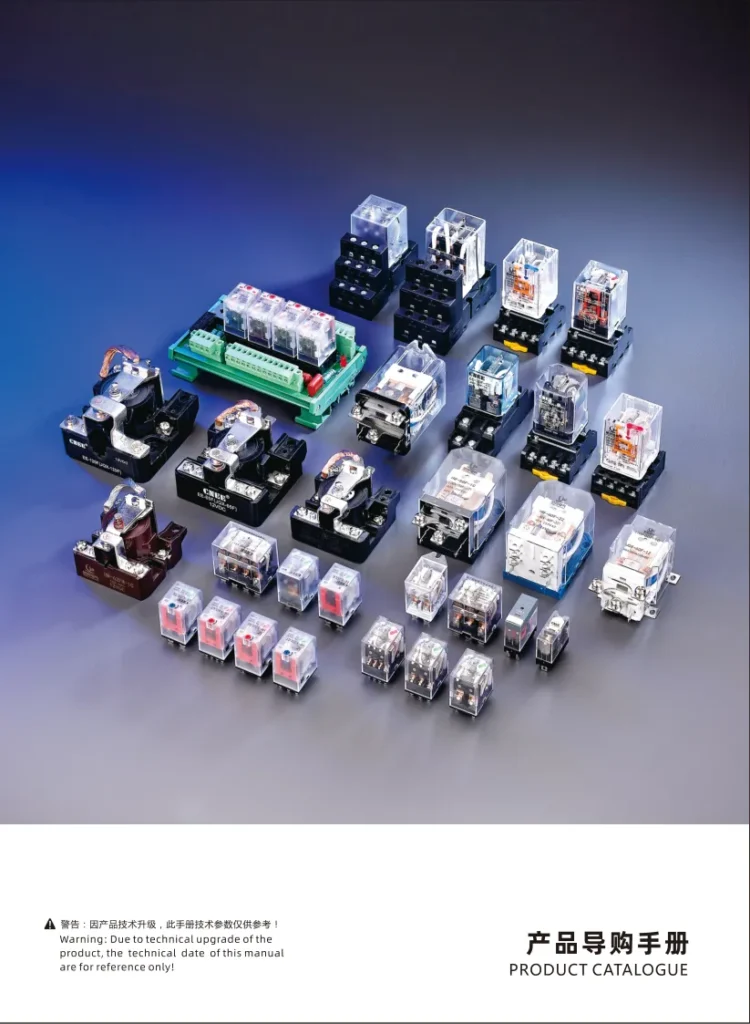
If you’re here, you probably already know that an intermediate relay 5A is one of the most common “workhorses” in control panels. But in the real world, B‑end buyers don’t just care about definitions—they want to know how to pick the right model, how to wire it properly, and where to use it without causing headaches down the road. That’s exactly what I’ll walk you through in this article, using the HH54P series as a concrete example.
So grab a cup of coffee, and let’s turn this “relay confusion” into a clear buying and wiring guide.
An intermediate relay 5A sits between the control signal and the load. It lets a small‑current signal (from a PLC, sensor, or push button) safely switch a higher‑current circuit or multiple branch circuits. Think of it as a remote‑control switch bank that lives in your control panel.
The “5A” in intermediate relay 5A usually refers to the rated contact current. For the HH54P‑type relays, you’ll often see 3A or 5A ratings depending on AC/DC and voltage, so it’s important not to treat “5A” as a universal number.
Key functions you can expect from an HH54P‑style intermediate relay:
Signal amplification: let a 100 mA PLC output switch a 3–5 A load.
Isolation: separate low‑voltage control circuits from higher‑voltage power circuits.
Multi‑branch control: one coil can drive several NO/NC contacts for different lines.
Why HH54P is a popular intermediate relay 5A choice
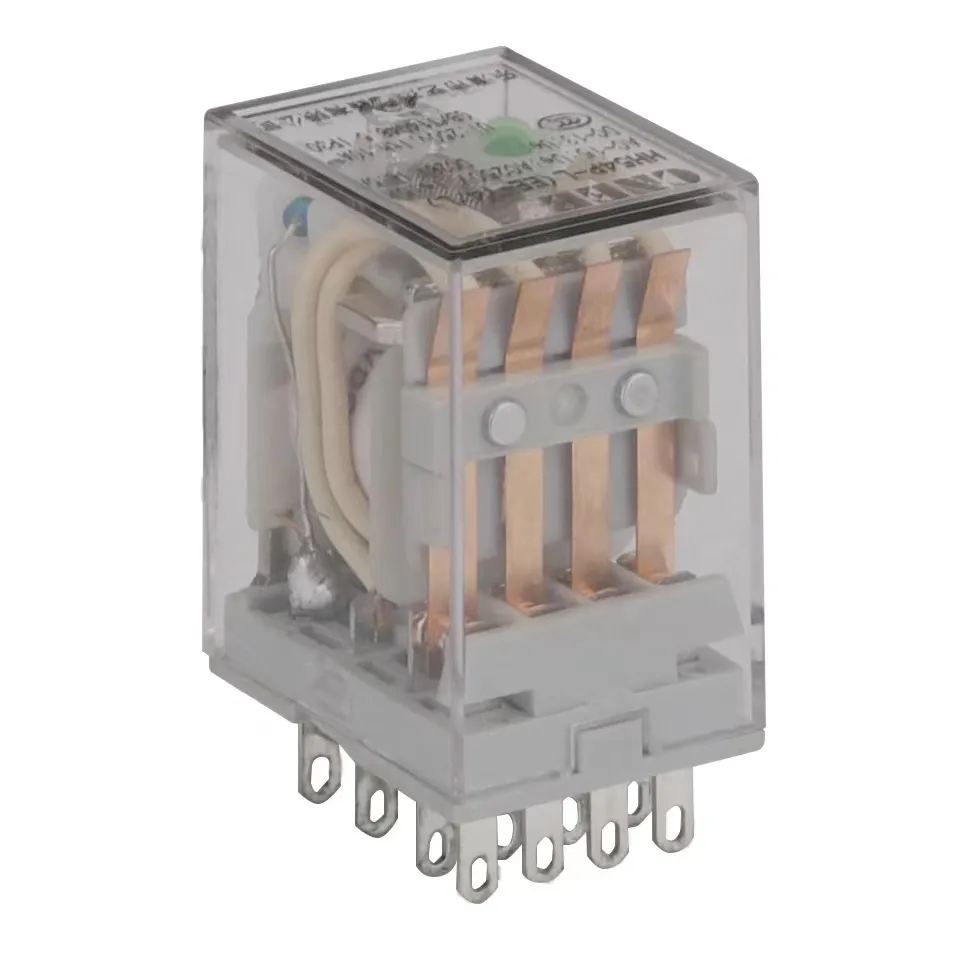
The HH54P series is a small, 14‑pin intermediate relay commonly used in industrial and commercial installations. From the technical data of similar HH54P / MY4‑series relays, typical specs look like this:
Contact form: 4PST‑NO / 4PST‑NC / 4PDT (or 4P4T)
Contact rating: around 3A–5A at 240VAC / 28VDC, depending on the variant
Coil voltages: DC 6–110 V, and sometimes up to 220 VDC; AC 6–220 V, and even up to 380 V AC on some versions
Mounting: PCB or socket‑mounted, often with DIN‑rail bases
Life: roughly 10⁵ electrical operations and 10⁷ mechanical operations
That mix of compact size, 14‑pin flexibility, and 3–5 A switching makes HH54P very attractive for:
Not every 5A relay is interchangeable. Here’s how to narrow it down when you’re evaluating an intermediate relay 5A like HH54P.
1. Check the real load: 5A vs. 3A
First, do not rely on the “5A” label alone. Many HH54P‑series relays have a 3A rating at 240VAC/28VDC, while some 5A versions are limited to lower voltages or specific current types.
Ask yourself:
Is the load resistive (heaters, lamps) or inductive (contactors, solenoids, motors)?
What is the maximum continuous current the contact will see?
Do you expect frequent switching (hundreds or thousands of operations per day)?
If your load is close to 5A resistive and switching often, you should either:
Choose a higher‑rated relay (e.g., 10A intermediate relay), or
Use two contacts in parallel (if allowed by the datasheet).
2. Coil voltage and power
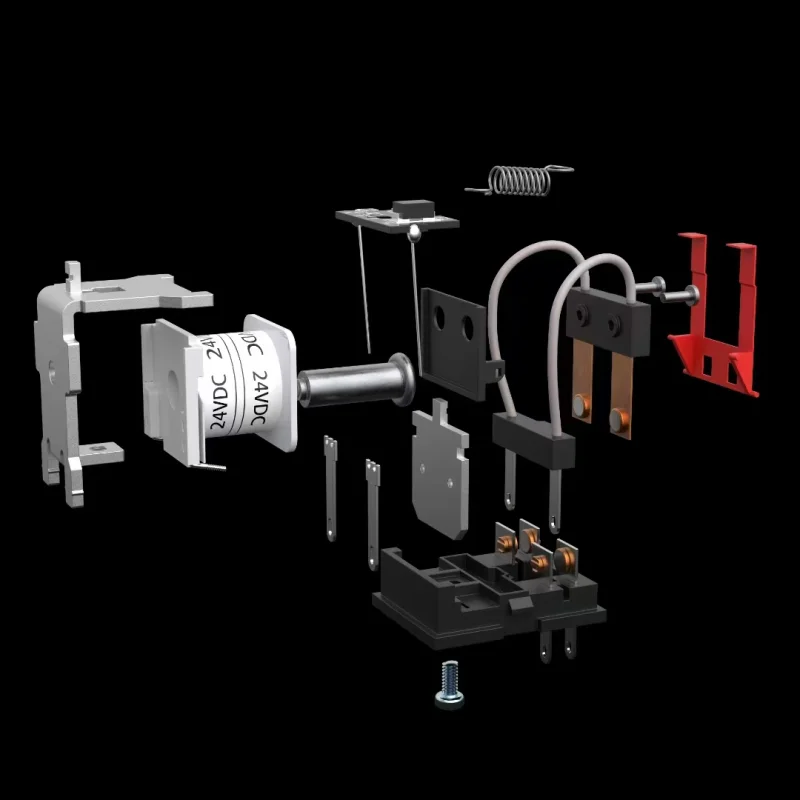
HH54P‑type relays are typically available with a wide range of coil voltages: 6 V, 12 V, 24 V, 48 V, 110 V, 220 V, and even 380 V AC/DC.
A practical rule of thumb:
Match the coil voltage to your control supply (e.g., if your PLC outputs 24 VDC, pick a 24 VDC coil).
Prefer DC coils where possible, because they reduce noise and coil heating in the panel.
3. Contact configuration and number of poles
Intermediate relays come with different contact arrangements: 1P, 2P, 3P, 4P, in NO/NC/PDT configurations. For HH54P, the 4‑pole double‑throw (4PDT / 4P4T) is common, which gives you:
4 change‑over contacts
8 control paths (4 NO + 4 NC)
Ask yourself:
How many separate circuits do you need to switch from one signal?
Do you need latching, self‑holding, or interlocking logic?
If you only need to switch one or two circuits, a 2‑ or 3‑pole relay may be cheaper and mechanically simpler. If you’re doing complex interlocks or PLC signal expansion, a 4PDT intermediate relay 5A like HH54P pays for itself in wiring time.
4. Certifications and environment
For industrial and commercial projects, certifications matter. Typical HH54P‑series relays are certified to standards such as CCC, CE, UL, CSA, and CQC, depending on the brand and region.
Also consider:
Operating temperature (‑40°C to +70°C is common)
Humidity and pollution degree where the panel will be installed
Vibration and shock levels (for machine or transport equipment)
If your project is for export, it’s worth asking for free samples or datasheets that clearly list all approvals before ordering in bulk.
Here’s a quick comparison table to help you choose HH54P‑style intermediate relays:
Feature
Typical HH54P‑style 5A relay
What this means for you
Contact rating
3A–5A at 240VAC / 28VDC
Suitable for PLC‑driven control circuits and small contactors
Coil power
0.9 W DC / 1.2 VA AC
Low power draw, less heat in dense panels
Contact material
Silver alloy
Good switching life under moderate loads
Life
≥10⁵ electrical, ≥10⁷ mechanical
Suitable for frequent switching applications
Mounting
PCB and socket (14‑pin)
Easy to replace and pre‑wire in base
Certifications
CCC, CE, UL, CSA (varies)
Meets common industrial and export requirements
Contact us for custom HH54P Intermediate Relay 5A solutions tailored to your needs.
Wiring is where many electricians make mistakes that cause noisy coils, contact arcing, or premature relay failure. Let’s walk through a practical wiring setup for an HH54P‑style intermediate relay 5A.
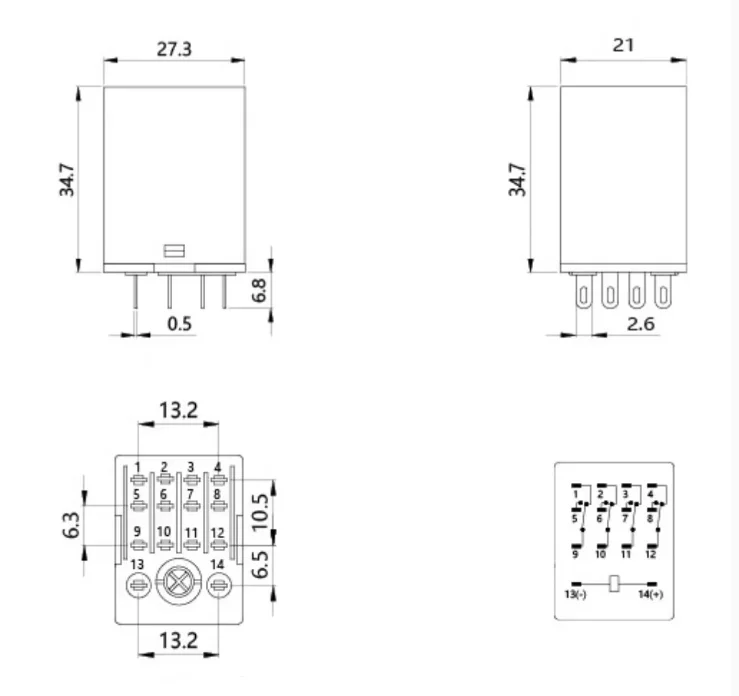
Basic terminal layout
HH54P‑series relays are 14‑pin relays with a standard pinout similar to the MY4 footprint. Common arrangements are:
Pins 1–8: contacts (4PDT)
Pins 9–11, 12–14: coil and sometimes LED indicators
Exact pin numbers differ slightly by brand, so always confirm against the datasheet, but the logic is the same.
Example wiring scenario
Let’s assume you are using a 24 VDC HH54P with 4PDT contacts to expand a PLC output.
Coil side (control):
Connect the PLC output NO (or relay output) to one coil terminal.
Connect the other coil terminal to 24 VDC common.
Add a diode or RC snubber across the coil if your PLC advises it, to reduce switching noise.
Contact side (load):
Route the power line (e.g., 230 VAC) to the common terminals of each pole.
Connect the NO terminals to the loads you want to switch (e.g., contactor coils, indicator lights, solenoids).
Leave NC terminals unused, or use them for interlock or alarm circuits.
Because the HH54P has 4PDT contacts, you can:
Switch four separate contactor coils from one PLC output.
Use one pole for feedback to the PLC input, creating a simple self‑holding loop.
Grounding and isolation
For 5A intermediate relays, keep these points in mind:
Do not share the same ground between high‑power loads and sensitive PLC inputs unless you use star‑point grounding.
Keep high‑current and low‑signal wiring physically separated in the trunking or duct.
Use separate terminals for each contact when possible, and avoid daisy‑chaining multiple loads on one contact if you’re near the 5A limit.
Practical applications of intermediate relay 5A in B‑end projects
Now, let’s talk about where you actually use an HH54P‑style intermediate relay 5A in real projects.
1. PLC expansion and signal isolation
In many panels, the PLC has limited outputs. Instead of buying a larger PLC module, engineers add intermediate relays 5A to multiply the outputs.
For example:
One PLC output drives the coil of an HH54P 4PDT relay.
The four contacts switch:
Contactor coil for main motor
Contactor coil for auxiliary motor
Indicator light
Feedback signal to another PLC input
This setup is common in HVAC panels, machine control cabinets, and pump stations.
2. Machine interlocks and safety circuits
In machine control panels, you often see intermediate relays 5A used for:
Door interlocks
Emergency‑stop circuits
Mode selection (manual vs. auto)
Using a 4PDT intermediate relay lets you combine several logic conditions in one device. For example, one HH54P can:
Energize the main contactor on safe conditions.
Break the circuit on any fault signal.
Send status feedback to the HMI.
3. Commercial building automation
In building automation, intermediate relays 5A are used to:
Switch lighting groups from a central controller.
Control HVAC zones (fans, dampers, valves).
Interface with third‑party systems (BMS, alarm panels).
Because the HH54P is compact and cheap per contact, it’s a popular choice for large‑scale panels where you need dozens of relay points.
Choosing between HH54P and other 5A intermediate relays
If you’re comparing HH54P with other 5A intermediate relays, here’s a simple table to help you decide:
Relay type / model
Typical rating
Contact form
Mounting
Best use case
HH54P (4PDT)
3A–5A
4PDT / 4P4T
PCB / socket
PLC expansion, multi‑circuit control
Simple 2‑pole 5A relay
5A
1PDT / 2PDT
Socket
Single‑circuit switching
10A industrial relay
10A
2PDT–4PDT
Socket or DIN rail
Higher‑power loads, motor starters
PLC‑module‑integrated
N/A (varies)
Depends on module
Rail‑mounted
High‑density output expansion
For most B‑end customers, HH54P wins when you need maximum flexibility in a small footprint and want to expand a few PLC outputs into multiple circuits.
How to optimize cost and reliability with HH54P
Buying relays in bulk is usually cheaper, but reliability matters more. Here’s how to balance both:
Order by voltage and contact type together. For example, group all 24 VDC 4PDT HH54P units in one order instead of mixing voltages.
Keep a small safety stock of the most common variants (e.g., 24 VDC, 110 VAC, 220 VAC).
Request a free sample set before big orders to confirm pinout, mounting, and performance.
If you tell me your typical project size (number of panels, loads, and PLC models), I can help you work out roughly how many HH54P‑style intermediate relays you’d need per installation.
Ready to order your HH54P intermediate relays?
If you’ve been searching for “intermediate relay 5A”, “HH54P 14‑pin relay”, or “PLC expansion relay 5A”, chances are HH54P‑style relays are exactly what you need.
You can now decide smarter:
Which load rating (3A vs. 5A) matches your circuits.
What coil voltage fits your control supply.
How many contacts you really need per panel.
When you’re ready to place an order or get a formal quote, feel free to send your project list (voltage, current, quantity, and preferred mounting) and we’ll align the right variant and configuration for you.
Contact us for custom HH54P Intermediate Relay 5A solutions tailored to your needs.
What is the difference between a 3A and 5A intermediate relay?
A 3A relay is usually rated for lower power or higher voltage (e.g., 3A at 240VAC), while a 5A relay can handle more current at lower voltages. Always check the exact rating in the datasheet; some HH54P‑series relays are 3A at 240VAC, not 5A.
Can I parallel two contacts to get 6A or 10A?
Many manufacturers allow limited contact paralleling for higher current, but only if: The relay is designed for it. Contacts share the load evenly. You don’t exceed the maximum voltage rating. If uncertain, pick a higher‑rated relay instead.
How often do 5A intermediate relays like HH54P fail?
Typical electrical life is about 100,000 operations. If your panel switches once every few seconds, that’s roughly 1–2 years of continuous use. For lighter loads and slower switching, an HH54P‑series relay can last much longer.
Are 14‑pin intermediate relays easy to replace?
Yes. With a socket base, you can pop the HH54P‑style relay out without touching the wiring. Just swap the unit and re‑insert. This is why many B‑end buyers prefer socket‑mounted 14‑pin intermediate relays for maintenance.
How do I choose between DC and AC coil voltages?
Use DC coils when: Your PLC or control power is DC. You want less coil heating and less electrical noise. Use AC coils when: You have a 110 VAC or 220 VAC control supply and want to avoid extra DC power supplies. The application is simple and doesn’t need frequent switching.
Power relay Contact are the hidden workhorses of industrial control. Their reliability hinges on the enduring quality of the contact set—the physical point where electrical energy meets mechanical action. This article dives deep into the contact structures and materials used in power relays, and provides practical guidelines to assess contact wear. Designed for B2B readers, […]
When a vehicle refuses to start and diagnostics point to the “PCM power relay,” that small component suddenly becomes very important to engineers, buyers, and maintenance teams. For OEMs, wholesalers, and parts procurement, understanding what a PCM power relay does – and how to choose the right one – directly affects reliability, warranty cost, and […]
In the fast-moving world of industrial automation, reverse power relay are small but crucial components that safeguard generators and parallel power systems. If you’re an engineer, electrical system designer, or purchasing manager, understanding how this device works—and how to select the right one—can help you prevent expensive downtime, hazardous faults, and unnecessary wear on your equipment. Let’s explore what makes […]
We use cookies to enhance your browsing experience, serve personalised ads or content, and analyse our traffic. By clicking "Accept All", you consent to our use of cookies.
Get a Free Quote
Your email information is completely secure and will not be disclosed to third parties for any reason.
Interested In Our Relay Products?
Get the latest product brochures and technical data.