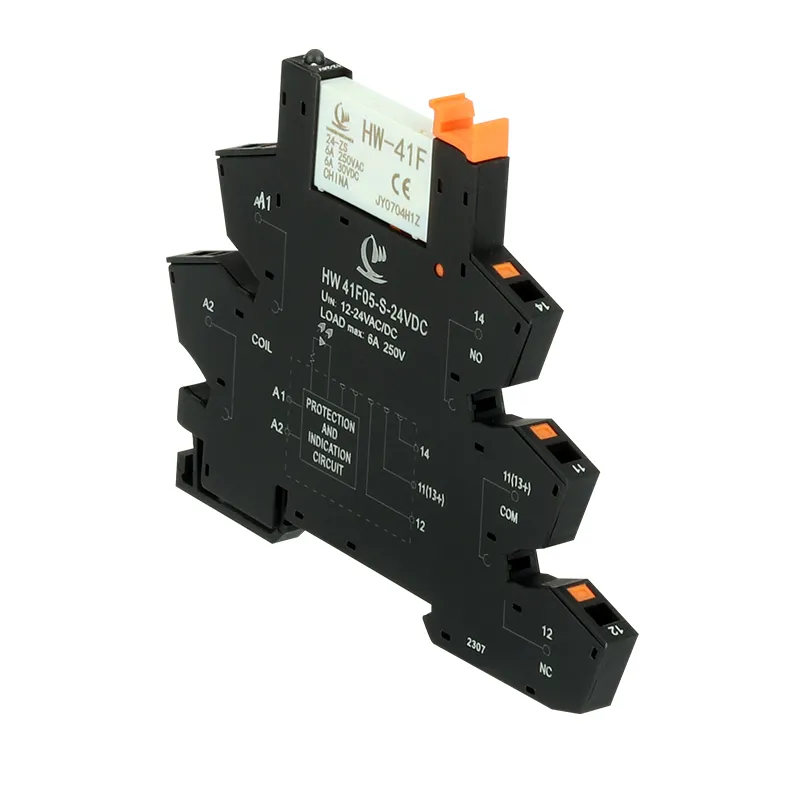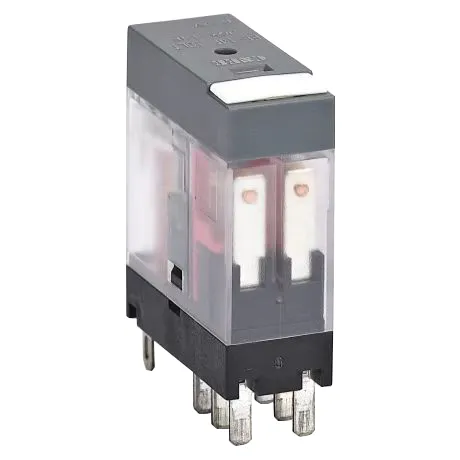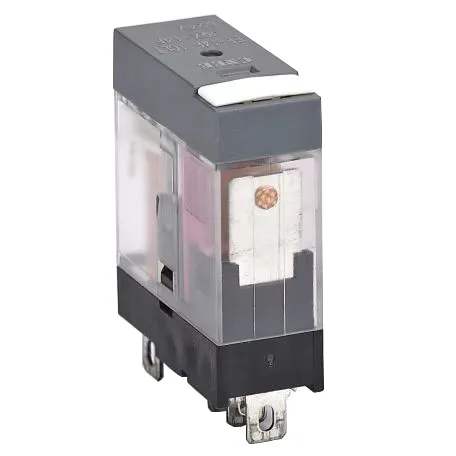
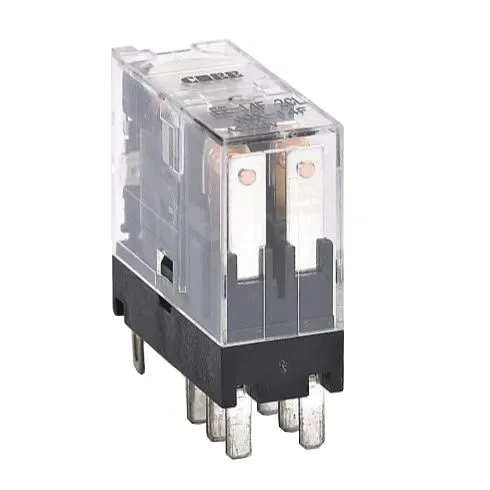
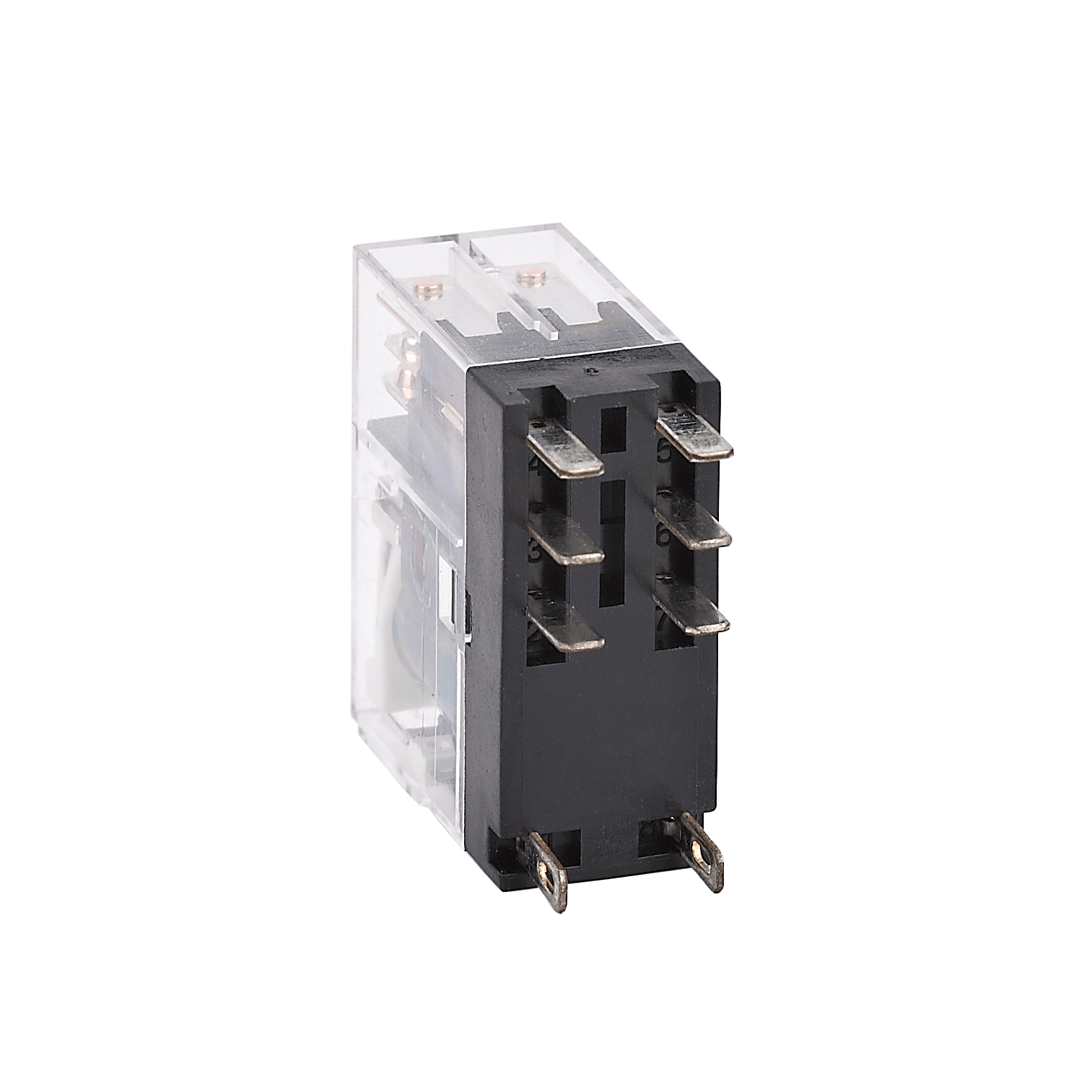
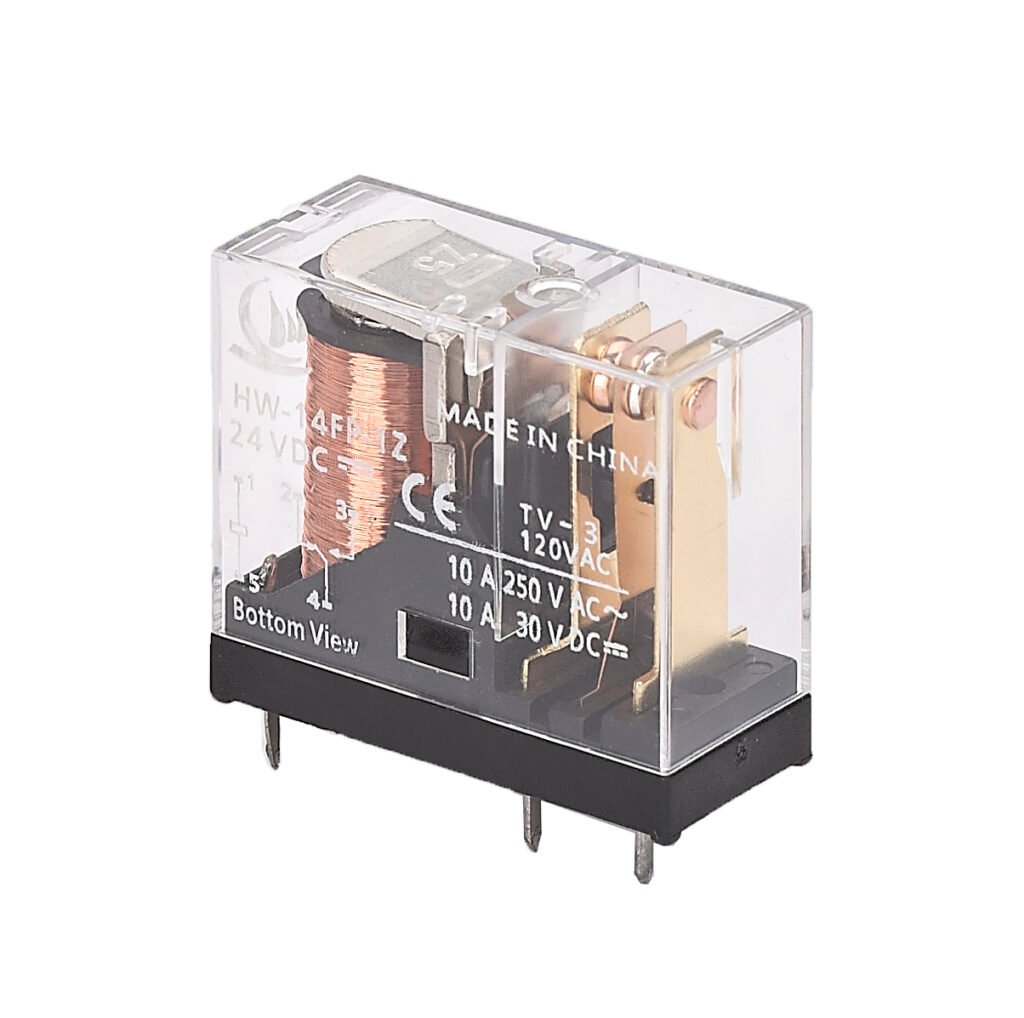
Low-voltage circuits are the foundation of modern electronics, and the HW-14F-2Z small relay 5V is engineered to meet these precise control requirements. Unlike high-voltage relays, which focus on switching household or industrial mains power, this relay specializes in signal control, microcontroller interfacing, and compact automation systems.
The relay operates on a 5-volt coil, which makes it directly compatible with microcontrollers such as Arduino, Raspberry Pi, and other development boards. This allows engineers, students, and product designers to integrate the relay into a wide range of DIY projects, IoT devices, smart appliances, and consumer electronics.
Built with high-quality electromagnetic components and flame-retardant housing, the HW-14F-2Z offers stable performance, high durability, and long contact life, making it a preferred choice for both prototyping and large-scale production
Model Description
| HW | 14F | Optional | Optional | P | Optional | Optional | VDC |
| ① | ② | ③ | ④ | ⑤ | ⑥ | ⑦ | ⑧ |
①Enterprise code: Hangwang Electric
②Serial number: 14F
③Number of contact groups: 2
④Contact form: (Z-conversion type H-normally open type D-normally closed contact)
⑤Mounted type: P: PCB mounted type No letters: plug-in mounted
⑥Operating state: L: LED indicate No letters: no indicate
⑦Auxiliary function: D/CR Inhibitory protection
⑧Coil voltage: (DC: direct voltage AC: alternating voltage)
Contact parameters
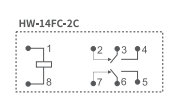
| Contact form | 2Z,2H,2D |
| Contact load | 8A |
| Maximum switching voltage | 277VAC 12A 30VDC 12A |
| Contact material | Silver alloy |
Operating Coils
| Rated voltage V | DC12V | DC24V | DC48V | DC110V |
| Rated current(+10%)mA | 44 | 22 | 11 | 4.8 |
| Coil resistance(+10%)Ω | 272 | 1090 | 4363 | 22916 |
| Rated power consumption W | 0.53W | |||
| Pick-up voltage(max)V | Less than 75% | |||
| Drop-out voltage (min) V | 10% or more | |||
| Allowable voltage(max) V | Rated voltage ×110% | |||
| Rated voltage V | AC12V | AC24V | AC24V | AC220V |
| Rated current(+10%)mA | 83.3 | 41.6 | 9 | 4.5 |
| Coil resistance(+10%)Ω | 50 | 202 | 4278 | 17111 |
| Rated power consumption W | 1.0VA | |||
| Pick-up voltage(max)V | Less than 80% | |||
| Drop-out voltage (min) V | 30% or more | |||
| Allowable voltage(max) V | Rated voltage ×110% | |||
Product Technical Parameters
| Contact resistance | ≤100mΩ |
| Electrical life | ≥10⁵ times |
| Mechanical life | ≥10⁶ times |
| Coil voltage | DC: 6-220V AC: 6-380V |
| Suction time | ≤20ms |
| Release time | ≤10ms |
| Between the same pole contacts | 1200VAC/1min(Leakage current 1mA) |
| Between opposite pole contacts | 1500VAC/1min(Leakage current 1mA) |
| Between contact and coil | 2500VAC/1min(Leakage current 1mA) |
| Insulation resistance | ≥100MΩ(500VDC) |
| Ambient temperature | -25°C ~ +55°C |
| Ambient humidity | 35% ~ 80%RH |
| Atmospheric pressure | 86 ~ 106KPa |
| Impact resistance | 10G (Sine wave half pulse: 11ms) |
| Vibration resistance | 10-55Hz (Double amplitude: 1.5mm) |
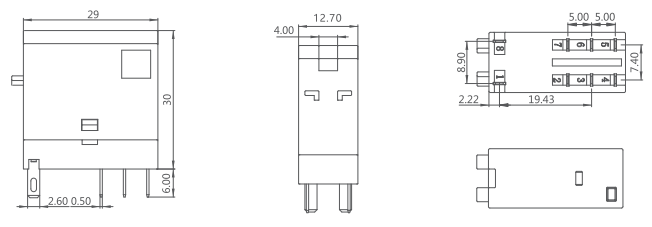
| Dimensions | 28.8 × 12.7 ×27mm |
| Weight | About 20g |
Product Size and Installation
Main Features
5V DC coil voltage – ideal for low-power circuits and microcontroller compatibility.
Compact housing – suitable for PCB mounting and modular electronic systems.
Double-pole double-throw (DPDT) contacts – supports versatile switching.
High dielectric strength – ensures safe operation in low-voltage environments.
Energy-efficient coil – reduces power consumption during continuous use.
Reliable mechanical endurance – thousands of switching cycles guaranteed.
Compatibility with relay modules – widely used as a 5V relay module for Arduino and Raspberry Pi projects.
Product Advantages
One of the biggest strengths of the HW-14F-2Z small relay 5V is its ability to bridge the gap between low-voltage control signals and higher-current loads. A microcontroller operating at just 5V can use this relay to control motors, lights, sensors, and other devices.
This makes it an essential component for smart home applications, robotics, and IoT devices. Its miniature size ensures seamless integration into PCB relay 5 volt circuits, while the DPDT design provides flexibility for more complex switching tasks.
For educational projects, such as Arduino relay control tutorials or DIY electronics kits, the relay offers a safe and reliable way to demonstrate switching principles. For commercial applications, its low power consumption and high reliability make it suitable for mass production.
Applications
The HW-14F-2Z 5V relay small size has a wide range of uses across consumer and industrial electronics:
DIY electronics – frequently used in Arduino relay modules 5V and hobbyist projects.
IoT devices – controls sensors, actuators, and communication modules.
Consumer electronics – integration into smart home devices, toys, and low-power appliances.
Automation systems – switching loads in embedded control boards and PCB relay modules.
Educational kits – ideal for electronics training and microcontroller programming courses.
Robotics – motor and actuator control using a safe 5V electromagnetic relay.
Installation and Maintenance
Installing the HW-14F-2Z small relay 5V requires attention to detail, particularly for PCB mount applications.
Steps for installation:
Verify that the control circuit operates at 5V DC.
Align the relay pins with the designated PCB slots or module socket.
Solder carefully to avoid overheating the coil or terminals.
Connect the load circuit according to the DPDT contact configuration.
Test by sending a 5V control signal to activate the relay.
For maintenance, it is recommended to check the relay periodically for oxidation on the contacts or solder joint issues. In high-frequency switching environments, replacing the relay after extended use ensures long-term reliability. Keep the relay in a dry, dust-free environment to prevent coil degradation.
How to Choose the Right Relay
When selecting a relay for low-voltage circuits, a few key factors should be considered:
Coil voltage – ensure compatibility; for 5V systems, a small relay 5V coil is ideal.
Contact rating – match the relay’s switching capacity with your load (motor, LED, sensor, etc.).
Relay type – DPDT relays offer more flexibility than SPDT in complex circuits.
Size and mounting – mini relays are suitable for PCB modules and compact enclosures.
Power consumption – low-energy coils extend battery life in portable devices.
Application – Arduino projects, robotics, and embedded systems often rely on 5V electromagnetic relays.
By considering these factors, users can choose whether the HW-14F-2Z 5V relay is the best fit for their design.
FAQ
Q1: What is a small relay 5V used for?
A: It is commonly used in microcontroller circuits, Arduino relay modules, and low-power automation systems.
Q2: Can the HW-14F-2Z control higher-voltage loads?
A: Yes. While the coil runs on 5V DC, the contacts can switch higher voltages within rated limits.
Q3: Is this relay compatible with Arduino and Raspberry Pi?
A: Absolutely. It is widely used as a PCB relay 5V module for prototyping and DIY projects.
Q4: Does the relay consume much power?
A: No. The coil is designed for low power consumption, making it suitable for battery-powered devices.
Q5: What is the lifespan of the HW-14F-2Z?
A: With proper use, it can withstand thousands of switching cycles without performance loss.
Q6: Can I use this relay for robotics projects?
A: Yes, it is widely adopted in robotics for motor and actuator control with low-voltage logic boards.
Request a Quote Now
Our team will get back to you within 24 hours.